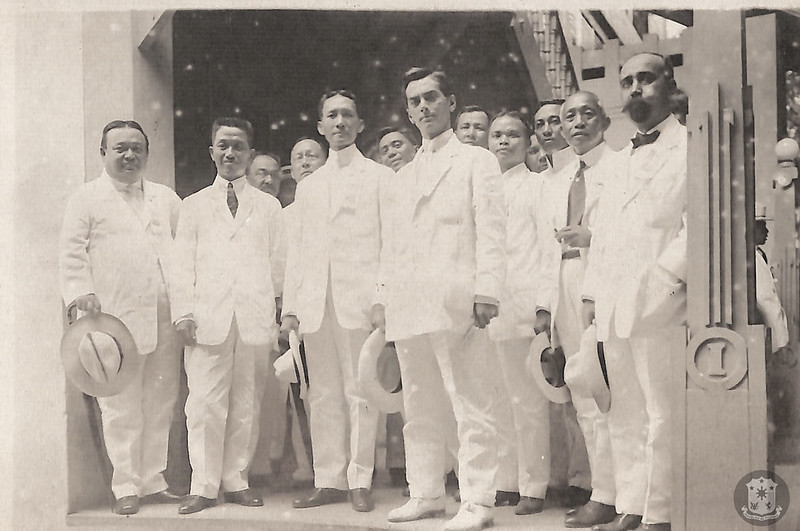
Quezon and Aguinaldo became political enemies when Aguinaldo supported Governor-General Leonard Wood in 1922; there was a brief reconciliation circa 1931-1933, when Aguinaldo supported Quezon in the Pro and Anti fight over the Hare-Hawes-Cutting Act; they again parted ways for the 1935 presidential campaign but a reconciliation took place after the midterms of 1938.
The Campaign of 1935 can be said to have had four acts. The prelude would have been from the passage of the Tydings-McDuffie or Philippine Independence Act, to the convening of the Constitutional Convention, which includes the showdown, electorally, between the Pro and Anti coalitions. In this, Quezon and Aguinaldo were allies, both rejecting the Hare-Hawes-Cutting Act.
A word on this. Hare-Hawes-Cutting was a case of human ambition and political perspective. The Great Depression made the time right for securing Philippine independence, and with Quezon very ill at the time, it made his previous subordinates consider the exciting possibility it was their moment; and they secured a law. Dilemma for Quezon: where was he in this achievement of their collective life-long dream? Here the question of politics and strategy enters the picture. Ambition for all politicians is a given. But what, as an American scholar put it, is leadership? What it requires obviously (but not so obviously to the non-political) is a followership. But what do both leaders and followers need? A shared cause. Here Quezon identified three weaknesses in the Hare-Hawes-Cutting Act: the first was one crystal clear to anyone who had lived through the Filipino-American War and the time since: the law would allow the continued presence of American army bases in the Philippines. Quezon therefore had an issue that resonated at least with the older generation: how could there be independence if the same force that had crushed the First Republic, would remain permanently encamped in Fort McKinley, easily exercising veto power over any Filipino government? Second, Quezon belonged to the generation of legislators who had opposed free trade with America in the early 1900s, an opposition which failed, so that by the 1930s, the Philippines was utterly dependent, economically, on sugar, coconut, etc. These products were a fundamental reason the Americans wanted to let the Philippines go: Cuban sugar, American beetroot, all opposed Philippine sugar and similarly, for oils from the Philippines. The HHC as it was, would immediately cut off the preferential tarrifs for the Philippines leading to immense economic disruption to accompany independence. Obviously this terrified not just the hacenderos and millers but the entire business community. Third, at this maximum moment of opportunity, Quezon argued that the Filipinos were being too accomodating and not insisting enough on their own national interest and could do better if they bargained better knowing the Americans well as Filipino leaders did, by then. So he had the basis for a campaign against it. The result was a national debate at all levels so intense and widespread it even included Rafael Palma as a political casualty in U.P. As in 1922, the showdown was in two arenas: first, a challenge to submit resignations to the Senate and the House –what in parliamentary terms is known as a vote of confidence– which Quezon won and Osmeña and Roxas lost; second, as a plebiscite in the form of the results of the legislative elections. Here, the ferocity of the public debate was so intense, the former opposition, the Democratas, splintered: one part went to Osmeña-Roxas (OsRox, the pros or pro-HHC) and the rest to Quezon and the antis (anti-HHC). Quezon won this overwhelmingly. The legislature then had a mandate to reject HHC and send Quezon to negotiate a better law. Those he beat were being disingenous –and those repeating the observation betray their ignorance of lawmaking– when they say it was virtually the same law except for a change in a few words. What were those words? First, limiting the American military presence after independence to naval bases (no one though of air forces yet at the time) and no army bases and significantly, the negotiations to be conducted after, and not before, independence; second, for the economic provisions governing the two countries to be subject to longer negotiations between the Filipinos and the US government; and third, diluting, to the extent it became ambigious (and thus beneficial for the Filipinos) the powers of the High Commissioner who would represent the US government after the abolition of the post of Governor-General. Not, by any means, cosmetic changes as the negotiations for both the bases after independence, and the economic adjustment negotiations of 1937 during the Commonwealth, would show.
The second act would have been the period during which the Constitutional Convention was doing its work, and the Sakdal Uprising, up to the ratification of the 1935 Constitution, a time for the proposing of candidates and the exploration of coalitions. Here, their reconciliation ended, as Aguinaldo prepared to contest the presidency and Quezon maneuvered to have the Philippine Legislature investigate and nullify, the land grant to Aguinaldo dating back to the previous decade.
The third act would have been the 1935 presidential election itself, from the time candidacies were announced, the campaign held, the election took place, and the winners officially proclaimed.
The fourth and final act would be from the time the winners were proclaimed, until the Quezon-Aguinaldo reconciliation became official in 1941. Thereafter, the reconciliation held, even after Quezon’s death, when Aguinaldo faithfully attended ceremonies in honor of Quezon.
June 13, 1933
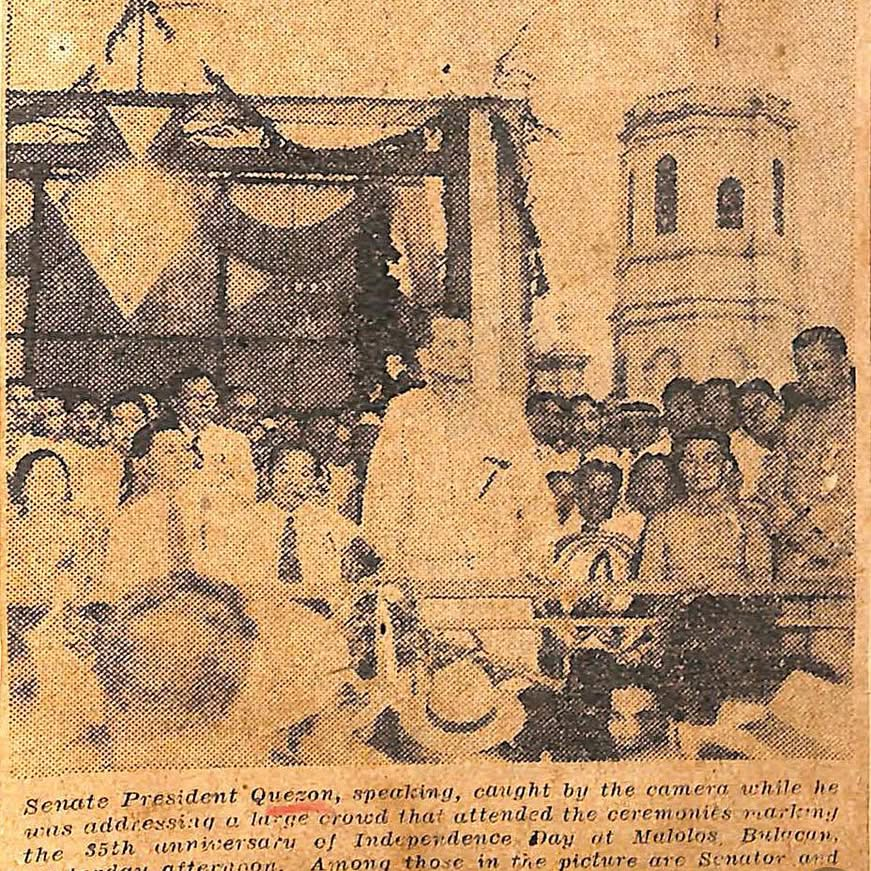
The Last Independence Mission: November, 1933
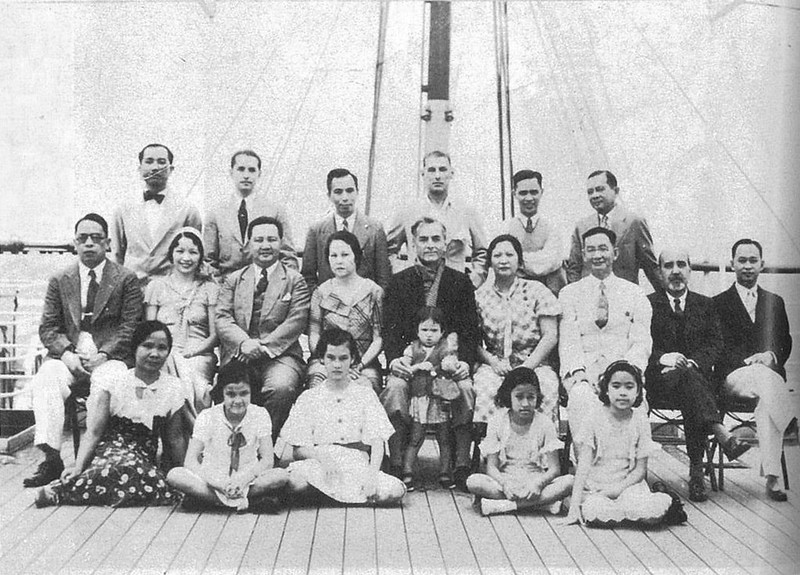
A note on the sources: This timeline is composed of contemporary news summaries from Philippine Magazine, in italics. There are headlines that link to contemporary articles from The Tribune, at the time not considered a pro-Quezon paper; these are prefixed with “Tribune:”; other articles, from the Philippines Free Press, or other publications, are linked. For a thorough review, please see the clippings collected in Philippine Press Clippings Volume II (1934B-1935) and Philippine Press Clippings Volume III (1935). Photographs from Philippines Press Clippings are also included as well as other items, such as newsreels, have also been embedded. In this manner, perhaps a flavor of events-as-they-happened, can be, however faintly, be recaptured.
Act I: The Prologue to the campaign of 1935
MAY-JUNE 1934
February 18, 1934
The Tribune: Aguinaldo May Head Veterans to Meet Quezon in Shanghai
February 16, 1934
April 8, 1934
The Tribune: Pro Democratas Rap Quezon and Sumulong
“Pro-Anti” Reconciliation Very Desirable Move, Aguinaldo States
May 1, 1934
The Tribune:
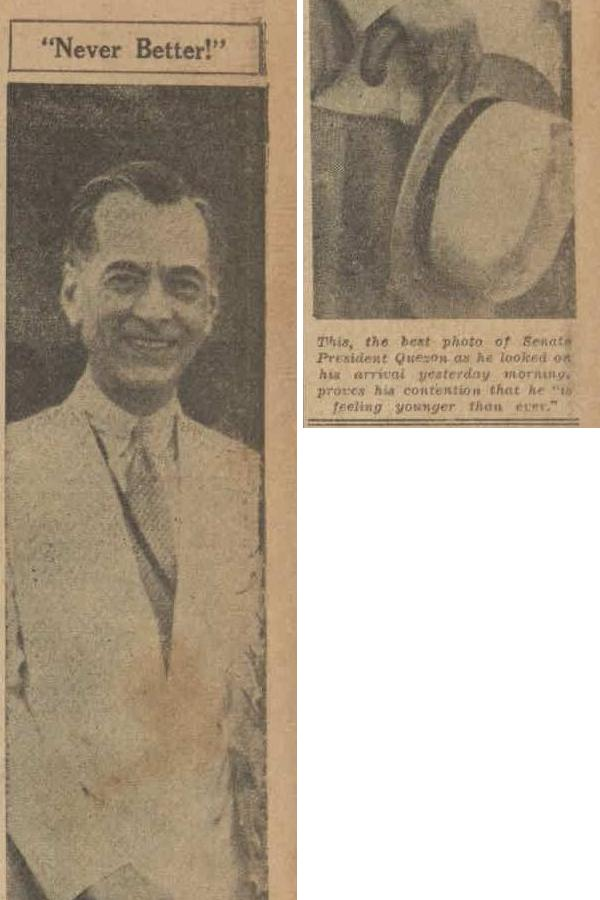
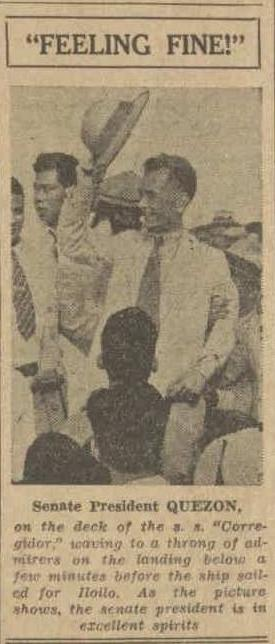
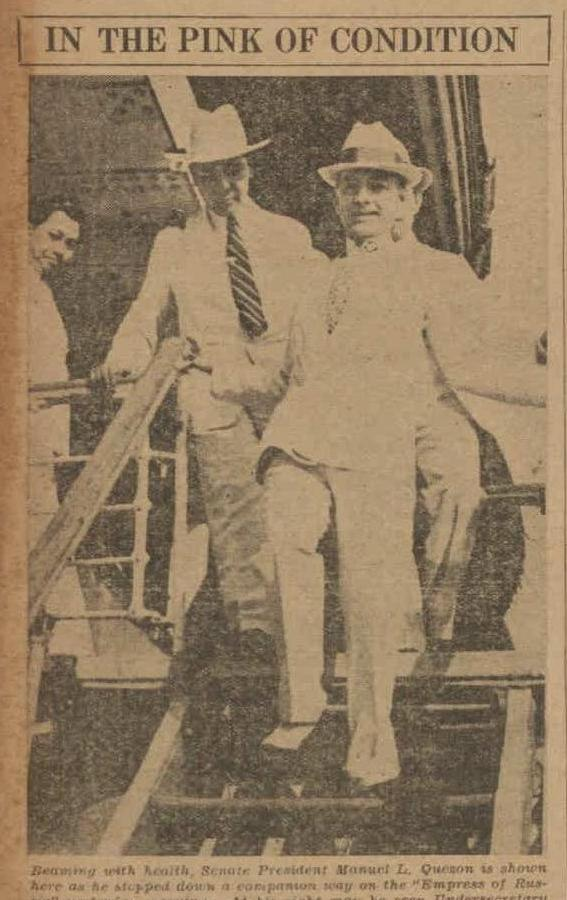
THRONG GREETS SENATE LEADER Quezon in Fine Shape As He Responds to Mammoth Welcome Demonstration
May 2, 1934
The Tribune: Aguinaldo Echoes Approval of Law Better Than HHC Act, Says Revolutionary Leader — Hopes For Shorter Transition
May 3, 1934
Quezon Submits Candidate Papers; No Campaign Fund
May 8, 1934
May 10, 1934
The Tribune: QUEZON RAPS OSROX PARTY Senate Head Heavily Guarded By Soldiers as He Makes Speech in La Union
May 26.—The Governor-General signs the constitutional convention bill and announces the date of the election of delegates as July 10, the convention to meet on July 30.
May 30, 1934
May 31, 1934
The Tribune:
CONVENTION CANDIDATES DELAY FILING Guinto Issues Instructions On Election of Delegates To Assembly
June 1, 1934
The Tribune: Quezon III, Returning Home Today Physicians Recommend Complete Rest — Is Due Back On S. S. Negros
POLITICIANS ARE NOT CONVENTION ASPIRANTS
ANTI RALLY MEETINGS SET FOR SUNDAY, MONDAY
June 2, 1934
The Tribune
G.G. CALLS FOR FAIR ELECTION Murphy Enjoins All Public Officers to Administer Law For All the People
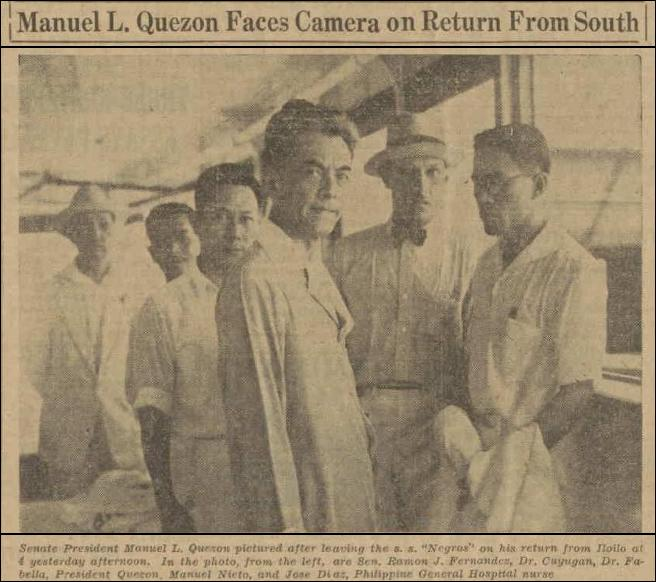
QUEZON SURE OF VICTORY Senate Head Returns From Southern Trip, Tells Newsmen Triumph Is Certain
ASK ALEJANDRINO TO BE CANDIDATE Certificate for Convention Of General Will Be Filed Next Week
June 5, 1934: The Pro v. Anti Showdown
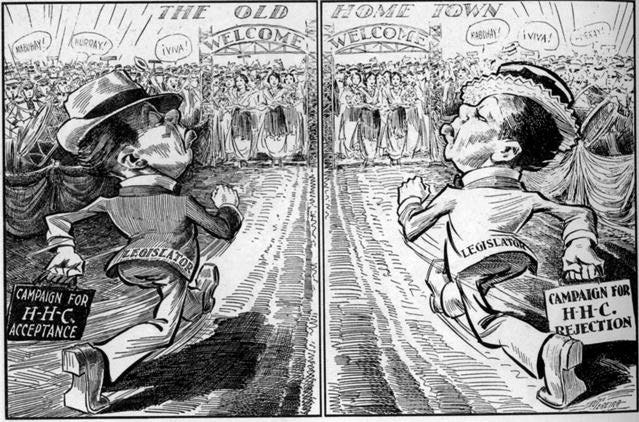
June 5.—The bitterly contested but orderly general elections held throughout the Philippines today result in an overwhelming victory for the Quezon forces.
From the Philippine Electoral Almanac:
1934 was a significant election year: it saw the second split between Manuel L. Quezon and Sergio Osmeña. The main cause of the split was the Hare-Hawes-Cutting (HHC) Bill, an independence bill obtained by the Osmeña-Roxas (OsRox) Mission in 1932. Quezon’s supporters compiled a list of objections to the bill’s provisions, particularly those regarding the American High Commissioner’s powers, trade relations, immigration exclusion, and military and naval bases.
Thus, the Philippine Legislature was divided into two: those who favored HHC (or the Pros) under Osmeña’s leadership, and those who opposed it (or the Antis) under Quezon’s leadership. Members of the defunct Partido Democrata were also divided on the issue.
While Quezon was in Washington heading the last independence mission, the Pros seceded from the Partido Nacionalista Consolidado and formed a new opposition party called the Partido Nacionalista Democrata Pro-Independencia in December 1933.
Quezon’s mission came back with the Tydings-McDuffie Law on April 30, 1934. It provided for a ten-year Commonwealth period, during which the U.S. would have jurisdiction over defense and foreign affairs, review the decisions of the Philippine Supreme Court, and have the right to intervene in the case of emergencies. The Pros were quick to argue that the Tydings-McDuffie Law was HHC with a different name, while the Antis declared that it was a different, better law.
The elections, which took place on June 5, 1934, were a showdown between the Pros and the Antis. The elections were significant because they showed once and for all how the Filipinos felt about Quezon and Osmeña.
The Antis won 75% of the contested seats in the House, while the Pros won 21%. Three seats went to members of Partido Sakdalista (from the Tagalog word sakdal, which means “to strike” or “to accuse”), an extremist group headed by Benigno Ramos; the three Sakdalistas would later join the Antis. In the Senate, the Antis had 8 senators while the Pros only had 3.
June 6.—Washington is reported as having watched the Philippine elections with interest and it is said that the Quezon victory will strengthen his hand when he returns to Washington. Doubts which Resident Commissioner Camilo Osias had created by his statements have now been removed.
June 7.—Senate President Manuel Quezon declares: “The fight is over. The country has given our party an overwhelming victory and I feel both happy and grateful. It is particularly gratifying to me that with the exception of Senator Osmeña and Representative Roxas every member of the Osmeña-Roxas Mission who was a candidate in the last elections and every member of the Legislature who has been very bitter in his personal attacks against me, such as Commissioner Osias, Representative Sabido, Representative Tirona, Representative Vementa, Representative Ramirez, Representative Gomez, Representative Bonifacio, and Representative Remigio have all and every one suffered a most humiliating defeat. . . . In this hour of triumph my happiness and gratitude go parallel with my realization of the tremendous responsibility which I have assumed. This is no time for jubilation but rather for rededication to the public service and I solemnly renew my pledge that I shall devote my life to the service of my people unswervingly and wholeheartedly.”
June 29, 1934
The Tribune: QUEZON MAY CANCEL TRIP Cañacao Naval Doctors Declare Ailment Can Be Treated Here
June 30, 1934
JUNE-JULY 1934
July 3, 1934
The Tribune: QUEZON DEPARTURE PLANS ARE DOUBTFUL President Believed Ready To Leave With New Mission After Legislature Opens
Generoso and Araneta Run on Slogan “Government of Filipinos for Filipinos”
July 4, 1934
The Tribune: ANTI CANDIDATES ARE PROCLAIMED Paredes Tells Audience Delegates Should be Elected Without Regard to Party
GUINGONA ISSUES ELECTION ORDERS Special Provinces Given Instruction on Election Of Delegates
July 5, 1934
The Tribune: YOUNG LEADERS USE AIRPLANES Vinzons Heads Young Philippines’ Air Trip to Camarines Norte
Act II: The Constitutional Convention and the Sakdalista Uprising
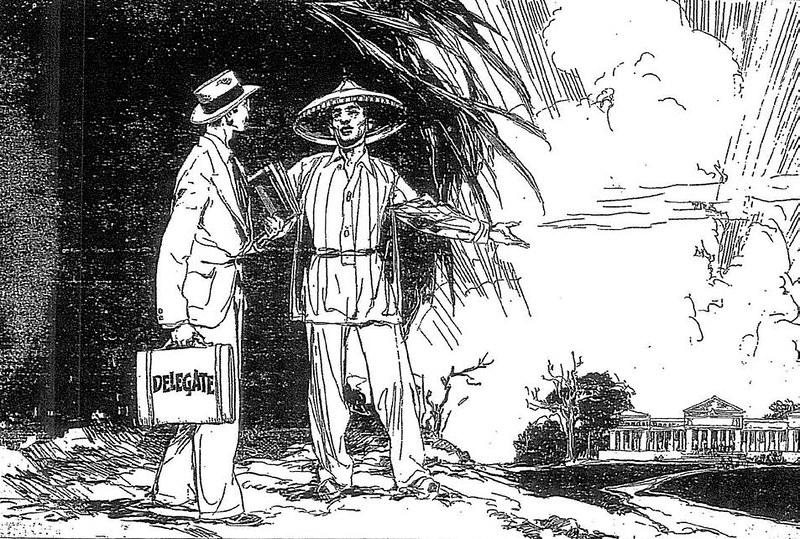
From the Philippine Electoral Almanac: Under the Tydings-McDuffie Law, the Filipinos were to adopt a constitution subject to certification by the U.S. President. As such, the Ninth Philippine Legislature passed Act No. 4125, which provided for the election and holding of a constitutional convention. The election of the constitutional convention of 202 delegates took place on July 10, 1934. Each representative district from the 1934 House and Senate elections elected two delegates, with the following exceptions: the special provinces of Mindanao (Agusan, Bukidnon, Cotabato, Davao, Lanao, and Zamboanga), which elected two delegates each; Sulu, which elected two delegates; the subprovinces of Mountain Province (Apayao, Benguet, Bontoc, Ifugao, and Kalinga), which elected two delegates each; Baguio City, which elected two delegates; and Nueva Vizcaya, which elected two delegates. This was a significant development in Philippine electoral history: in previous elections, the representatives for Mindanao, Sulu, Mountain Province, Baguio, and Nueva Vizcaya were all appointed.
However, voters were not very enthusiastic about the election; only about 40 percent of all registered voters went to the polls. In Manila, for instance, only 28,000 people out of 71,000 qualified voters voted. There were two main reasons for the lack of voter participation. First, the constitutional convention election took place a mere month after the general elections. Second, some major political figures, like Manuel L. Quezon and Sergio Osmeña, were not running; partisan politics were not emphasized as much.
Ultimately, the election was still a victory for the Antis, who had 120 delegates, against less than 60 Pros. The remainder of the delegates were independents. The three highest officials in the constitutional convention were all members of the defunct Partido Democrata. Claro M. Recto (Anti) was elected President; Ruperto Montinola (Pro), First Vice President; and Teodoro Sandiko (Anti), Second Vice President.
July 10.—Although only about a third of the qualified electors take part in the elections for the Constitutional Convention, today, they were among the more intelligent voters who needed no persuation to cast their votes, with the result that many able men are elected to the Convention on a non-partisan basis. Among those better known are Resident Commissioners Guevara and Osias, Rep. Manuel Roxas, Sen. Elpidio Quirino, Sen. Ruperto Montinola, Secretary of Agriculture and Commerce and acting Secretary of Finance Vicente Singson Encarnacion, Miguel Cuaderno, Vice-President of the Philippine National Bank, Vicente Lopez, well known businessman and agriculturist. Sen. Claro M. Recto, Sen. Jose Clarin, Rafael Palma, Salvador Araneta, Manuel Lim, Eusebio Orense, Dr. Jose Laurel, Gregorio Perfecto, Paulino Gullas, Gov. Mariano Cuenco, and Vicente Francisco, all well known lawyers. Judge Roman Cruz, Tomas Confesor, Father Servando Castro, the Rev. Enrique Sobrepeña, and many other.
July 12, 1934
CALOOCAN SECRETARY WILL BE PROSECUTED Guinto Says Fiscal Will Act In Case of Missing 200 Ballots
July 13, 1934
The Tribune
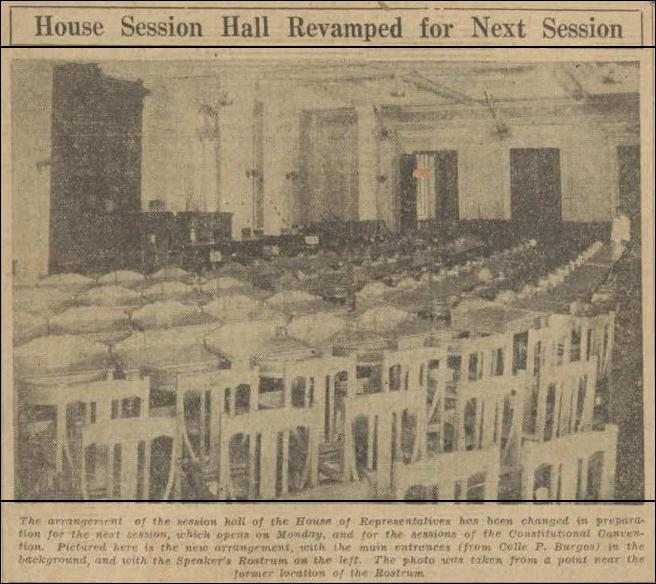
July 13.—Quezon issues a press statement declaring that the “antis” should organize the Constitutional Convention because they predominate in it and because the party in power is responsible for the carrying out of the terms of the Tydings-McDuffie Act.
July 14, 1934
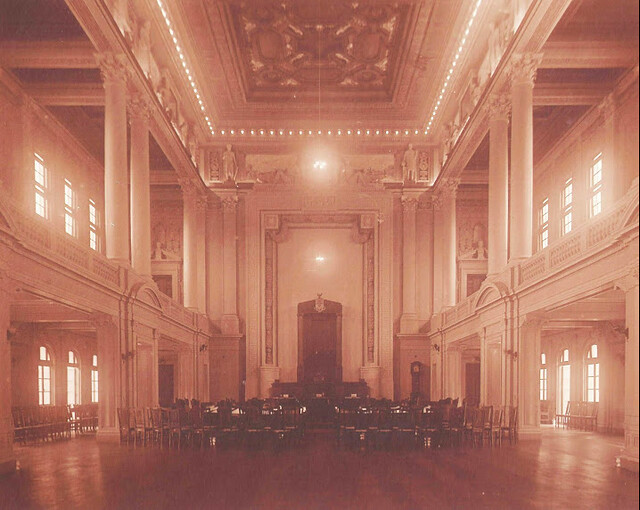
July 16.—The Tenth Philippine Legislature convenes and Manuel L. Quezon is elected President of the Senate by 14 votes, 4 going to Senator Osmeña, minority leader. Speaker Quintin Paredes is elected Speaker of the House, polling 63 votes as against Rep. Manuel Roxas who received 19 votes and Nicolas Rafols 1 vote.
In his opening address, Quezon declares that “a new government is about to be established, a government destined to be the last rung of the ladder to our final emancipation. When the doors of this Chamber are finally closed, we will have brought to a happy conclusion and experiment unique and un paralleled in the annals of colonial administration,—the joint undertaking of a conquering and a subject nation to prepare the latter for a life of independent nationhood. We shall then have concluded laying the foundations of a government for our people, truly deriving its powers from the consent of the governed. . . . From a population of barely 7,000,000 we now count a full 14,000,000 people, enjoying a standard of living not even equalled by the mightiest of our Oriental neighbors. We have grown into political manhood in the very short span of hardly a generation. We have imbued ourselves with the ideals of the West, so that today we stand a lone nation, Oriental in setting, but Occidental in religion, in culture, in tastes, and even in prejudices. We have so progressed in our 35 years of relationship with America that in the field of government we can stand side by side with any other nation, and not suffer by the comparison. While we are not enjoying at present the material prosperity that we would wish for our people, yet we can be thankful that of all nations our is perhaps the least affected by the economic depression that has engulfed the entire financial world. The great progress that we have attained has been due to the policy of free trade between the United States and the Philippines, implanted by the American government. Now this policy has been changed in so far as our unlimited access to the United States market is concerned, and is threatened with its complete termination, even before the independent Philippine Government is established, that is, soon after the export tax, imposed by that provision of the Tydings-McDuffie Law inherited from the Hare-Hawes-Cutting Law, is put into effect. We have been caught unprepared for this change of policy and this is the most serious of our problems. We must meet the situation with foresight and vision, with only the best interests of our country, now and for the future, as our objective. . . . During the period from 1921 to 1933, both inclusive, our foreign trade reached the enormous total figure of P6,087, 000,000. Of this total volume of trade, however, P4, 163,000,000 constituted our trade with the United States alone; our trade with all the other nations only reached P 1,924,000,000. While we actually sold to the United States P731, 000,000—worth of goods more than what we purchased from them, we were paying other nations P262,000,000—more than what we received from them. Had it not been for the favorable balance of our trade with the United States, which was the direct result of the present free trade arrangements with that country, our foreign trade would have registered the enormous loss to us in the amount already stated. As it is, however, our gain in the United States trade not only covered our loss in the trade with other nations, but it has also enabled us to enjoy a total favorable balance in our overseas trade amounting to P469,000,000.
July 17, 1934:
The Tribune: QUEZON GETS FREE HAND ON CABINET Senate Majority Votes Confidence–House Leaders Pledge Support
July 18, 1934
July 19, 1934
The Tribune: SOME DELEGATES MAY BE BARRED Question Raised as to Right Of Tax Delinquents to Sit In Convention
July 20, 1934
The Tribune: Quezon-Roxas Entente Cordiale Feature Senate President’s Party
July 21, 1934
The Tribune: ASSEMBLY HEAD IS MAIN ISSUE Delegates to Convention Begin Considering Candidates For Presidency
July 24, 1934
The Tribune: RADICAL CHANGES IN ELECTION LAW Diokno Bill Would Make Voter’s Entertainment on Election Day Bribery
July 25, 1934
The Tribune: Will Cooperate with Majority On Convention Presidency, Says Gen. Alejandrino, Pro Delegate
July 26, 1934
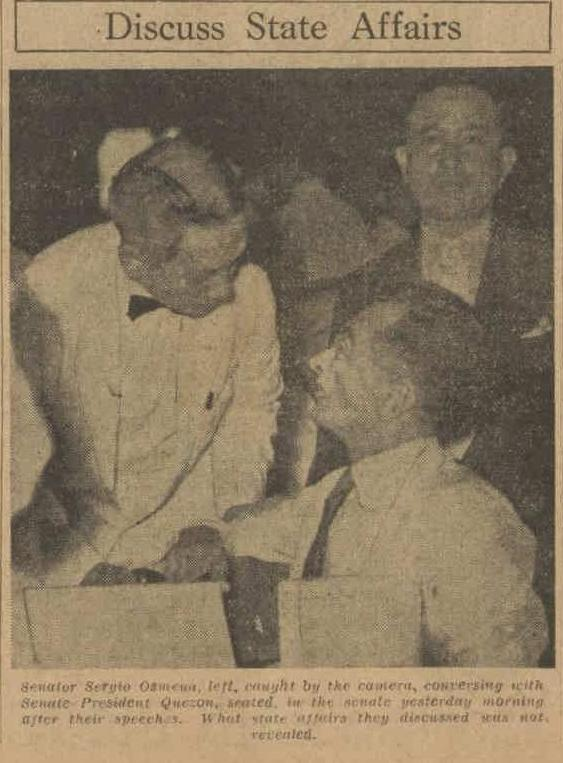
July 27, 1934
August 1, 1934
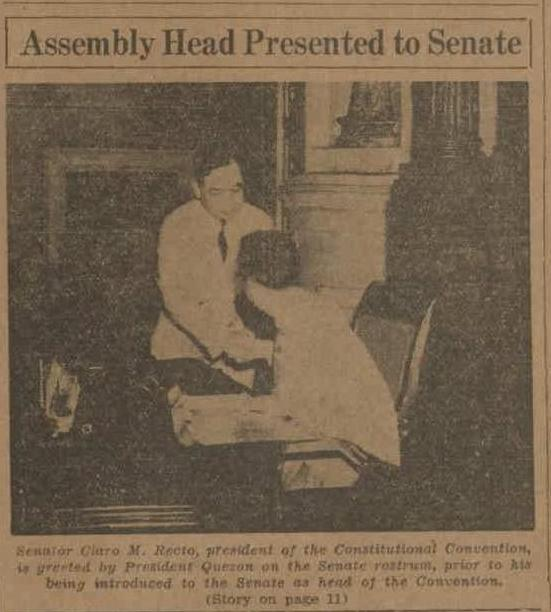
NEW PARTY TO BE FORMED SOON Majority Solons Hold Caucus Today–To Set Convention Before Quezon SailsMindanao-Sulu
Delegates Organize To Work for Region in Convention
August 2, 1934
The Tribune: QUEZON EXPLAINS PURPOSE OF PARTY New Organization to Be Formed In Interest of People, Says Senate President
August 7, 1934
August 8, 1934
August 14, 1934
August 16, 1934
August 29, 1934
September 18, 1934
The Tribune: EXPECTS REPORTS IN SATURDAY- President Recto Hopes to Hear From Three Convention Committees Today
September 26, 1934
The Tribune: Delegates Move Against Party Spirit in Assembly 40 Sign Resolution Urging Members of Convention to Check Partisanship
September 27, 1934
September 29, 1934
The Tribune: CONVENTION PRESIDENT ILL Recto Has Slight Attack Of Grippe–Quezon For Spanish Language
October 21, 1934
The Tribune: Majority Swings to Unicameralism Delegates Take Up Question In Caucus; Convention Votes Monday
October 25, 1934
BACK NOV. 29, QUEZON RADIOES TO PAREDES No Other Details of President’s Return to Islands Revealed
October 26, 1934
FAMOUS SURGEON EXAMINES QUEZON Dr. Hugh H. Young Sees Senate President at Johns Hopkins Hospital
October 27, 1934
The Tribune: Pres. Quezon Operated On Successfully
PLEBISCITE BILL FILED
November 8, 1934
The Tribune: UNICAMERAL GROUP TO FIGHT Election of Senators by Provinces Only Ground to Be Accepted
November 10, 1934
The Tribune:
AGUINALDO CASE TO BE TAKEN UP SOON Department of Agriculture Has Plan to Follow on General’s LandsCONSTITUTION DRAFT FACES MANY CHANGES Debate Opens Today–Final Draft Should Be Ready By Dec. 5, Says Briones
November 13, 1934
November 14, 1934
November 20, 1934
November 22, 1934
November 23, 1934
November 27, 1934
The Tribune: AGUINALDO LAND CASE UP TODAY Other Debtors Watching Decision by Department–Officials Among Those in Debt
November 30, 1934
The Tribune: HASTE NOTED IN CONVENTION But There Will Be No Railroading of Constitution, Says Recto
December 7, 1934
The Tribune: CONVENTION ELIMINATES SUPER-BODY Plan to Create Permanent Commission in Assembly Is Defeated
December 9, 1934
December 14, 1934
The Tribune: ACCOUNTS BODY PLAN IS KILLED Convention Votes ’84 to 46 Against Proposal After Briones-Recto Debate
December 20, 1934
CONVENTION HALT FOUGHT Younger Delegates Start Move To Keep Body In Session
Huge Gathering for Quezon Welcome; President May Arrive on “Empress” Ship
December 21, 1934
BOY SCOUTS Called To Welcome Quezon
December 22, 1934
ASSEMBLY TO MEET JAN. 7 Longer Recess Voted — Recto Gets Overwhelming Vote Of Confidence
December 23, 1934
December 24.—Press reports that a formal coalition of the major political parties to insure the success of the commonwealth government is being considered.
December 26, 1934
LEADERS’ AIM IS TO SETTLE PARTY STRIFE Purpose Is to Abolish Differences Before New Regime Starts
December 27, 1934
December 29, 1934
The Tribune: PROS WILL NOT OPPOSE QUEZON
1935
January 2, 1935
The Tribune: DRIVE FOR NEW PARTY STARTS Bulacan Scene of Campaign–Noted Veterans of Revolution Head Group
BICAMERALIST MOVE WEAKER Delegates Now in City Sey Reconsideration Is Doomed
January 3, 1935
UNICAMERAL PLAN DEFINITE–RECTO Convention Chief Says Reconsideration Is Improbable
January 3.—Aguinaldo states that though he wants real union among all Filipinos a coalition of political parties would be artificial and not to the best interest of the country. He reiterates his stand for a shorter transition period. As to his candidacy for the presidency of the commonwealth, he declares he has not been consulted by those who have advanced his claims.
January 4, 1935
LAND PROBLEM FACES LEADERS Officials See Grave Question In Holding Of Foreigners
RECTO FOR EARLY SPECIAL SESSION Says It Must Be Held to Pass Complementary Laws
January 5.—In a speech at Baguio, Quezon stresses the need of the cooperation of every man and woman in the Philippines to help the country meet the difficulties facing it.
January 6.—The Tribune publishes an editorial favoring a coalition in general terms. The Herald carries a sharp editorial attack on Aguinaldo.
January 9.—At a meeting of the Nationalista-Democrata Party, Quezon stresses the difficulty of the problems faced by the country and urges unity and cooperation.
January 11, 1935
CORDIALITY MARKS QUEZON LUNCHEON Senate Head, Minority Leaden Unite in Praise of Convention Work
Mission to Go, Says Paredes Majority Will Decide on Makeup Before Convention Ends Work
January 13, 1935
The Tribune: The COALITION PLAN Salient Points
January 15, 1935
The Tribune: PEOPLE’S WELCOME GRATIFIES OUEZON Senate Head Returns from Provincial Tour, Confers With G. G. 9 A. M. Today
Speed Essential in Forming Commonwealth, Say Recto, Roxas
APPEALS COURT IS VOTED DOWN Convention Will Wait for Substitute Plan–Committee At Work
January 16, 1935
January 17, 1935
January 18, 1935
January 22, 1935
January 31, 1935
The Tribune: QUEZON URGES NEW CITY HALL Senate President Promises To Aid Projects of Improvement in City
February 1, 1935
QUEZON LEAVES BY MOTOR FOR NORTH
February 2, 1935
The Tribune: Accord for “Pro” Fusion in Sight Democrata, Nacionalista Wings In Agreement–Formal Merger Is Expected Soon
February 3, 1935
The Tribune: Coalition Plan Rapped Needless, Say Leaders Majority Men, However, Say Cooperation Is Country’s Need
February 5.—The Philippine Veterans Association holds its annual convention and votes to stay out of politics. Aguinaldo in a speech praises the United States for its fulfillment of the independence pledge and again advocates a shorter transition period.
February 7, 1935
BIG CIGAR MEN’S UNION PROJECTED Torres Invites All Existing Organizations to Convention On Feb. 25
February 9.—Pro-Democratas and Pro-Nacionalistas hold a meeting formally uniting the two groups. Osmena is elected President, and former Senator Benigno Aquino chairman of the platform committee. In a speech, Osmena states: “I can not see any reason why we should hesitate now to go ahead with the Independence Law.”
February 10, 1935
The Tribune: AGAINST COALITION
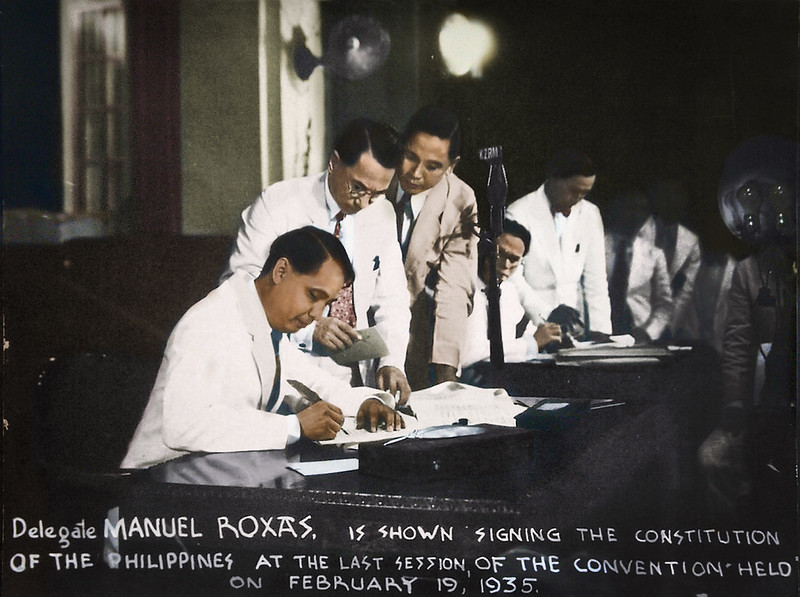
The CONSTITUTION of the PHILIPPINE COMMONWEALTH
February 14, 1935
The Tribune: AGREEMENT IMPERATIVE SAYS PAREDES Country Needs It Now Even If Literal Coalition Seems Impossible
Will Rush Plebiscite Phil Will Be Held Soon After F. D. Okays Constitution, Recto Declares
February 15, 1935
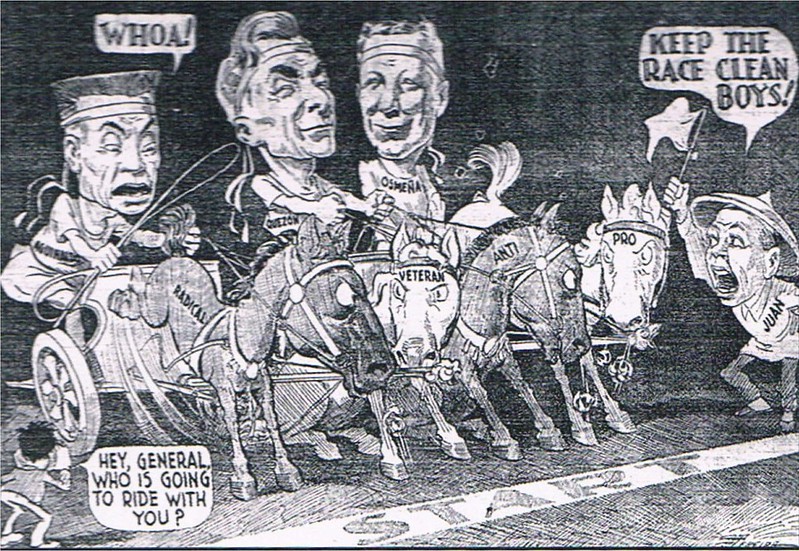
The campaign of 1935
March 16, 1935
PEASANT LEADER PLEDGES SUPPORT Manahan Will Campaign In Provinces Against Radical Propaganda
March 17.— Sen. Sergio Osmeña, returning from the South, tells newspapermen that the two wings of the minority party in Cebu and Iloilo have ratified the proposal to form a coalition of the major political parties and that the plan has met with general approval throughout the Visayas.
March 18.—The Quezon Mission calls on President Franklin D. Roosevelt and Sen. Claro M. Recto submits the constitutional draft. The President states: “I will give the constitution very careful consideration”. Quezon declares in a press interview that the Mission has decided not to seek any modification of the political terms of the Tydings-McDuffie Act, but has not yet decided whether to seek revision of the economic provisions at this time, stating that many observers believe the moment to be inopportune.
March 22, 1935
The Tribune: SET DATE FOR REGISTRATION Voters in Plebiscite May Register on April 22 and 23, Is Suggestion
March 23.—The ringing of bells and the blowing of whistles a few minutes after midnight, and a radio program marks the signing of the constitutional draft by the President in Washington at 11:00 o’clock there the morning of the same day.
March 24, 1935
RECTO TO HIGH COURT Succeeds Street May 1–President Gives Praise To Constitution, Convention Head
March 26, 1935
WOMEN LEADERS TO START DRIVE Will Urge Women to Go To Polls in Constitution Plebiscite
ALTAVAS FOR JOIN-TICKET Capiz Mogul Announces Stand For Quezon-Osmeña– Provinces Celebrate
March 27, 1935
The Tribune: QUEZON WANTS POLITICAL TRUCE FOR P. I. Leader for United Front–Opens Battle Against Cordage Limitation
WANT ELECTION IN SEPTEMBER Legislators Preparing for Special Session to Open April 8
3,000 RADICALS HOLD MEETING Bulacan Town Scene of Big Demonstration as Red Flags Wave
March 28, 1935
The Tribune: Red Flags Defy Police
Governor-General Frank Murphy requests Acting Governor-General J. H. Hayden to call a special session of the Legislature within ten days to provide for a plebiscite on the constitutional draft. He also cables his congratulations to the Philippine people averring the “hope that the signing of the constitution will bring happiness and confidence into their homes.
March 29, 1935
The Tribune: “RED TERROR” DENIED Pampanga Trouble Caused by Hoodlums, Not Socialists, Say Authorities in Province
BULACAN RED LEADER HELD Violent Speech in ‘Congress’ Meeting Lands Speaker In Jail
April 2, 1935
April 3.—General Emilio Aguinaldo cables Sen. M. F. Tydings, Senate President Manuel Quezon, and Chester Gray, farm lobbyist, urging independence for the Philippines within three years. The two former refuse to comment, but Gray declares that he will “heartily support” Aguinaldo. The plea otherwise meets with chill response.
April 5.—While the Aguinaldo appeal meets with little favorable comment in Manila, Rafael Palma, Filemon Perez, Judge Anastacio Teodoro, and Bishop Gregorio Aglipay are reported to be organizing a party to support Aguinaldo for President under the Commonwealth.
April 8.—The Philippine Legislature meets in special session and unanimously passes the plebiscite bill which is signed by the Governor-General on the same day, although three days had originally been scheduled in case debate should arise. The bill sets the date of the plebiscite at May 14 (registration April 22 and 23) and appropriates ?350,000 for printing and distributing of ballots. Only one question will be asked: “Do you vote for ratification of the Constitution of the Philippines with the Ordinance appended thereto?” Election inspectors will be paid a ?2.00 per diem. The constitutional draft will be translated and printed in a number of the dialects. The Legislature also adopts a joint resolution congratulating the Constitutional Convention on its work.
April 22.—The women are reported to be showing very little interest in the first of the two-day registration for the Plebiscite on the constitutional draft on May 14.
April 23.—The women surprise observers by a rally on the second day of registration. It is estimated that a total of some 200,000 women registered.
Juan Ruiz, Director of Posts, withdraws the second-class mail privilege from Sakdal, stating that it publishes “libellous matter inciting to rebellious conspiracies, stirring up the people against lawful authorities, and tending to disturb the peace of the community.”
May 2.— Three Constabulary men killed and five wounded in a Sakdal uprising at Santa Rosa, Laguna. Three of the Sakdals in the mob which had taken possession of the municipal building are killed and sixteen wounded, and many are arrested.
May 2.—Murphy and Quezon minimize the first reports of the Sakdal trouble in the Philippines, but Washington official circles show concern. Quezon states that the Sakdal organization is a “racket” and that in the Philippines, as in other countries suffering from depression, men can be easily induced to resort to drastic measures. Senators K. McKellar and E. W. Gibson state that their impressions are strengthened that the Philippines is not ready to sever the bonds with the United States. Gibson remarks, “It was perfectly apparent when we were in the Islands that certain foreign interests were bound to stir up trouble. The Philippines needs a strong government like the United States in view of the disturbed conditions and conflicting interests there”. McKellar states that practically all people the Mission consulted in the Philippines were fearful—fearful of economic collapse and of outside aggression. He says that the “Japanese are already all over the Islands.”
May 3.—Fifty-two Sakdals are killed and thirty-nine wounded by Constabulary forces rushed to Cabuyao, Laguna, and one is killed and thirteen wounded at San Ildefonso, Bulacan, in a series of uprisings in the provinces of Laguna, Rizal, Bulacan, and Cavite. Telephone and telegraph communications with Manila were cut both north and south, and an attack on Manila was rumored. One Constabulary man was killed at San Ildefonso and two wounded, and four were wounded at Cabuyao.
A complaint for sedition is filed by Col. Miguel Nicdao against the two Sakdal Representatives, Aurelio Almazan and Mariano Untivero.
Those in charge of the popular banquet to be given tomorrow in honor of General Emilio Aguinaldo postpone the affair “in view of the sad happenings which have taken place in the provinces near Manila”.
May 3.—McKellar submits his report to the Senate. The report is as pessimistic in its description of the Philippine outlook as Gibson’s. He suggests a change in the Tydings-McDuffie Act so as to permit the election of a Filipino chief executive, but otherwise leaving the provisions of the Jones Law in force. He declares that the constitution of the commonwealth frankly sets up a dictatorship and that the Filipinos are not ready for a democratic or republican form of government. “In seeking independence now they are making a monumental mistake”.
Disturbed by the Sakdal reports, McKellar states, “I feel we went too far in enacting the Tydings-McDuffie Law”.
May 4, 1935
The Tribune: NO “LEADERS” HERE!
Hayden Flying Down today 50 Stain in Cabuydo Fight Sakdal Leaders flee Dead, Wounded in Church Patio
WOMAN LED CABUYAO RIOT Desiderio Submits Report Of Binan, Sta. Rosa, Cabuyao Fighting
57 KILLED IS TOLL AS RIOTS SUBSIDE List of Wounded Reaches 70; Over 200 Sakdalistas Face Charges; City Tense Though Officials Say Peril Is Over People Have Nothing More to Fear, GG Declares–Paredes Sure Danger Is Past TROUBLE CENTERS QUIET Heart-Rending Scenes Greet Officials As Victims’ Families Identify Bodies
WASHINGTON IS STIRRED BY UPRISING Murphy Minimizes Outbreak–“Racketeering,” Quezon Calls It NO WORD FROM MANILA Official Information Is Being Awaited by War Department
CITY PREPARED, SAYS POSADAS Full Arrangements Made For Protection of Manila In War Council
Ramos Directed Rising Outbreak in Laguna Traced to Sta. Rosa Cabaret Killing–Agitation Rife for Weeks Past
Flashes From the Riot Area
May 4.—Quezon states that the Sakdal uprising is not political but is an economic protest due to the distress of the people of the Philippines especially in certain provinces near Manila. “Of this situation, political racketeer Ramos has taken advantage”. “The condition of economic distress is the outcome of certain measures enacted by Congress radically curtailing the flow of trade from the Islands to the United States”.
May 5, 1935
CITY “WAR FUND” OKAYED BY BOARD P13,000 Set Aside for Police Cars, Ammunition, Other Expenses
McKELLAR’S REPORT OUT Advises Filipinos Against Freedom as Sakdal Tales Fill Press
Quezon Blames Congress Says Restrictions on P. I. Exports Are at Bottom of Present Outbreak
May 5.—The Acting Governor-General, returned from Mayaoyao today issues a statement: “It is a tragedy that lives should have been lost and men injured in this misguided and futile assault upon the authority of the government. . . . There is no likelihood of any further disorder. . . . The moral sense of the community has been outraged by those who were responsible for inciting this attack with its toll of dead and injured, many of whom were undoubtedly ignorant and misguided dupes of unscrupulous and selfish leaders. . . . So far as possible the men who incited and led this assault shall be discovered and punished. He orders an investigation of the incident by a committee composed of Col. F. W. Manley, Maj. G. C. Dunham, Col. L. Van Schaick, and Capt. E. G. Chapman, their report to be made to him and transmitted to Governcr-General Frank Murphy and the War Department. He declines to comment on the bearing of the disorders on the two chief political parties, the coalition, and the coming plebiscite , but calls attention to the fact that in connection with the protest of local committee of the Sakdal party in Laguna against the illegal refusal of permission to hold meetings, the Governor-General’s office had written to the Secretary of the Interior that the right of free speech should be protected and that the Secretary of the Interior has directed the Governor of Laguna that “requests of any association or society which does not advocate, urge, and preach doctrines and principles of rebellious or seditious character, for permits to hold public meetings, should-be granted if this right is exercised within the bounds of law”. The Acting Governor-General tells Governor-General Murphy by radio-phone that the uprising was political and not fundamentally a result of economic difficulties. Secretary of Labor Ramon Torres states that the uprising is due to a state of unrest among the people resulting from the economic depression and discontent sown in the minds of the people by unprincipled agitators. Some are tenants who have grievances against the landlords.
Representatives Almazan and Untivero are arrested and charged with rebellion in connection with the uprisings at Santa Rosa and Cabuyao. They claim they are not members of the Sakdal directorate and do not know what is going on within the party. They blame the Governor of Laguna for prohibiting the Sakdals from holding public meetings. Governor Pedro Espiritu of Cavite dies of apoplexy.
May 7, 1935
MAY RETURN, SAYS RAMOS Awaiting Word from Philippines–Says He Tried To Stop Uprising
FLASHES FROM THE PROVINCES NUEVA ECIJA Two Gatherings Are Dispersed
May 8, 1835
May 8.—The Acting Governor-General, after a Cabinet meeting, declares that the Sakdal party will by protected in its legal rights with reference to freedom of speech and assembly and that municipal officials who belong to the party will not be put out of office or persecuted as long as they are loyal to their oath of office.
May 9, 1935
TO GO AFTER MAIN MOVERS IN UPRISING Yulo Plans Swift Action–Acting Editor of Sakdal Organ Sought
AGUINALDO TO VISIT FORTIFIED ISLANDS General with Family Will Be Guests of U. S. Army Today
May 10, 1935
BIG LAUNCH FLEET TO GREET MISSION “President Hoover” with Recto, Roxas, Due 8 A. M. Tomorrow
May 11, 1935: Aguinaldo in an address at the Manila Opera House states that he is not a candidate for the presidency under the commonwealth as he is not a politician, “does not possess the art of creating issues”, is without the support of a widespread political organization, and without financial resources. He again advocates a shorter transition period.
May 12, 1935
READY TO FOIL SAKDAL PLOT Scheme to Frustrate Plebiscite Reported Set for Night Of May 14
See the clippings in full:
Act III: The Presidential Campaign of 1935
May 14.—The plebiscite on the constitutional draft is held and results in a heavy vote, estimated as 95 per cent favorable to the document.
Murphy states that the result of the plebiscite in the Philippines shows that the recent Sakdal disturbances were purely local. “It is evident that the people are unanimous as any people can be behind the constitution. It is also apparent that the Filipino people favor all that adoption implies”. Quezon states: “None henceforth will be able to say that we have misrepresented the will of our people when we accepted the Independence Act”.
June 5, 1935
RADICALS TO LAY OFF PRESIDENCY Will Not Enter Candidates–Sakdals May Avoid Polls
Philippines Free Press: Aguinaldo opens campaign, June 8, 1935:
Pledging “the early restoration of our glorious Republic” and the fulfillment of his 44-plank platform before a relic of the revolution, a banner tattered “not by age but by the bullets of enemies,” General Emilio Aguinaldo proclaimed his candidacy for the commonwealth presidency Sunday. The aged warrior’s acceptance speech was made before a small crowd liberally estimated at 5,000, in Cavite, Cavite, at the Paseo del Reparo.
Besides Catilinarian attacks on the present leadership, Don Emilio presented a 43-plank platform, later to be reinforced by a 44th, advocating among other things a shorter transition period before independence, reforms in the government structure and improved relations between labor and capital with a view to reducing expenditures and taxation.
June 6, 1935
The Tribune: Bishop’s Entry Will Not Affect Quezon, Is Belief Move to Aid Aguinaldo Seen–People Want Change, Says Aglipay
AGUINALDO NOT WORRIED No Concern Over Aglipay’s Candidacy–More Criticisms Answered
San Miguel Will Back Aguinaldo Tax-Payers Resent Disapproval of Petition for Remission Of Tax
Guests for Inaugural Garners, Dern, Ranking Solons Among 36 Coming For Commonwealth Ceremonies
PLEBISCITE RETURNS STILL INCOMPLETE Interior Department Lacks 16–Nine Provinces Behind
BOOST AGUINALDO General and Sumulong Named Sakdals’ Candidates
June 7, 1935
Pros Will Follow Antis, Convening on Same Day Minority Also Meets June 16, To Vote on Coalition
TIRONA WANTS LONGER TIME TO CAMPAIGN Aguinaldo Camp Hails Majority’s Legislative Program
CROWDS THRONG TO SAKDAL TRIAL Bulacan Court Jammed as 92 Face Judge for San Ildefonso Revolt
LABOR CONGRESS AGOG ON ELECTION Fear Split Among Labor Leaders on Choice Of President
June 9, 1935
The Tribune: Quezon Is Host To Majority Men At Manila Hotel
50,000 WELCOME MURPHY, QUEZON Throngs Line Streets for Hours To Catch Glimpse Of Leaders
June 13, 1935
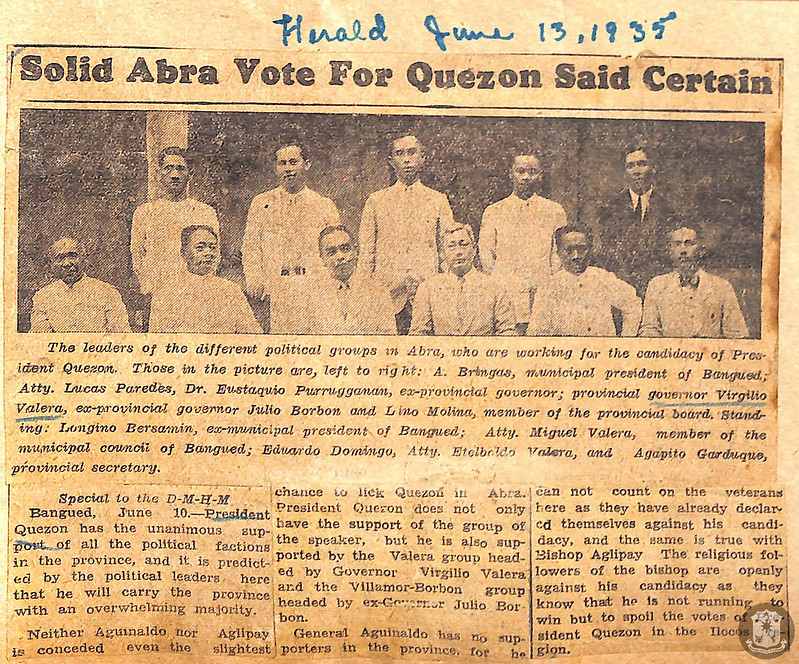
The Tribune: SAKDAL TRIALS ARE REOPENED Representatives Implicated In Laguna–95 Tried In Bulacan
AGUINALDO CAMP FILES PROTEST Score Probe of Cebu Sakdals Who Nominated Veteran
June 14, 1935
QUEZON FAVORS AGUINALDO PLEA Would Give General Inspectors–Coalition Will Decide
BIG PARTIES PREPARE FOR CONVENTIONS Coalition Believed Assured–Delegates Expected Here Tomorrow
June 15, 1935
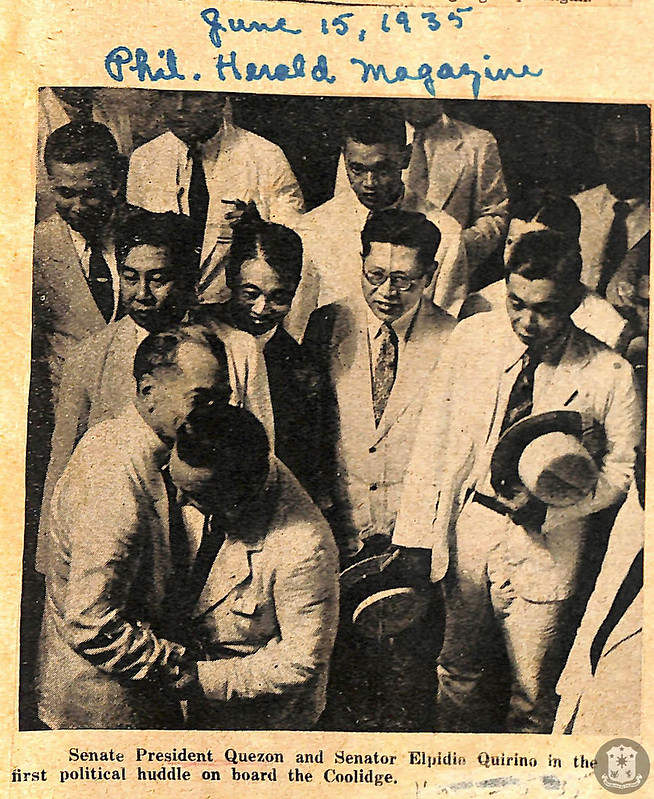
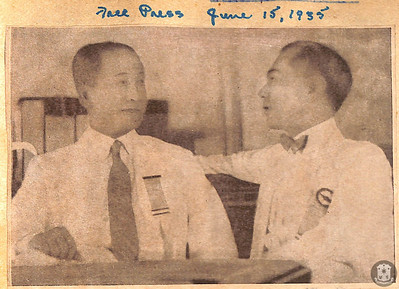
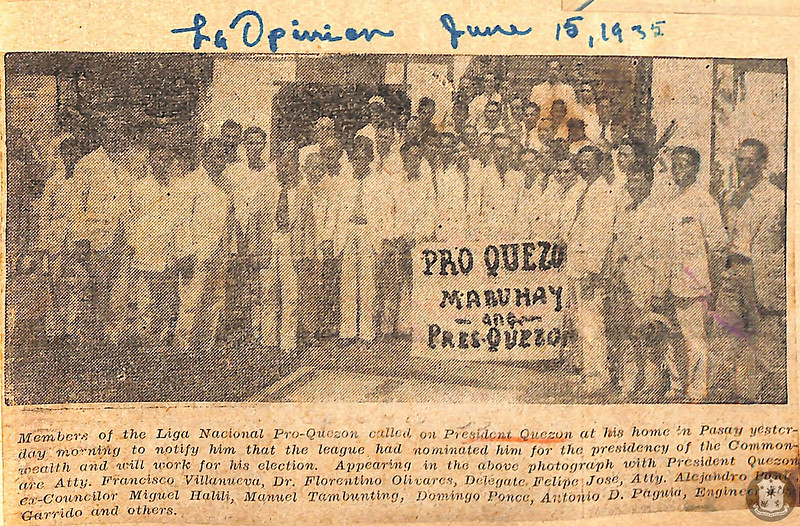
The Tribune: PARTIES GATHER TODAY ROXAS LINES UP ON SIDE OF COALITION Conventions This Morning Expected to Ratify Agreement
June 16, 1935:Pros and Antis hold separate conventions
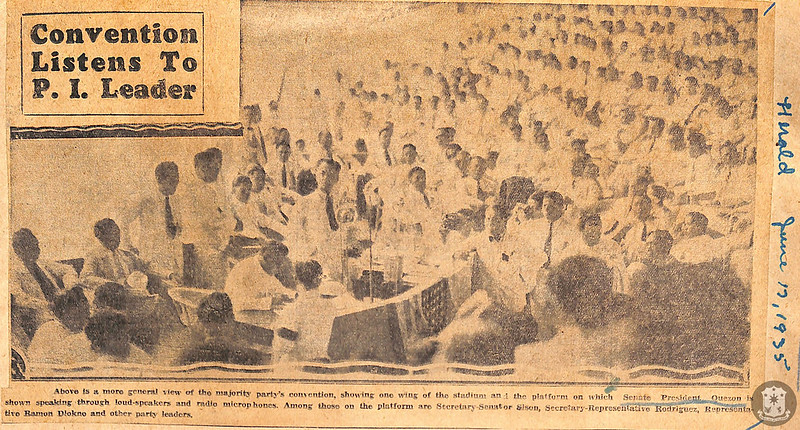
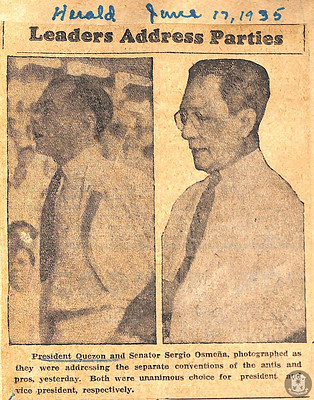
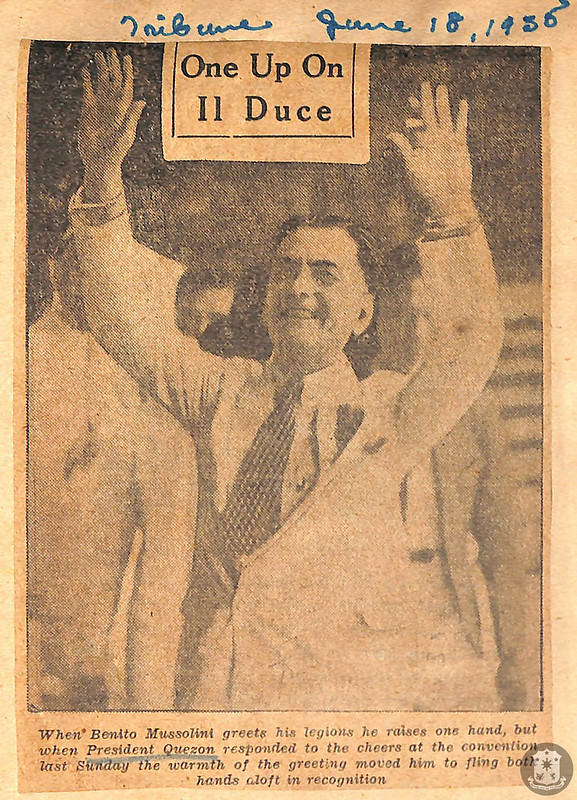
The Tribune: PARTIES GATHER TODAY ROXAS LINES UP ON SIDE OF COALITION Conventions This Morning Expected to Ratify Agreement
June 20, 1935
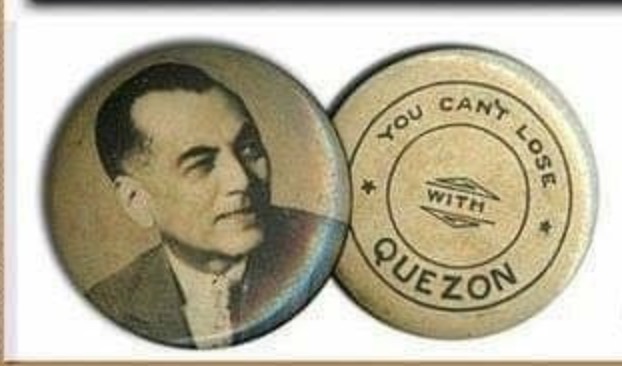
June 21, 1935
SMALL PARTY LEAGUE TO OPPOSE COALITION Group Organizes to Work For Aguinaldo Candidacy
QUEZON IS SAILING FOR BOHOL AT 7 A. M. Osmena, Briones Going With President
Sison, Vargas Order Election Bill Text Held Up
June 22, 1935
Quezon Silent On Candidacies On Present Trip
June 24, 1935
June 24.– The National Federation of Women’s Clubs protests to the Governor-General against the provision in the election bill cancelling the right of the women to take part in the coming Commonwealth elections. They state that they are ready to take the question to the courts if necessary.
June 25, 1935: Sakdal, Radical, Laborista, Communist, Philippine Fascist, Civil Union parties combine to to form National Socialist Party
The Tribune: GROUP TO FIGHT COALITION FORMS Anti-Coalitionists Organize League, Meet This Afternoon
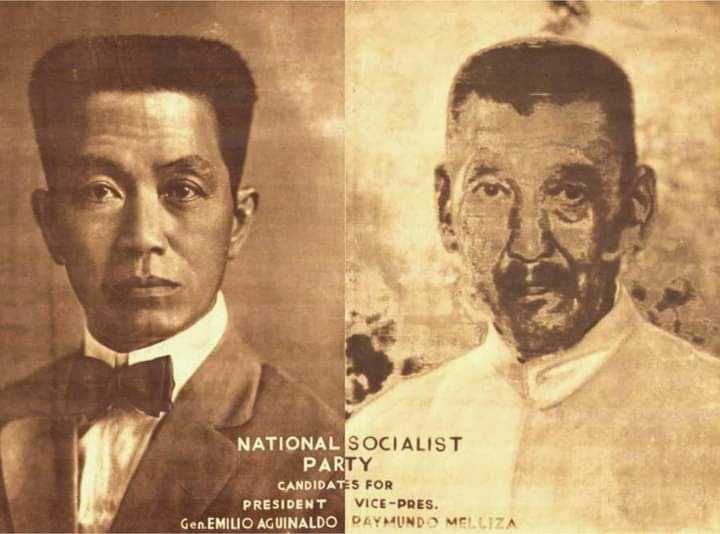
June 25.– At a meeting presided over by General Emilio Aguinaldo, the National Socialist Party is formally organized, the Sakdal Party, headed by Jose Timog, and other minority groups including the Radical Party, headed by Rep. Alfonso Mendoza, the Laborista Party, headed by Pablo Manlapit, the Pampanga Communists, headed by Abad Santos, the Philippine Fascists, headed by Miguel Cornejo, and the Civil Union, headed by Vicente Sotto, all taking part.
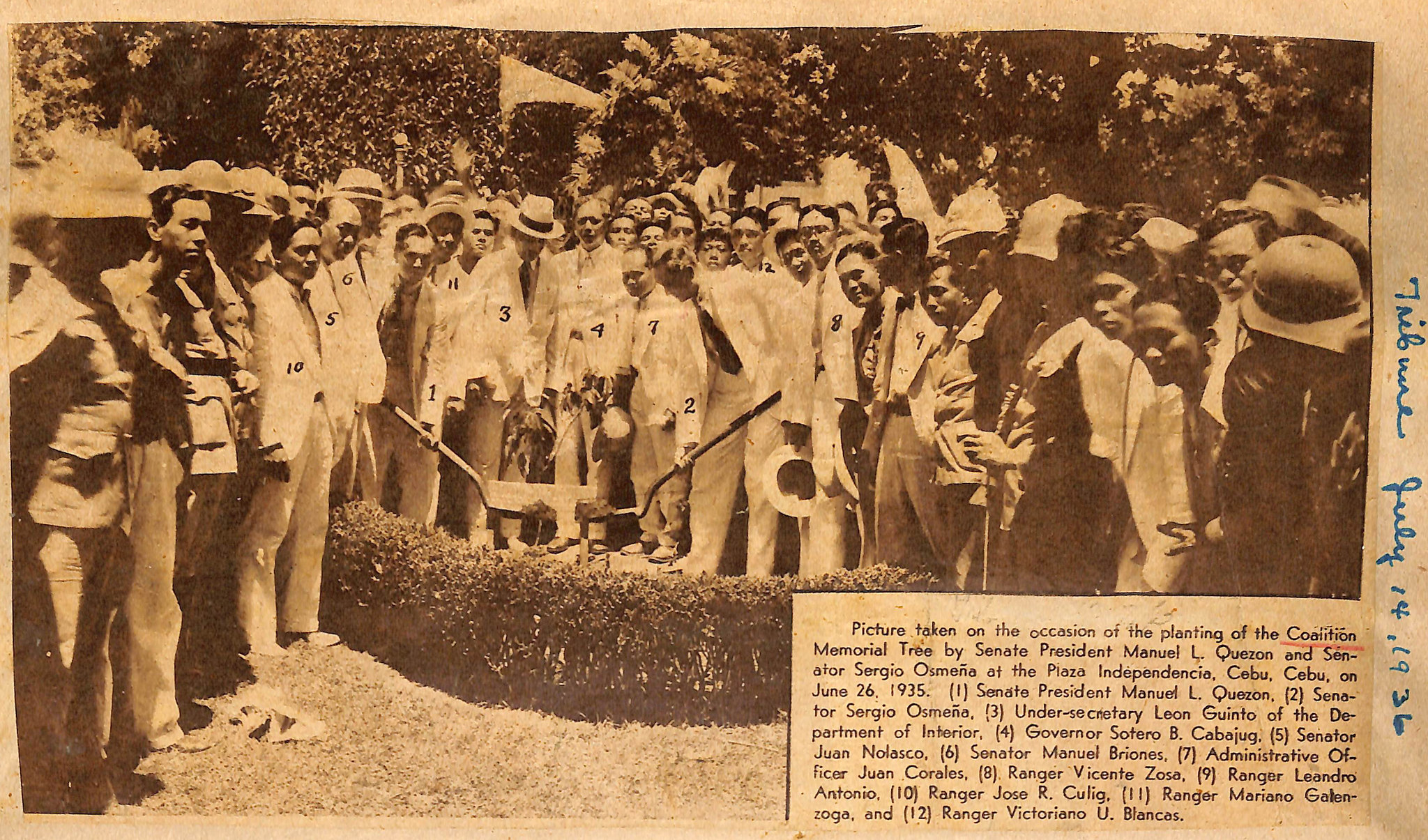
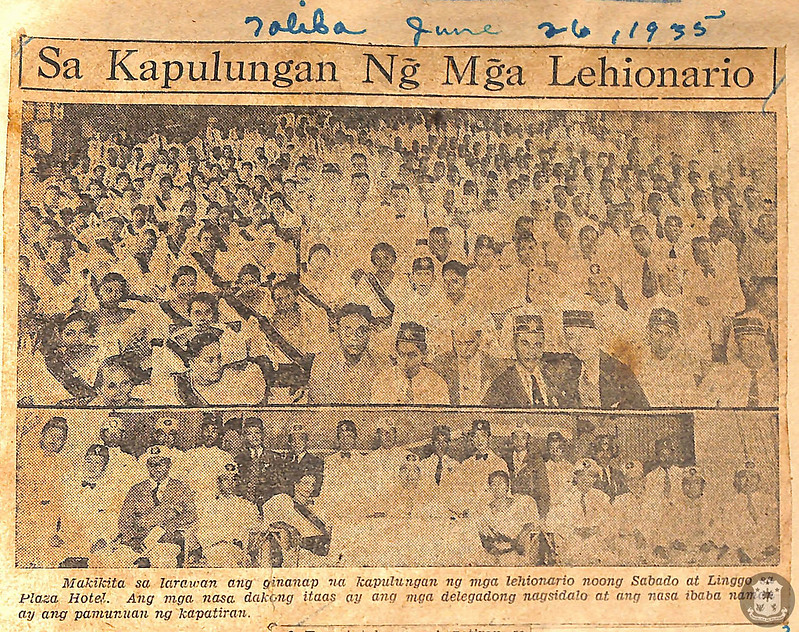
June 26, 1935
The Tribune: CEBU AWAITS PARTY Biggest Crowd of Tour Turns Out to Greet Quezon, Osmeña
Unite Small Parties Aguinaldo At Meeting Fascists, Socialists Lead Move To Form General’s Party
WOMEN PRESENT PLEA TO MURPHY Insist on Right to Vote In Petition To G. G.
June 27, 1935
The Tribune: Aglipay Party To Be Launched Next Sunday
SENATOR OSMENA Will Be Backed by Cuenco And His Faction in Cebu
Quezon Tells Cebu People He Sought Coalition with Minority
June 28, 1935
The Tribune: HAWAII FILIPINOS CONTENTED–SANDIKO Convention Vice-President Silent on Presidential Race
Quezon Party Is Due 8 A. M. Today
June 28.–Judge M. C. Montemayor at Malolos, Bulacan, sentences 87 Sakdals, found guilty of sedition in connection with the May uprising to imprisonment for terms of from two to seventeen year. Some of the 96 persons originally included in the charges, have been freed.
June 29, 1935
AGUINALDO SAILS TODAY Opens Visayan Campaign With Visit to Samar
SMALL PARTIES FAIL TO AGREE Mendoza Objects to Commitment for Aguinaldo
Malolos, Bulacan, June 28.–Found guilty of the charge of rebellion, 87 Sakdals out of the 96 who figured in the uprising and seized the presidencia of San Ildefonso on the night of May 2, were sentenced today to prison
June 29, 1935
June 29.—Aguinaldo, accompanied by former Senator Emiliano Tria Tirona and a small delegation, leaves for a short tour of Cebu, Leyte, and Samar.
June 30, 1935: Aglipay launches Republican Party
June 30.—Bishop Gregorio Aglipay in a speech in Manila at the launching of the Republican Party with himself as candidate for the presidency states: “We wish to consolidate the liberal institutions implanted here by America and put an end to caciquisim and corruption”.
July 3, 1935
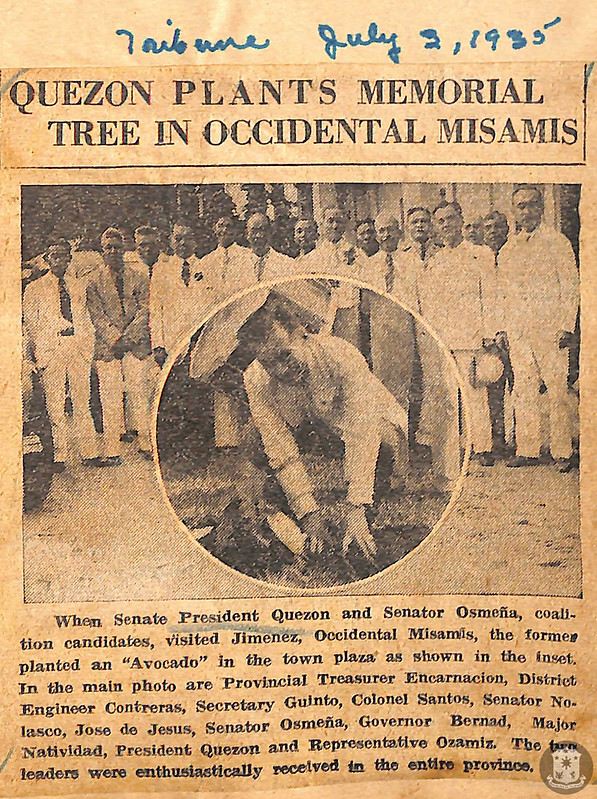
July 10, 1935
July 10, 1935,–Melliza, vice-presidential candidate, suddenly and without explanation, leaves Manila for his home in Iloilo. It is rumored there was a dispute about campaign funds.
July 13, 1935
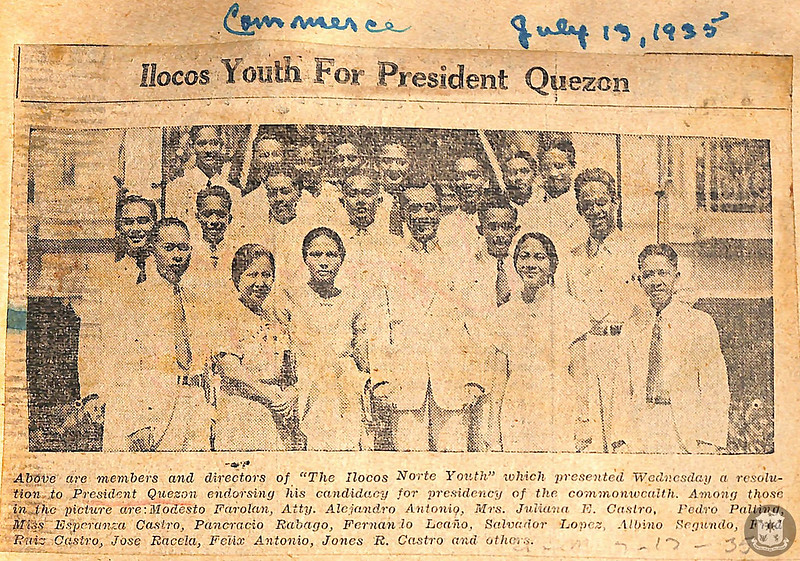
July 14, 1935
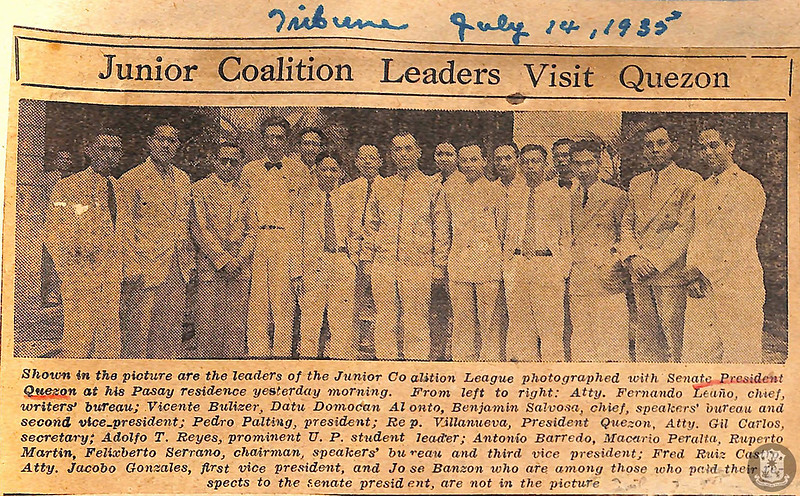
The Tribune: Aguinaldo Expected to Fire First Shot in Bulacan Today
Junior Coalition Leaders Visit Quezon
AGLIPAY GOES TO TAYABAS For Baptismal Party, But Will Tell People What He Thinks of President Quezon
July 15, 1935
July 15.– A delegation of the Republican (Aglipay) Party, headed by Ricardo Alejandro, Party President, and ex-Sen. Isabelo de los Reyes, call on the Governor-General and present a resolution requesting the annulment of the results of the plebiscite on the grounds that these do not represent the true sentiments of the people. The resolution declares it is not proper for the United States to conclude its altruistic labors of more than three decades with a legislative enactment so selfishly conceived as the Tydings-McDuffie Act, recites the beneficent results of American sovereignty, states that the Filipinos have nothing but gratitude in their hearts, protests against the “unfortunate leaders who were blind enough to accept the Tydings Act under which America will leave us at a time when we need her most”, and charges them with having failed as their duty as defenders of the people’s interests, declaring that they forgot that the Tydings Act “promises an independence impossible of achievement because it imposes conditions which no country can bear for ten years,” and concludes that the Jones Law is “all we need for our continued welfare”. The resolution arouses particular interest because Bishop Aglipay stated in a campaign speech a few days ago that he is not in favor of independence in ten years or in from three to five years, but immediately.
July 17, 1935
July 17.— José N. Abueg, reputed head of the Sakdals in Cavite, accused of inciting sedition at a Sakdal meeting in General Trias on August 31 of last year, is sentenced to an indeterminate sentence of from two to four years. Filomeno Pordon, Ignacio Martinez, and Narciso Galvez, his co-accused, receive similar sentences. They appeal to the Supreme Court and are out on bail of P1,500 each.
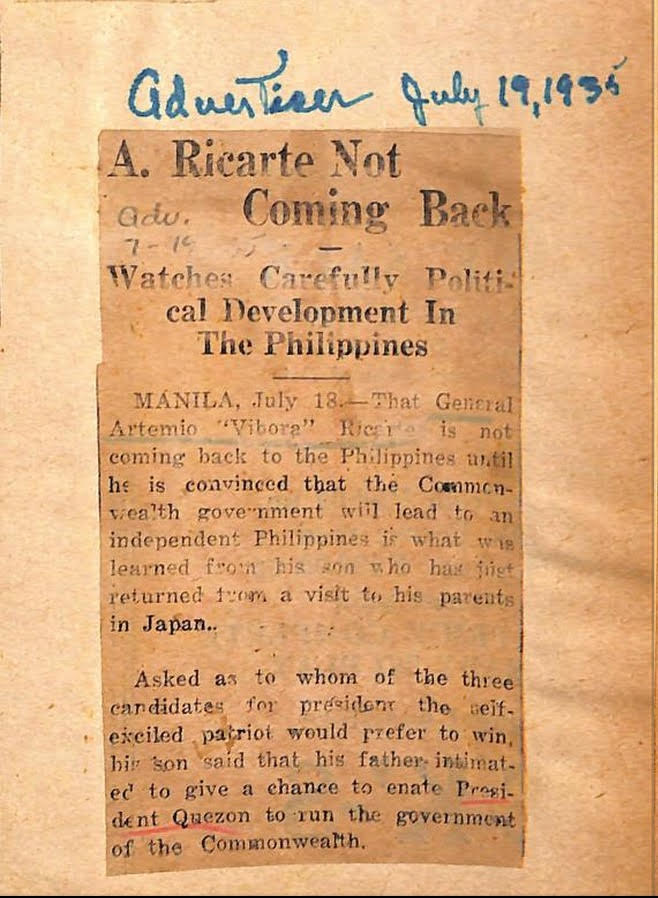
July 19, 1935
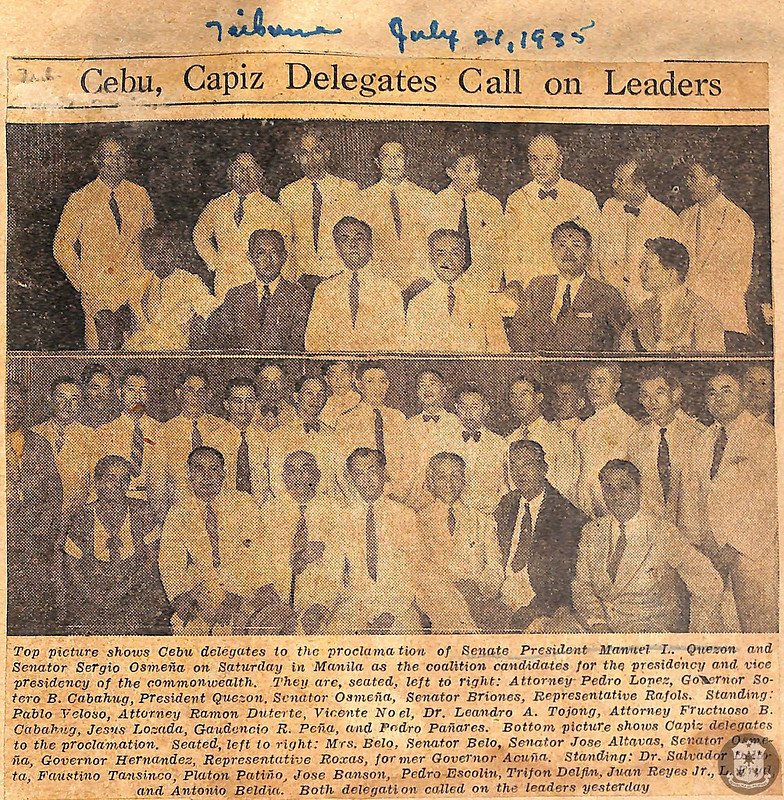
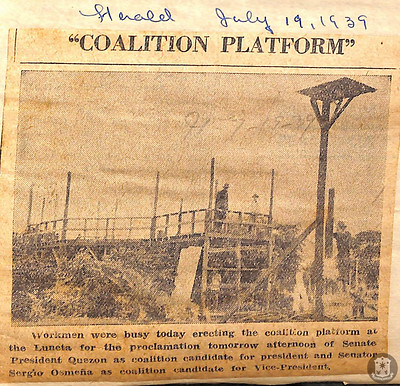
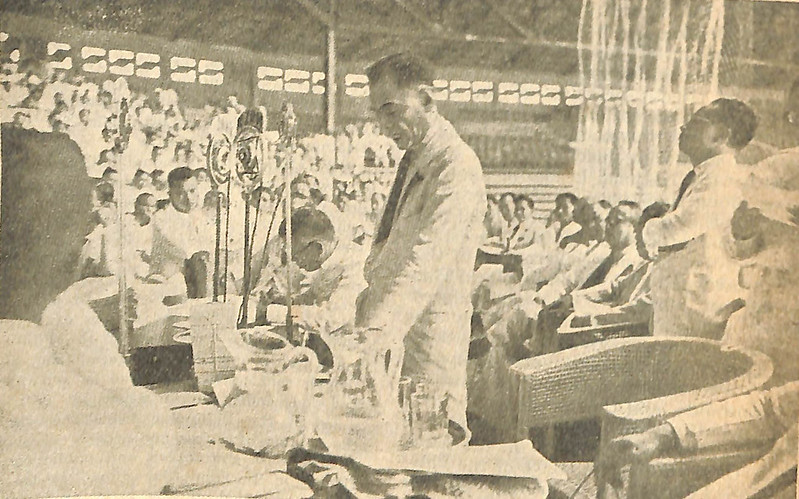
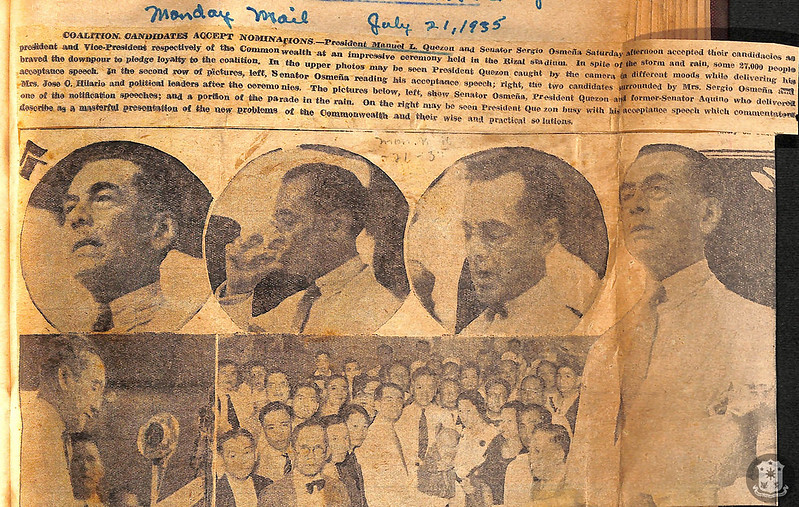
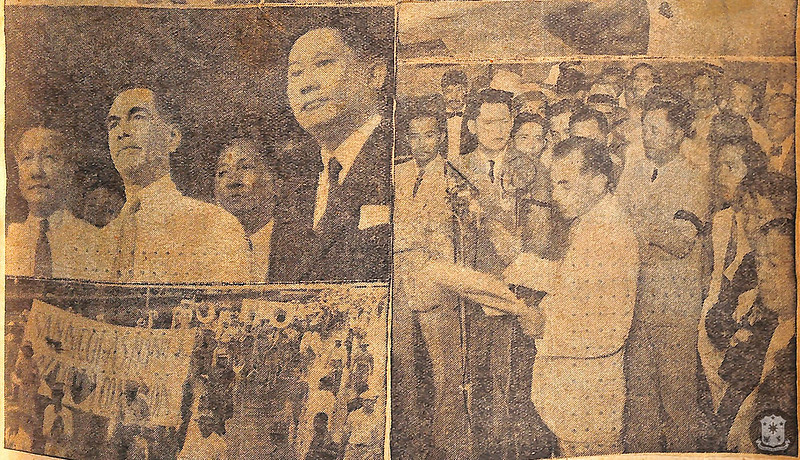
The Coalition Convention, July 20, 1935
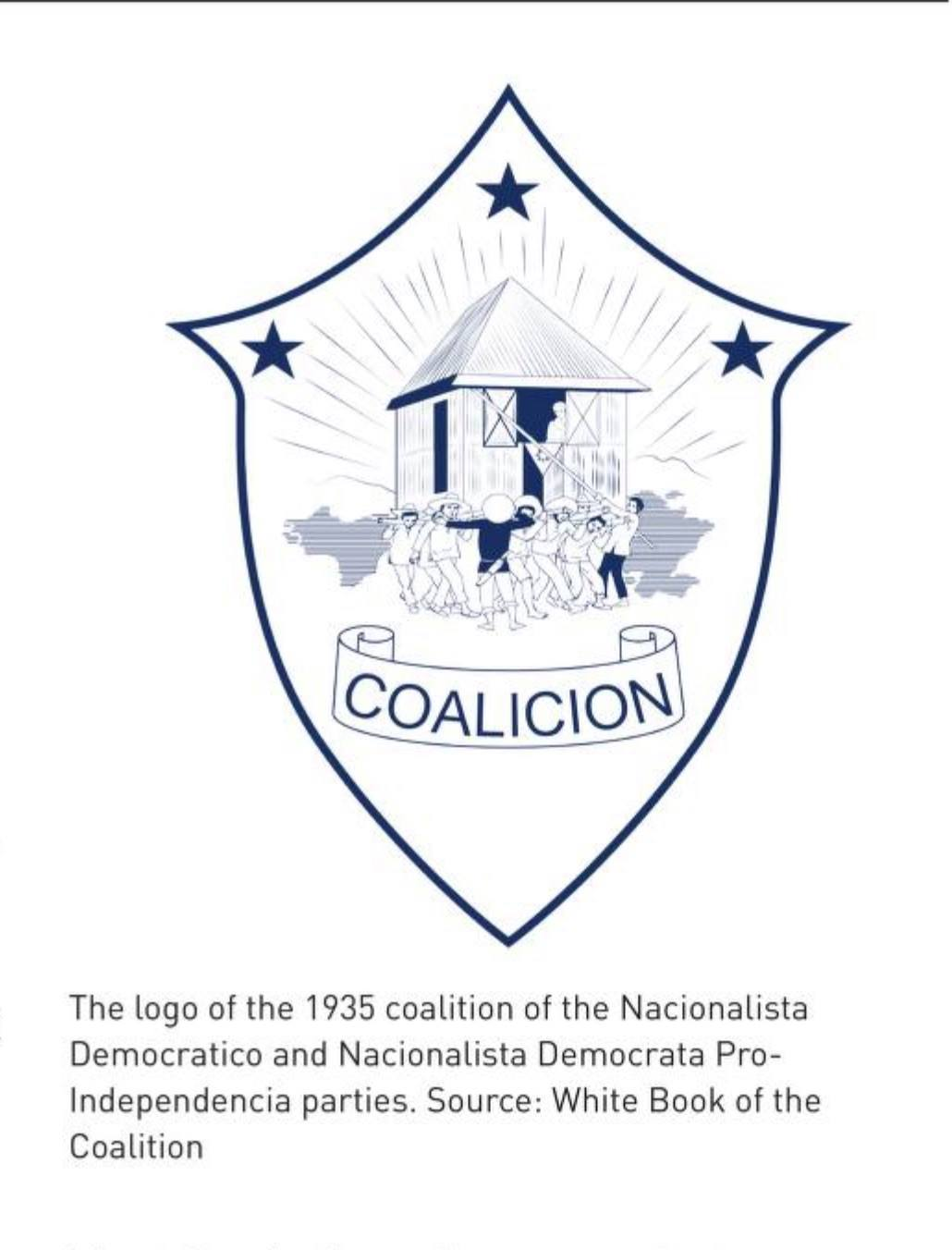
White Book of the Coalition: This book was prepared by the Nacionalista Democratico and the Nacionalista Democrata Pro-Independencia Parties. It offers an explanation about the coalition, the rationale for its formation, and the coalition platform and national candidates.
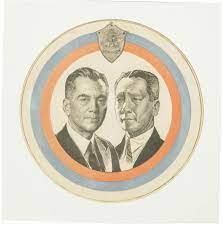
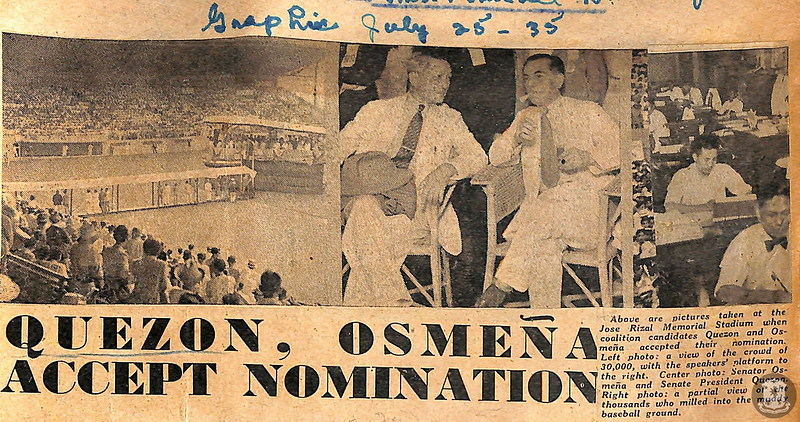
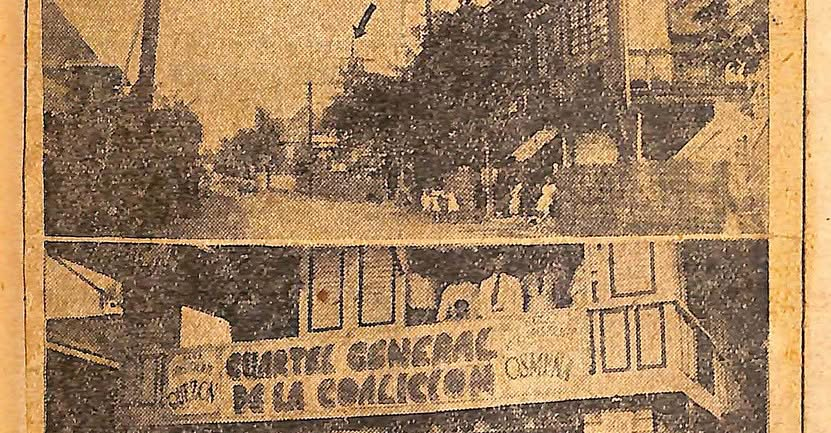
July 21, 1935
July 22, 1935: Artemio Ricarte endorses Quezon for the presidency
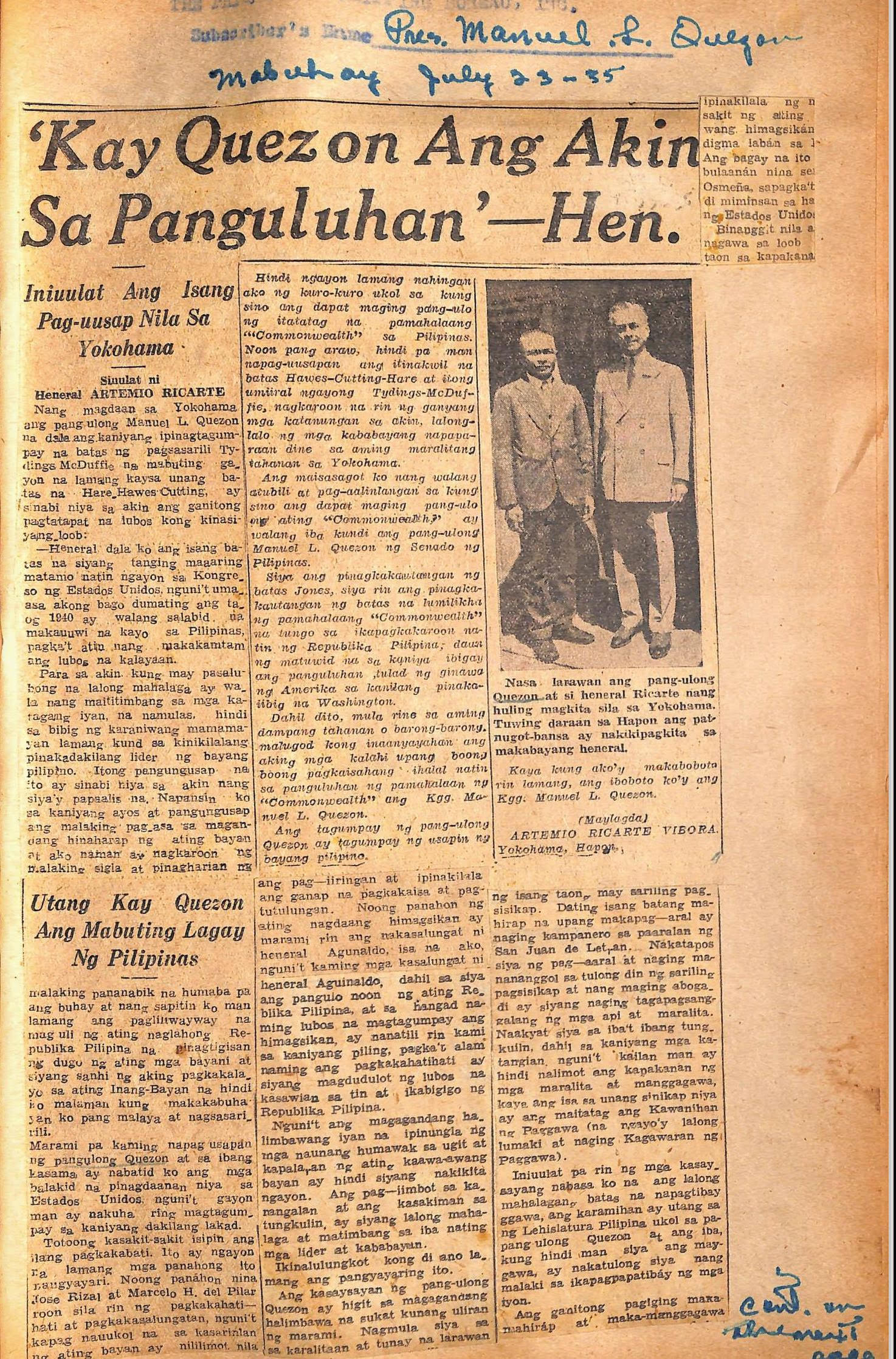
July 25, 1935
ISSUE RULES FOR ELECTION Sison Publishes Instructions For Municipal Governments
NYT: Aguinaldo Evokes Little Enthusiasm:
General Emilio Aguinaldo is not meeting with much success in the opening stages of his campaign for the Presidency of the Philippine Commonwealth. His platform failed to arouse any degree of favorable comment in the Philippine press and apparently failed to attract certain groups for whose support he had hoped. His declaration of candidacy was planned to be something in the nature of a public demonstration. It was announced that his supporters would meet at a historic bridge in the province of Cavité, march to the general’s home and then on to the provincial capital carrying the general in triumph at their head. Arrived there, three beautiful girls were to display a battle-torn flag of the now 35-year-old insurrection while the general made his speech of acceptance. The last part of the program was all that went off according to schedule. The day was hot and the paraders got restless, the narrow roads around the general’s home were blocked and finally an unruly crowd straggled into the provincial capital.
The speech of acceptance was long. The platform itself involved some forty-three points. Two items only are of importance. He promised his followers independence within three or five years and a continuation of favorable trade relationship with the United States. He also promised a government different from that of Manuel Quezon. This second phase did not reach the heights of a “throw the rascals out” campaign but confined itself to what is called “an effective re-organization of the government branches in order to secure greater efficiency.”…
One of the surprising things which the general has faced is the abrupt lack of support among his own veterans. Representatives from veterans’ groups in three provinces have stated that their organizations will continue to avoid political commitments. That can mean only one thing –they will not go on record for Aguinaldo.
July 28, 1935
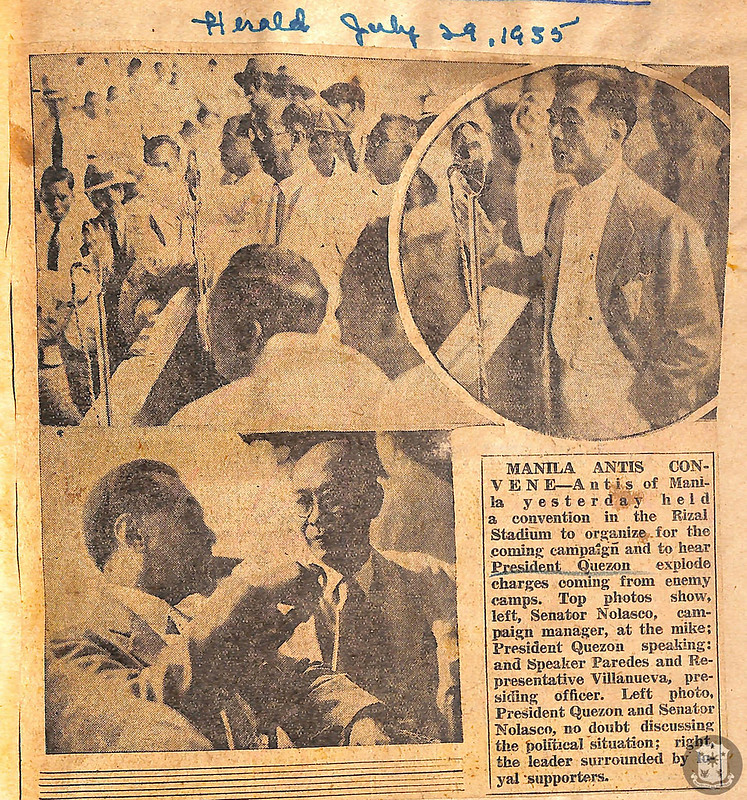
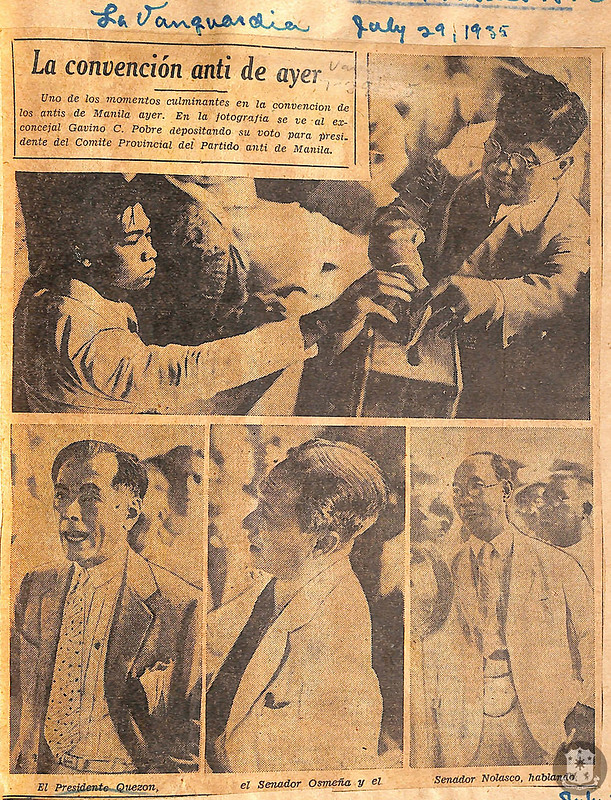
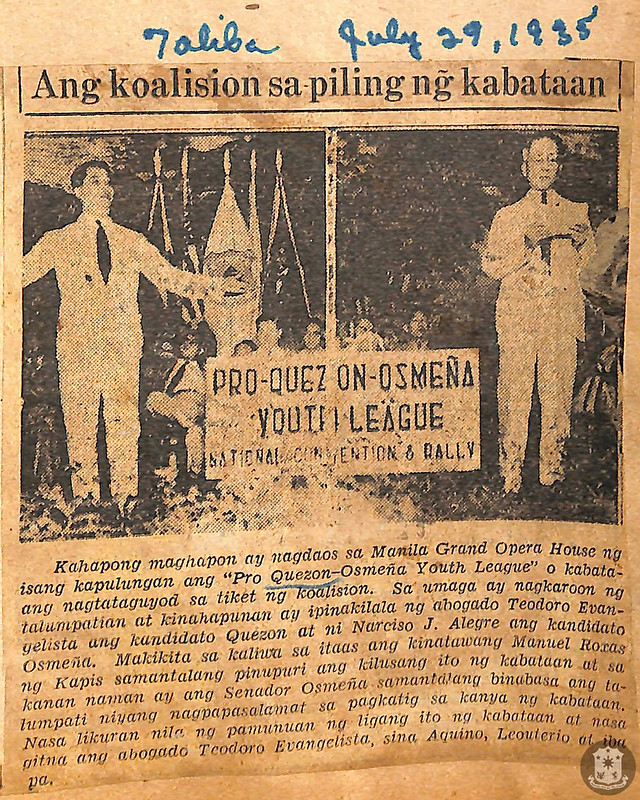
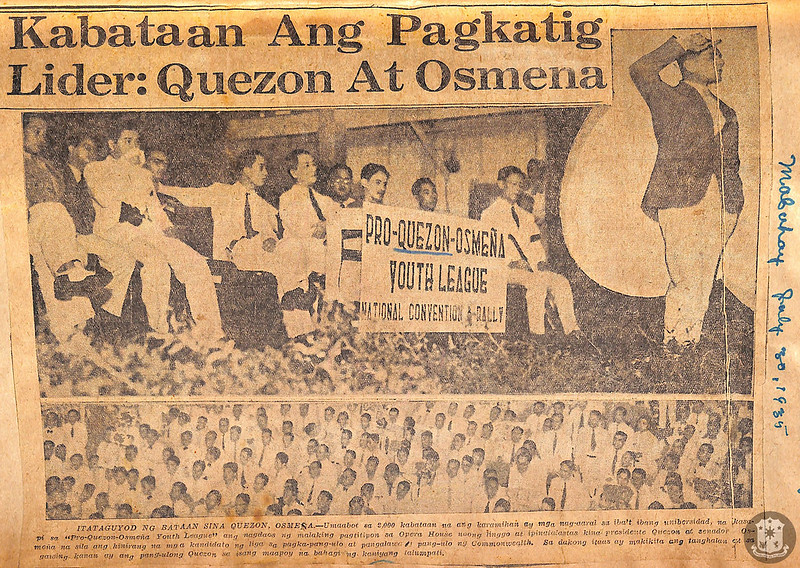
July 30, 1935
BATANES TO GET FIRST BALLOTS Material for Election Will Be Shipped on “Isidoro Pons”
APPOINT INSPECTORS No Friction Expected In Council
EXPECT FIGHT ON INSPECTORS Aglipay, Aguinaldo May Dispute Claim In Courts
Youth Rally Hears Quezon President, Osmeña Address Youth League Delegates
July 31, 1935
August 1, 1935
The Tribune: SEEK SOLID COALITION FRONT HERE Local Leaders, Headquarters Confer on Adjusting Disputes
QUEZON, OSMENA WILL SPEAK BEFORE YOUTH Monster Meeting Scheduled Sunday–Speeches Will Be Broadcast
ASK AGUINALDO To Withdraw from Race–American Makes Suggestion
August 2, 1935
ASK TEODORO TO RECONSIDER Aguinaldo Camp Wants Judge To Stay–Irrevocable, Says Teodoro
August 3, 1935
MENDOZA WILL FIGHT IN COURT FOR INSPECTOR Says Radical Party Is Entitled To Third Polls Official
BAR VILLANUEVA, PRO LEADERS SAY Candidacy Opposed–Radical, Nat-Soc Merger Is Proposed
QUEZON YOUTH RALLY Ceremonies Start 4 P. M. Tomorrow
It’s a Lot of Money These Days Inspector’s Per Diems Outweigh Politics in Some Towns
August 4, 1935
The Tribune:
BITTER CONTEST IN ASSEMBLY SEEN Hundreds File Candidacies–Quezon Orders Fair Play On Inspectors
August 7, 1935
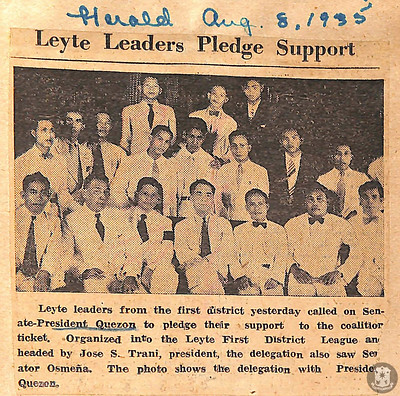
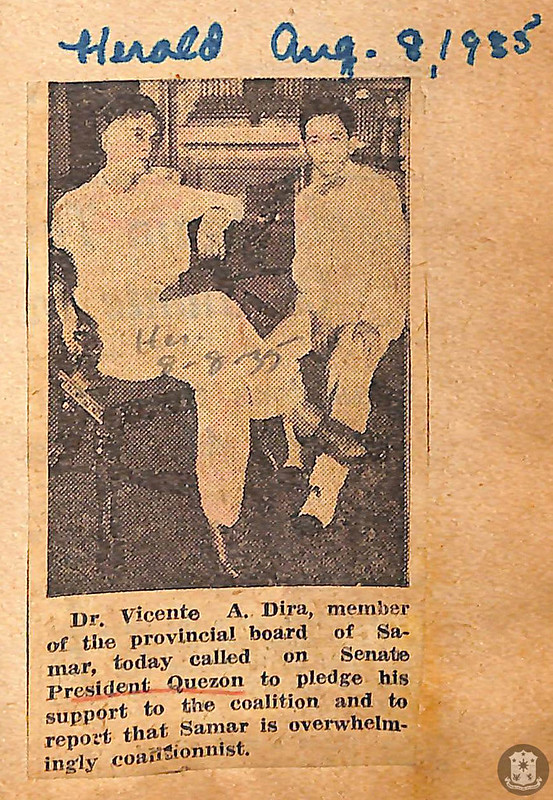
August 11, 1935
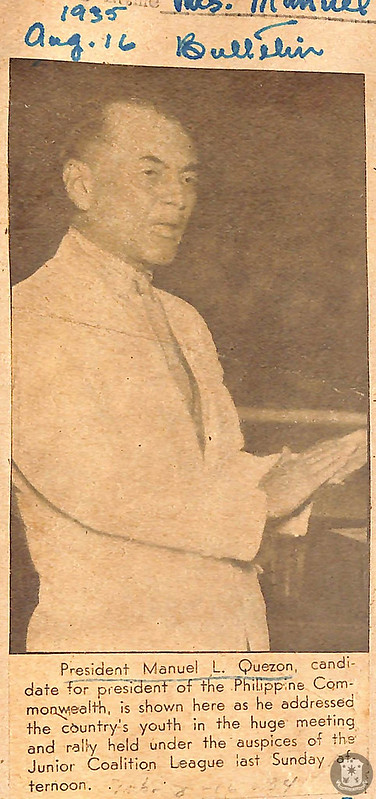
August 14, 1935
CABINET WILL STUDY RELIEF, ELECTION ROWS Secretaries Gather at Weekly Meeting at Palace This Morning
ANTI CONVENTION TO BE HELD TODAY Aguinaldo Sails–Santiago, Oppus Exchange Comments
August 20, 1935
The Tribune: COALITION IN LAGUNA GAINS NEW BACKERS Aglipay Followers Fall In–Paredes Makes Stirring Appeal in Abra
August 21, 1935
August 22, 1935
The Tribune: FINAL DRIVE OPENS SEPT. 1 Aguinaldo Sure of Cavite, Area Says–Mojica Withdrawal Uncertain
Alzate Leads Delegates to Quezon
August 22.—Guevara arrives in Manila stating that he has not resigned and has come merely to vote for Quezon and Osmeña. He states he will not retract a single statement he has made in regard to the desirability of an American protectorate over the Philippines. “The moment Japan establishes its sovereignty over the Philippines, the Filipinos are done for as a people and as a race; their culture and civilization will be destroyed and they will be absorbed by Japan.” He declares an American protectorate would be preferable to “neutralization” as in the latter case the Philippines would have several masters.
The Governor-General returns the bills appropriating P400,000 for slum clearance in Manila and P500,000 for the purchase of the Ayuntamiento to the Legislature without vetoeing them in the strict sense as he favors them but is opposed to charging these large appropriations against this year’s income.
August 23, 1935
Smuggled Voters Eliminated Agree to Cancellation of Names–Perfecto to Prosecute Stubborn Ones
PROCLAMATION SET FOR TOMORROW Bulacan Will Proclaim Quezon, Osmena and Buendia At Convention
August 23.—Senate President Manuel Quezon, who was present when Guevara spoke to reporters in favor of an American protectorate, issues a statement: “I am not for an American protectorate or any other protectorate. An independent Philippines must depend upon itself for its protection. America will never consider favorably the idea of extending a protectorate over an independent Philippines”.
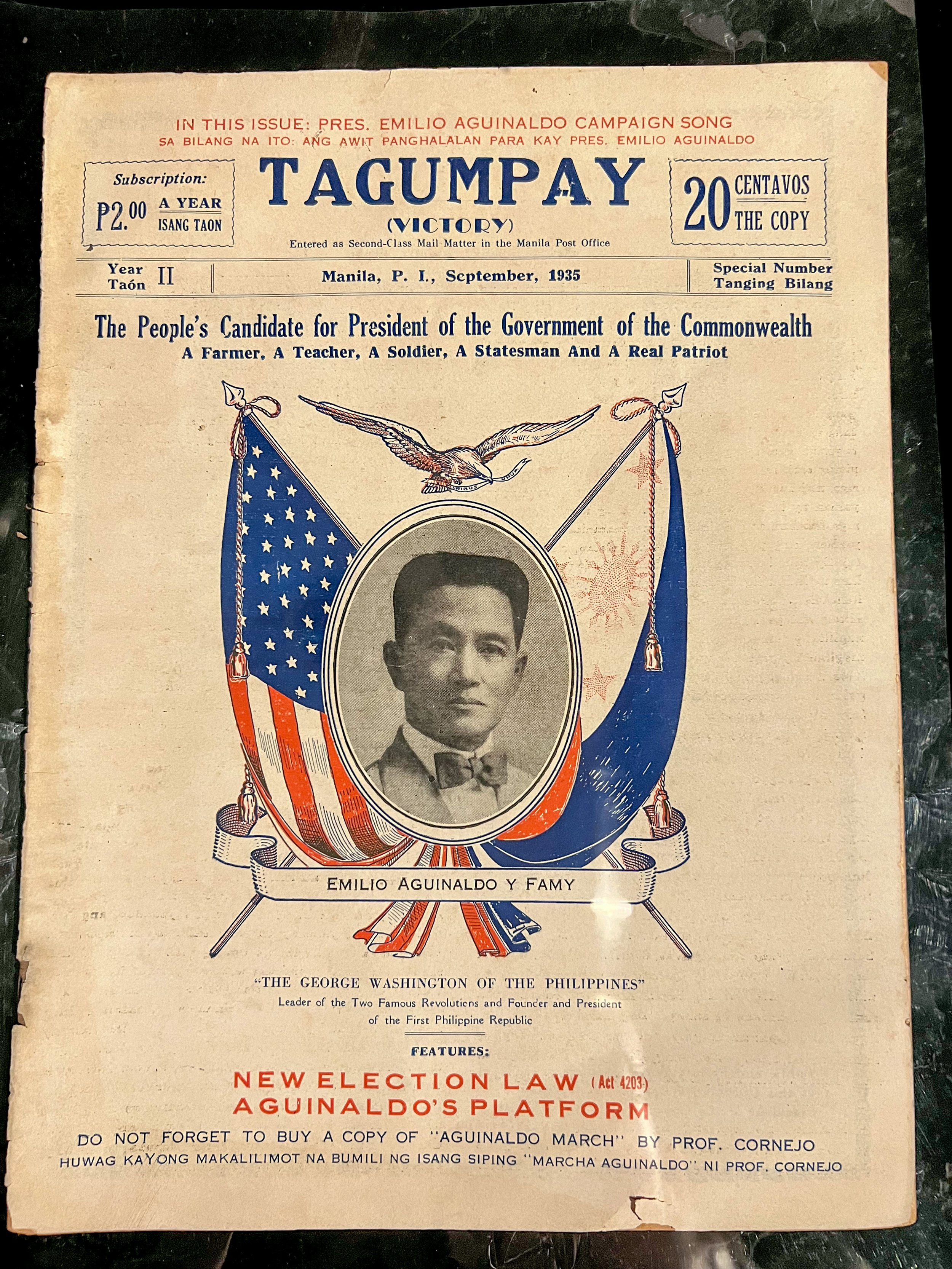
August 24, 1935
The Tribune: QUEZON SCOUTS ACCUSATIONS OF OPPONENTS President, Osmena Cheered By Throng of City Pro Leaders
WEATHER WILL NOT HALT COALITION DRIVE Talking Pictures of Quezon, Osmena Shipped To Visayas
NEW CITY HALL ON QUEZON’S VICTORY Fuente Says Assembly Will Pass Bill If President Is Elected
August 29, 1935
The Tribune: Labor League Starts Drive Pro-Coalition Group Will Open Campaign Today
PEACE, ORDER ARE ASSURED Government Ready, Says Threats Should Not Cause Public Alarm
September 3.—In a letter to the headquarters of General Emilio Aguinaldo, presidential candidate, the Governor-General justifies the political activities of some members of the Cabinet stating they are acting as party leaders and not as Cabinet men. The letters is a reply to a denunciation of department secretaries and other officials for engaging in politics.
September 8, 1935
The Sunday Tribune:
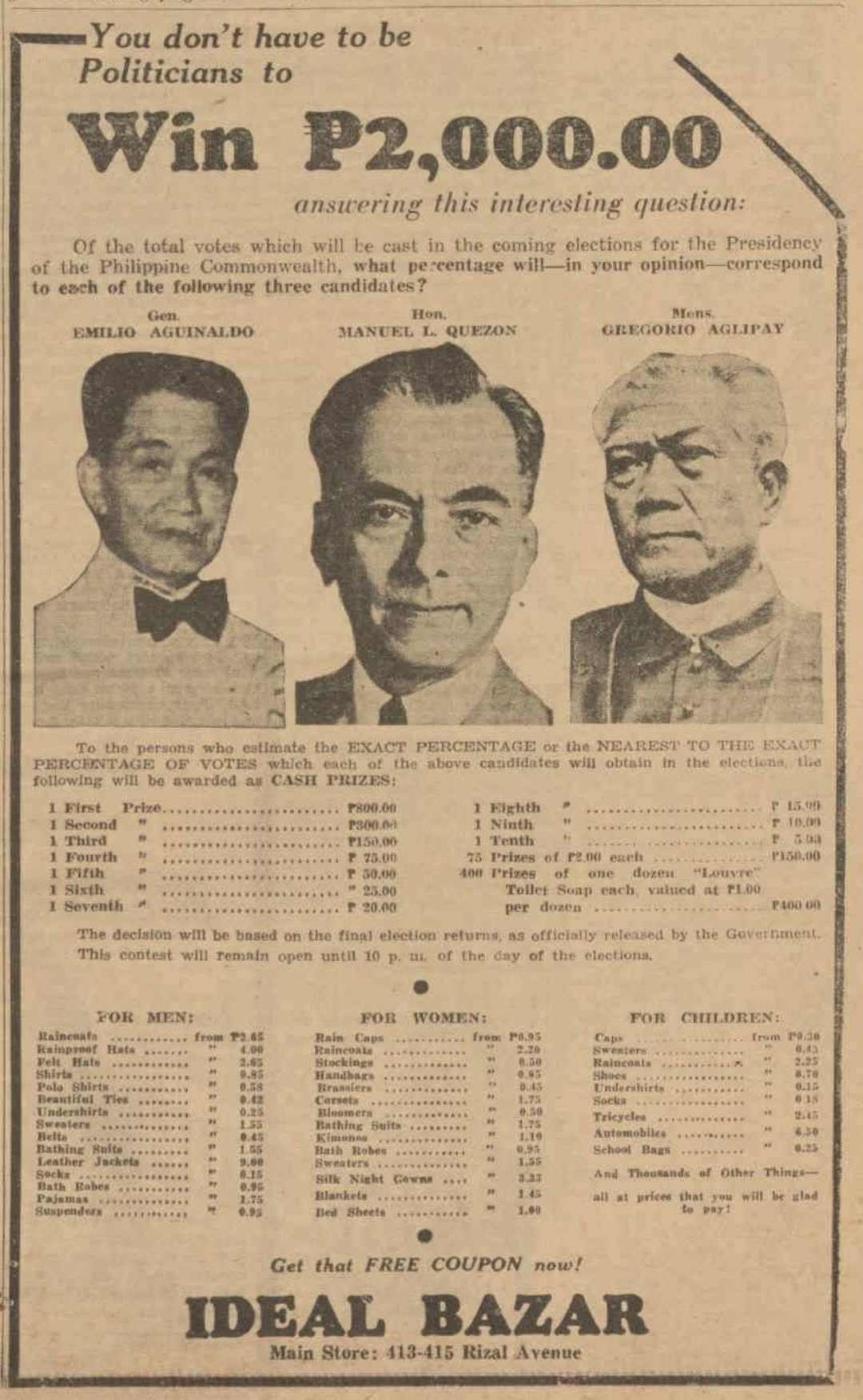
REPORTS OF DISORDERS DISCOUNTED Coalition Plans Big Rally At San Lazaro Today–Aguinaldo Leaves
QUIRINO RETURNS Says Coalition Has Good Chances in Ilocos, Cagayan
Three Speeches By Quezon on Schedule
September 10.—The headquarters of the Quezon-Osmeña Coalition issues a statement to the effect that there is general talk of a plot to assassinate Quezon to prevent his becoming President of the Commonwealth even if elected, implying that this talk originated from the Aguinaldo quarters.
September 13.—Aguinaldo leaders declare there never was any plot in their ranks to assassinate Quezon and charge that the protest is pure propaganda.
September 17, 1935: Election Day
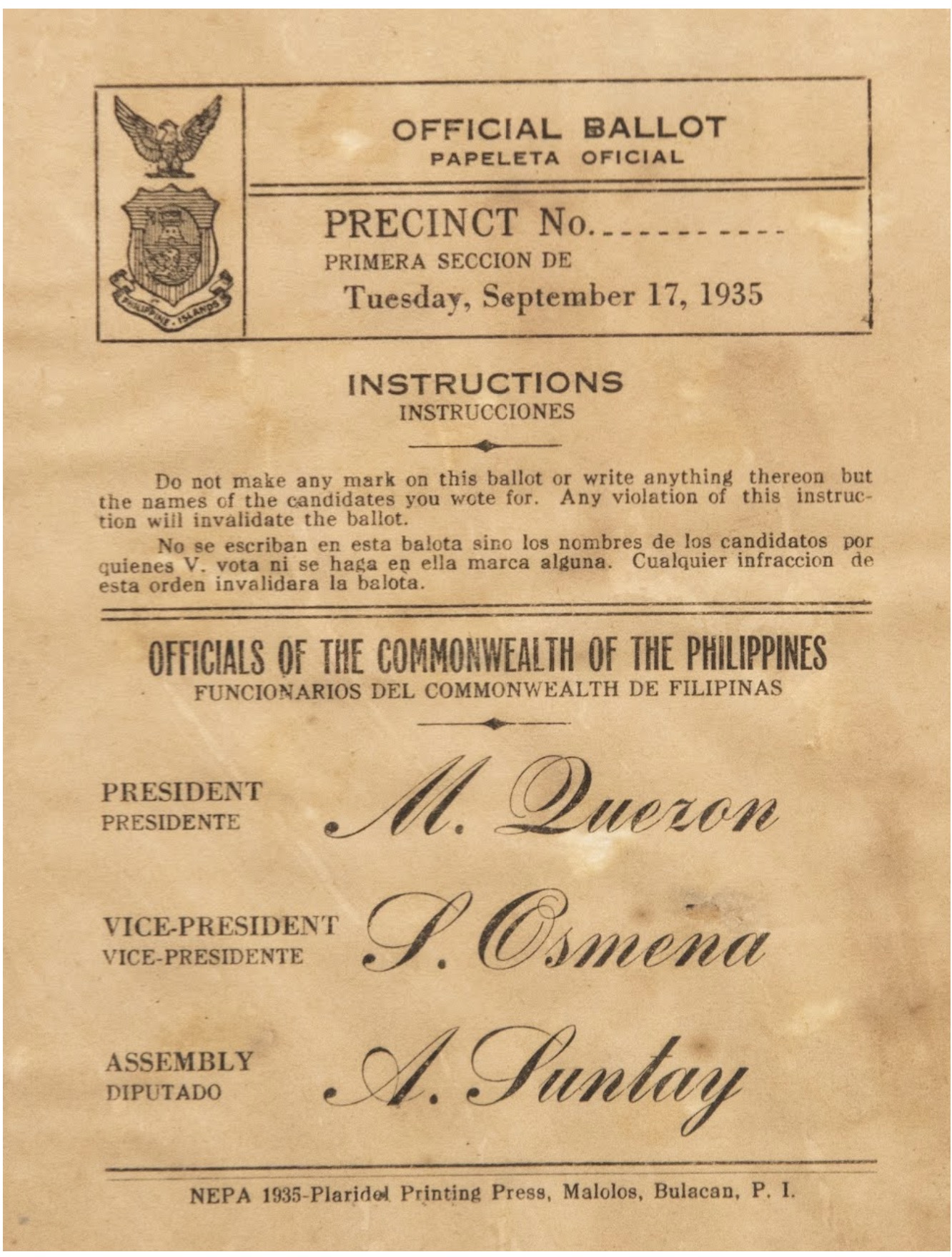
From the Philippine Electoral Almanac:By virtue of the Tydings-McDuffie Law or Philippine Independence Act of 1934, the Commonwealth of the Philippines was established. It created with it the position of president and vice president, and a unicameral legislature called the National Assembly. It also mandated the Philippine Legislature to call for an election of delegates to a Constitutional Convention to draft a constitution for the Philippines. The document produced was submitted to the President of the United States for certification on March 25, 1935, and was ratified by the Filipino people through a national plebiscite on May 14, 1935.
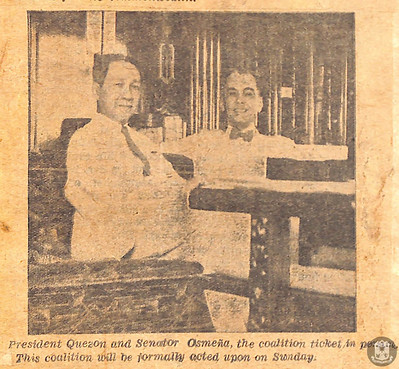
On September 16, 1935, the first national elections in the Philippines were held. The two leading Nationalist politicians-outgoing Senate President Manuel L. Quezon and former Senate president pro-tempore Sergio Osmeña-joined forces to form a powerhouse coalition ticket. They faced former President Emilio Aguinaldo and Raymundo Melliza, who ran under the National Socialist Party, and Bishop Gregorio Aglipay of the Philippine Independent Church who, with Norberto Nabong, reestablished the Republican Party.
The coalition ticket won by a landslide, with Quezon winning in all provinces except the Aguinaldo and Aglipay bailiwicks of Cavite and Ilocos Norte, respectively. Osmeña, on the other hand, demolished his opponents and lost only in the province of Cavite, a feat unsurpassed to this day.
While united for the country’s top two positions, Quezon’s Partido Nacionalista Democratico (Antis) and Osmeña’s Partido Nacionalista Democrata Pro-Independencia (Pros) slugged it out for seats in the National Assembly. This unicameral legislature had 98 elected members, of which 87 were from existing representative districts, eight from existing special provinces, and three from the Mountain Province. A significant majority of elected assemblymen were Antis (72%), while 21% were Pros; the rest belonged to opposition groups.
The 1935 Constitution came into full force and effect on November 15, 1935, with the inauguration of the Commonwealth. Among its provisions was that it would retain the constitution of the Republic of the Philippines once independence was recognized on July 4, 1946.
September 17.—The elections, peaceful and orderly throughout the country, result in victory for Quezon and Osmeña. Manila also went for the Coalition, with Gregorio Perfecto and Pedro Gil, both “pros”, elected to the Assembly. Quezon states: I think only of the task before me and I seek God’s help to meet the grave responsibilities that have been placed upon my shoulders by my election as the leader of this new nation. My heart goes in deep gratitude to my people who have so generously honored me. Osmeña states: Thankful as I am for the popular confidence reiterated by the people, I think less of the victory that the Coalition has achieved than of the great responsibilities which the two parties have assumed before the country. We are ready, however, to face them, counting with the united support of all the people”. Governor-General Frank Murphy sends Quezon a message of congratulation.
September 18.—Aglipay sends Quezon a brief message of congratulation. Aguinaldo issues a statement: “The result of the election was a great surprise to me. It is incredible, for instance, that in towns where we had election inspectors and officials of the National Socialist Party, I did not get a single vote . . . I accepted my candidacy to comply with my duty to the public which, I am convinced, desires immediate independence and wants another leadership that will alleviate its present suffering. . . . If the elections had been clean and honest and if there had not been active official intervention and abuse of power, the result would have been different. My duty to the public has not yet been terminated. I do not want to tolerate whatever interference with the popular will may have been committed which may henceforth cause the insecurity of our institutions and sow the seeds of fratricidal wars in the future. . . .”
Sept. 19.—Bishop Gregorio Aglipay, one of the defeated candidates for the Commonwealth presidency, states that the people have made their decision and that their will should be respected, and sends President-elect Manuel L. Quezon a brief message: “I congratulate you on your victory”.
September 20, 1935
Sept. 20.—Aglipay occasions surprise by announcing on behalf of the Republican Party that the frauds committed should render the elections void and by proposing that a new election be held.
Due to growing unrest among the people because of the scarcity and high price of rice due to losses from storms and insect pests, the Cabinet decides to import rice free of duty to make good the shortage.
September 21, 1935
Sept. 21.—Rep. Julio Nalundasan, reelected to the Assembly, is shot and killed while standing in front of his window after dinner at his home in Batac, Ilocos Norte, by an unidentified assassin. Upon recommendation of the Provincial Governor the town is placed under Constabulary control.
General Emilio Aguinaldo’s “National Socialist Party” sends a cablegram to the President, signed by former representative, and campaign manager, Emiliano Tria Tirona, accusing the Governor-General of “partiality” for having permitted department secretaries to work for the Coalition candidates which “attitude encouraged active intervention officials commissions threats coercions election frauds constabulary and police meddling election results adulterated expression of popular will evidence of frauds can not submit to Murphy as losing confidence his fairness such frauds causing discontent among masses immediate action earnestly requested.”
Philippines Free Press: Coalition ticket wins by landslide, September 21, 1935:
Quezon and Osmeña carried into office on huge wave of votes—even Manila votes for Senate President:
Burying all opposition under an avalanche of votes, the coalition ticket of Manuel L. Quezon for president and Sergio Osmeña for vice-president on Tuesday overwhelmingly won the first national elections ever held in the Philippines.
Although the victory of Quezon and Osmeña had been a foregone conclusion, even their closest followers were surprised by the coalition strength shown in such bitterly contested districts as Manila and Cavite, where General Aguinaldo was expected to show the most strength, and in the Ilocano provinces, where Aglipay was admittedly at his best.
In Manila, where minority leanings have always been pronounced, Senate President Quezon polled a total of 25,454 votes to Aguinaldo’s 10,236 and Aglipay’s 4,503. In many towns in Cavite where it was expected that the general would walk away with the honors, the coalition ticket ran neck-and-neck with the favorite son. In Ilocos Norte Bishop Aglipay had things all his own way, but in other Ilocano provinces it was a nip and tuck fight. In the Visayas the coalition ticket ran ahead of the opposition, although in some of the Bicol provinces Aguinaldo was showing strength on the face of early returns.
But it was not Senate President Quezon who received the most votes in Tuesday’s election. It was Senator Osmeña, coalitionist candidate for vice-president, who ran well ahead of his running party, largely due to the ineffective candidates presented against him.
Although fear of uprisings and disturbances could be noted on every hand previous to the election, no official word of any serious disturbances was received on election day.
Extreme vigilance on the part of police and constabulary, in addition to the heavy rains which fell throughout most of Luzon on election, was held responsible for the quietness which prevailed everywhere.
In his Pasay home the future president of the commonwealth received the election returns as rapidly as they could be gathered. When it became certain that he had been elected, Mr. Quezon issued the following statement:
“I am overwhelmed by the result of the election. I am more than grateful to my people for their generous support and confidence. The thought uppermost in my mind now is the great responsibility that this election entails. With God’s help I hope I will not fail my people.
“The results of the election show our people have placed their faith in the platform and men of the coalition. The Filipino people expect us to build the firm and solid foundation of the Philippine republic.
“In this hour of triumph I am thinking only of the great task before me and I seek God’s help to meet the grave responsibilities that have been placed upon my shoulder by my election as the leader of this nation.
“My heart goes in deep gratitude to my people who have so generously honored me.”
The results were a severe blow to General Aguinaldo who had issued a statement on the eve of the voting declaring: “Whatever may be the results of the election, I trust that the will of the majority will be respected.” Following the tabulation of results, the general said: “It is incredible…electoral manipulations….My duty to the public has not yet been terminated.”
Bishop Aglipay, unworried by the election results, attended a Manila cinema alone on election night. When the returns were in he sent a telegram congratulating President-Elect Quezon.
Act IV: The Long Road to Reconciliation, September, 1935- June, 1941
September, 1935
Sept. 23.—Quezon receives a message from the President, “My most cordial congratulations upon your election to the highest office within the gift of the Filipino people. Your overwhelming choice by the electorate is a fitting culmination of your many years of patriotic labor on behalf of your country”. Quezon replies: “I am deeply touched by your very generous message of congratulations. It is fitting that at this time I should express, on behalf, of my country as well as of myself, our profound gratitude to you, your government, and your people for the noble and successful work accomplished by the United States in the Philippines. It is a monument to the sense of justice and love of freedom of your great nation”.
Sept. 24.—Quezon states that “it is idle to talk about a protectorate because even if everybody in the Philippines were for it, America would not consider it for a minute . . . America is willing to let us have either our own sovereignty and independence, or to let us remain under American sovereignty. . . . Everything we have done so far would be a mockery, acts of bad faith on our part, unless we sincerely want and mean to be an independent nation. . . . The die is cast and there is only one serious, one decent, one honorable, one courageous thing for the Filipinos to do and that is to go ahead toward the establishment of the Philippine Republic without hesitation and without dismay, but with determination and valor. That there are dangers in our path, only the blind or the fool would deny. But we shall overcome every obstacle. . . .” (See editorial in the October Philippine Magazine)
Sept. 25.—Quezon leaves unexpectedly on a ten-day vacation trip to Hongkong.
September 27, 1935
The Tribune: Who Ranks Whom in New Regime
Sept. 29.—Quezon suddenly returns from his visit to Hongkong.
October, 1935
Oct. 2.—Three Constabulary agents, sent to Kawit, Cavite, to report on the political meetings being held nightly in the grounds of the Aguinaldo home, are assaulted, and bloodshed is narrowly averted.
Oct. 3.—Aguinaldo in a press interview declares that many of his followers are resentful over the outcome of the election, but denies that any disorder is likely to result. He says he is gathering evidence from all parts of the country of fraud and coercion committed on behalf of the Quezon-Osmeña ticket which he will present to competent local authorities to see that it reaches the President in support of his claim that the election was “scandalous and illegal”. He states that people have been coming to his house to denounce these frauds, but that he has invariably advised them to keep the peace. He claims that there have been reports of a plot to assassinate him and that the people are possibly excited about this. Constabulary activity, according to him, probably represented propaganda to get larger appropriations.
Oct. 7.—Reported that the nightly meetings of disgruntled persons are continuing at Kawit, despite the efforts of the authorities to discourage them. It is said that vows to assassinate Quezon and Osmeña are openly made.
Oct. 8.—Aguinaldo calls on the Governor-General but the subject of their conference is not made public.
Oct. 14.—Reported that Aguinaldo has presented the Governor-General with a voluminous report containing charges supported by affidavits of electoral frauds committed in different parts of the country.
Oct. 16.—The Governor-General refers the election protests of Aguinaldo to the Legislature and also orders Secretary of Justice Jose Yulo to investigate the matter. Aguinaldo stated in his letter that the cases reported, supported by affidavits, are “only typical instances” of wholesale frauds, investigation of which would “lead to the discovery of other irregularities which I am sure will alter the result of the last election.”
Oct. 17.—The Philippine Legislature adjourns. Governor General Frank Murphy states, “The Legislature did not a good job. It passed every important piece of legislation before it”.
Both the Governor-General and President-elect Manuel L. Quezon are targets of fiery attacks at a meeting held on the grounds of General Emilio Aguinaldo’s home at Kawit, Cavite, the former for having done nothing for the common people and the latter for having changed from a Mason to a Knight of Columbus, since when “he has been a tool of the Archbishop”.
Secretary of Justice Jose Yulo writes a letter to Aguinaldo requesting him to come to his office for a conference and to furnish the department with specific information with respect to alleged election frauds so that they may be investigated, indicating that the accusations in the Aguinaldo letter are in general terms not furnishing a due basis for action. “Having made the charges,” state Yulo, “General Aguinaldo will have to prove them or make an effort to do so unless he wants to lay himself open to the charge that he was making gratuitous statements reflecting upon the integrity of the government and of election officials”, The Legislature, before adjourning, referred the Aguinaldo communication to the Committee on Elections.
Oct. 18.—Aguinaldo rejects Yulo’s invitation, stating that in requesting the Governor-General to forward his communication to the President of the United States his “idea was to withdraw the same from the jurisdiction of the Philippine authorities”, and declaring that he has “lost faith in the officials of our government called upon to investigate my charges”. “I consider my protest here ended and see no reason for me to appear before the election committee of the Legislature of before anybody else.”
Charges are filed in Cavite against Wenceslao Vinzons, alleged to have advocated the assassination of Quezon and Vice-President-elect Sergio Osmeña in a speech at Kawit on September 24, and against Porfirio de Juan, also accused of having advocated the assassination of Quezon, branding him as “Public Enemy No. 1” on September 26. Alfonso Sarayba is accused of having assaulted agents in authority for having incited the people to beat and kill agents of the Constabulary at Kawit on October 2.
Oct. 19.—Reported in the press that on October 17 Aguinaldo wrote the Governor-General that if no free and independent investigator can be appointed to look into his charges of fraud, that the correspondence be sent to the President. It is stated at Malacañang that the entire correspondence will be forwarded as a routine matter. Reported that Aguinaldo has also sent cables of protest to the heads of the Spanish war veterans and the American Legion, asking for their intercession to secure the rights of free assembly and free speech in the Philippines.
Aguinaldo is summoned to appear Monday before a joint session of the Senate and House committees on elections where he will be given an opportunity to substantiate his charges.
Reported that the meetings at Kawit have been shifted to the General’s Amaya hacienda near Tanza and are conducted there indoors in his summer house.
October 20, 1935
The Tribune: Probe Continues Authorities Will Carry on Investigation Of Aguinaldo Charges Despite General’s Wishes, Says Yulo
Oct. 20.—Teodoro Asedillo, Laguna bandit, demands P5000 ransom for five persons he has kidnapped during the past few weeks. He recently captured a girl whom he forced to marry one of his men, shooting and seriously wounding the girl’s father who tried to protect her. Carabaos are daily stolen for food and citizens are forced to give up their shot-guns to members of the Asedillo band which is spreading terror throughout the region, cowing even the municipal officials.
Oct. 21.—Aguinaldo writes the chairmen that he considers the committees of the Senate and House “without jurisdiction to take cognizance of and decide a case on which the Philippine Legislature has already taken definite action”.
The Constabulary arrest Nicasio Layaoen for the murder of the late Representative Julio Nalundasan: action is also promised against alleged accomplices.
October 22, 1935
WIDESPREAD PLOT SHOWN IN PAPERS Alleged Secretary to Benigno Ramos Arrested On Arrival Here
Oct. 22.—The Senate and House election committees in joint session adopt a resolution dropping the Aguinaldo charges. The Department of Justice will, however, continue an investigation.
Charges of conspiracy to commit rebellion are filed against ten Sakdal leaders including Santiago Salvador, alleged lieutenant of Benigno Ramos, who was arrested on Monday on his arrival from Japan reportedly bearing letters concerning a plan to overthrow the government which involved setting fire to all gasoline stations in Manila at a given moment and kidnapping high officials.
October 23, 1935 The Governor-General grants conditional pardons to twenty-seven Sakdals imprisoned for complicity in the May uprising at Santa Rosa.
Oct. 25.—Secretary of the Interior Teofilo Sison instructs the provincial governments and provincial commanders of the Constabulary not to allow Sakdals to hold meetings or parades, as the party has been proved to be “an organized radical, anti-government association”.
October 26, 1935
The Tribune: Royal Welcome for MacArthur GENERAL DUE 10 A. M TODAY Other Notables Arriving On “President Hoover” This Morning
Oct. 26.—Major-General Douglas MacArthur, until recently Chief of Staff of the U.S. Army, arrives in Manila, shortly to assume the position of military adviser.
October 27, 1935
Oct. 27.—Quezon gives a dinner in honor of MacArthur.
The Constabulary is reported to be collecting all revolvers and shot-guns in Cavite as a precautionary measure except those in the hands of the police and Constabulary, and those held by Americans and foreigners who are not suspected of any inclination to take part in an uprising.
October 29, 1935
The Tribune: STAR WITNESS IN NALUNDASAN CASE ON STAND Policeman Gives Important Testimony at Preliminary Hearing
KAWIT SPEAKER IS UNDER ARREST Porfirio de Juan Seized–Aguinaldo Scouts Talk Of Plots
October 29, 1935 –Daniel Meairan, Vice-President of Amadeo, Cavite, is shot and dangerously wounded with a home-made pistol by Arsenio de la Rea, Sakdal leader, who is arrested. The motive for the attack is not known.
Constabulary in Pangasinan follow the Cavite example and collect all fire-arms.
Oct. 30 . — Reported that Aguinaldo after a conference with officials including Osmena has agreed to desist from a public demonstration on inauguration day although he may continue to hold his nightly meetings in his “back-yard” in Kawit until next Saturday, when Dern arrives.
October 31, 1935
The Tribune: QUEZON INDISPOSED
Fireworks to Feature Inauguration Festivities; To Be Held Two Nights
PARTY FUSION IS BEING CONSIDERED Antis and Pros Reported To Have Accepted Plan In Principle
November 1, 1935
The Tribune: TEMPORARY CABINET JOB FOR OSMEÑA Vice-President to Handle Instruction Portfolio, Foreign Matters
November 8, 1935
The Tribune: PROGRAM OF INAUGURATION
QUEZON IS ASKED FOR HIS CHOICE Antis Fear Division in Ranks May Give Pros Chance To Pick Speaker
November 11.—Ranking members of the two political parties in Congress now in Manila laud the stand of Quezon in abiding by the ten-year transition period as provided in the Tydings-McDuffie Act. Aguinaldo reaffirms his stand for a shorter period of from three to five years.
Secretary Dern and the Governor-General make a brief social call upon Aguinaldo.
November 12, 1935
The Tribune: “NO FEAR OF TROUBLE” General Valdes P. C. Men Ready for Any Emergency
Dern Visits Aguinaldo 2500 Line Streets to Greet War Secretary and Murphy
November 12, 1935
The Tribune:
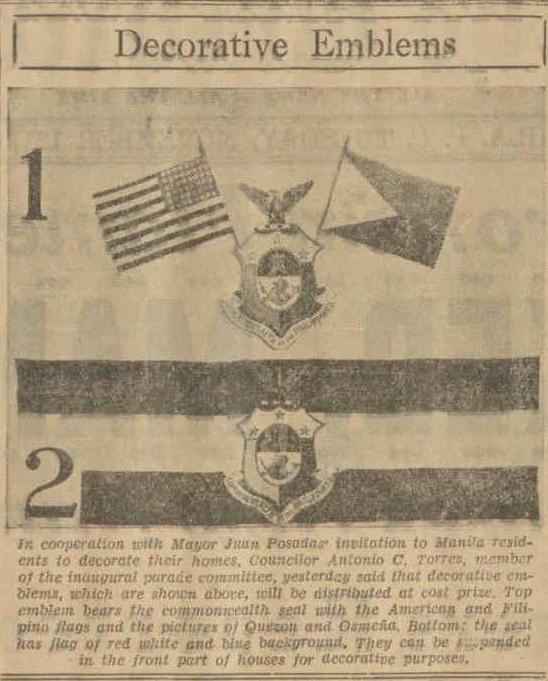
November 12.–The Constabulary cancels all leave as Sakdal activity is again reported, especially in Cavite.
Nov. 13.—At a meeting in the Plaza Hotel, Manila, Aguinaldo again advocates a shortening of the transition period, declaring that the Filipinos would be willing to undergo any sacrifices. He charges that Congress has made several attempts to grant independence at an early period but was always opposed by Filipino political leaders. A resolution is adopted urging the people to hold meetings in the municipalities and barrios to pass resolutions in favor of early independence and another resolution endorses the stand of Paredes in his opposition to Quezon’s plan to reduce the power of the speaker’s office. The allegedly high-handed methods of the government in refusing to permit Aguinaldo’s followers to hold meetings in public is attacked.
Sakdal leaders address a memorial to Dern expressing the desire for immediate independence.
November 14, 1935
The Tribune: Parade Route Tomorrow
MORE NEWSMEN ARRIVE TODAY Roy Howard Heads Last Batch Of American Journalists To Report Inauguration
November 15, 1935: Proclamation of the Commonwealth of the Philippines; Inaugural of Quezon and Osmeña
The Tribune:
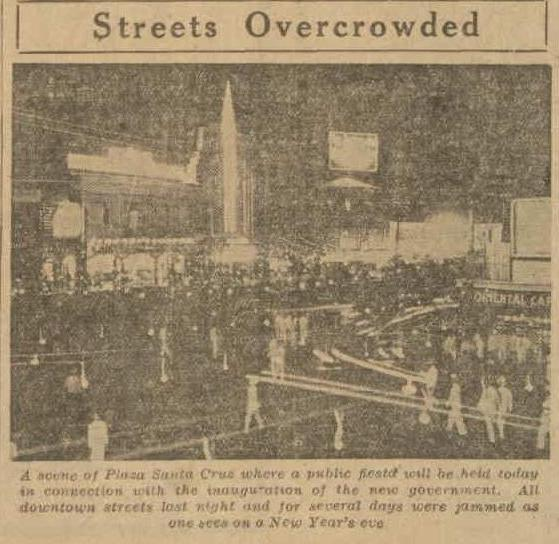
F. D. Signs Proclamation Congratulates Quezon, Murphy, Filipino People
SAKDALS FILE CHARGE Leader Says There Will Be No Trouble Today
WILL CELEBRATE 22 Bulacan Towns Will Have Inauguration Ceremonies
AGUINALDO SIGNS Resolution to Be Presented To Secretary Dern
Nov. 15.—Governor-General Murphy’s last official act is to pardon thirsty “political” prisoners, sakdals and communists, stating to newspaper men he wants to set an example of tolerance where difference of opinion are concerned.
With impressive ceremonies on the steps of the Legislative Building, the Commonwealth of the Philippines is inaugurated. Following the introduction of the high personages present and an invocation by His Grace, the Most Rev. Gabriel M. Reyes, D.D., Archbishop of Cebu, Governor-General Murphy introduces the Secretary of War who makes a notable address on the United States policy in the Philippines, after which he requests the Governor-General to read the proclamation of the President of the United States announcing the results of the election of the officers of the Commonwealth. The oath of office is administered to President-elect Manuel L. Quezon by Chief Justice Ramon Avanceña and a nineteen-gun salute is fired. The oath is then administered to Vice-President Sergio Osmeña and later to the delegates-elect of the National Assembly. Thereupon, the Secretary of War on behalf of the President of the United States declares that the Philippine Government has terminated and that the new Government now enters upon its rights, privileges, powers, and duties, as provided under the Constitution of the Philippines. President Quezon delivers an address outlining the policies he will follow. After a civil and military parade, President Quezon goes to Malacañang and High Commissioner Murphy goes to the Manila Hotel, both with Cavalry escorts, the latter later returning to Malacañang as a guest of President Quezon who will not immediately occupy the palace.
President Quezon issues an executive order directing Philippine officials to take their oaths of office as early as practicable and prescribing the form, and calls a special session of the National Assembly for November 22.
The Japanese Foreign Minister sends his congratulations to President Quezon through the President of the United States, wishing the new government a happy and prosperous future and expressing the hope that it will “contribute to the promotion of peace in East Asia”. Foreign Secretary Sir Samuel Hoare also addresses a message of goodwill to President Quezon through the United States Government.
November 16, 1935
Nov. 16.—President Quezon names Vice-President Osmeña acting Secretary of Public Instruction, vice former Vice-Governor J.R. Hayden, who leaves for the United States shortly. Chief Justice Ramon Avanceña is reappointed to the presidency of the Supreme Court. Jaime Hernandez, Deputy Insular Auditor, is named Auditor-General. Under-Secretary Jorge B. Vargas is appointed Secretary to the President.
November 19, 1935
Nov. 19.—In a conference between Rep. Bertrand Snell and Aguinaldo, the former advises that Aguinaldo cooperate with Quezon.
November 21, 1935
The Tribune: Malacañang Open to Public Every Sunday
FUSION OF PARTIES Will Be Taken Up at Today’s Caucus
Nov. 21.– President Quezon opens Malacañan Palace to the public on Sundays, beginning December 1, from 9:30 to 11:30 A. M., and the grounds from 8:00 A. M. to 5:00 P. M., following the White House practice.
During an all-day caucus presided over by President Quezon, and after prolonged debate, the majority party votes in favor of a fusion with the minority.
An 80-page bill on national defense is filed, also a bill on standardization of government positions, and a census bill.
November 22, 1935
The Tribune:
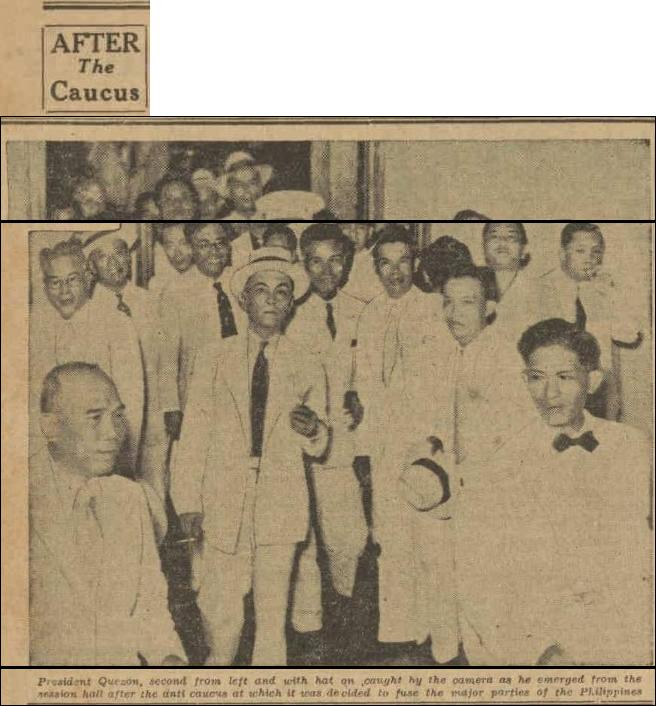
November 23, 1935
The Tribune: Businessmen Support Quezon
AGUINALDO MAY MAKE AMERICAN JOURNEY Followers Believe General’s Presence in Washington Necessary
Nov. 23.—The minority party directorate and leaders, headed by Vice-President Sergio Osmeña, approves the proposed fusion of the “antis” and “pros”.
November 24, 1935
The Tribune: Quezon Promises to Give People Clean Government President Urges Cooperation In Speech at Popular Banquet
November 26, 1935: The Tribune
Nov. 26.—The Assembly unanimously adopts a resolution expressing support of President Quezon’s defense plans.
President Quezon issues a Thanksgiving Day proclamation enjoining the people to offer thanks to God and making special mention of “the establishment of the Commonwealth based upon the free will and suffrage of the Filipino people”.
November 29, 1935
December, 1935
Dec. 8.—General Emilio Aguinaldo issues a statement criticizing the national defense plan, stating that the Philippines should rely first on American protection and later on “the spirit of international justice which I hope will continue to exist”. He states the country can not afford the appropriations asked for for a “useless pretense”, and that to preserve internal peace it is only necessary to “stop hunger”. He however expresses himself in favor of military instruction in all schools.
December 11, 1935 Gen. Emilio Aguinaldo cables the National Dairy Union of the United States declaring that the Filipinos “rejoice that you will push Congress to adopt a new proposal to grant immediate independence; we will strongly support your stand with gratitude”.
General Emilio Aguinaldo states that it is not true that the people are afraid of Japan someday taking the Philippines or that they want to perpetuate the present form of government; instead they want to shorten the transition period to independence.
POSTSCRIPT: RECONCILIATION, 1936-1941
1936
February 7, 1936
The Tribune: Quezon, Aguinaldo Meet in Binakayan
May 13, 1936
The Tribune: SOCIALIST PARTY RAISES OLD CRY Resolution to Ask for Immediate Independence; Aguinaldo to Head Meet
July 15, 1936
The Tribune: TENANTS TO BUY AGUINALDO LAND Leases to Be Continued Pending Law Change, Rodriguez Announces
August 29, 1936
The Tribune: CHARGES AGAINST SUNTAY DROPPED Case of Seizure of Contraband On Board Vessel Is Dismissed with Warning
October 16, 1936 Porfirio de Juan, one of the campaign managers of General Emilio Aguinaldo during the last election, is convicted of sedition and sentenced to five years imprisonment. He will appeal. The case grew out of the nightly meetings held last year at Kawit.
1937
Feb. 18 . 1937 — General Emilio Aguinaldo states he may go to the United States to confer with leaders of the Washington administration regarding the need of granting the Philippines early independence. Friends of Judge Juan Sumulong state he may accompany the General to personally present the resolutions recently adopted by the “National Socialist Party”.
Feb. 19, 1937. — Judge Quirico Aberto, former Secretary of Justice and an opposition leader, declares he does not favor the plan of General Aguinaldo and Judge Sumulong going to the United States at this time and that he will do his best to dissuade them.
Feb. 25, 1937.– A group of anti-administration leaders, meeting in the house of Gen. Jose Alejandrino, send a telegram to President Roosevelt asking him to veto Act 2336 because it seeks to grant “excessive delegation of power to the President of the Commonwealth”. The Act which would empower the President to raise tariff schedules by not more than 400 per
cent and lower them not more than 75 per cent and also appropriates P50.000 for these establishment of an advisory tariff commission, was signed by President Quezon in December and is now before President Roosevelt for his approval. Those signing the telegram are General Aguinaldo, Bishop Gregorio Aglipay, Celerino Tiongco, Sakdal head. Judge Sumulong, Judge Aberto, General Alejandrino, and former Senator Emiliano Tirana, executive secretary of the so-called “Popular Alliance.”
Feb. 26, 1937 –Assemblymen criticize the opposition of General Aguinaldo, Judge Sumulong and others to the act now before the President of the United States for approval which would give the President of the Commonwealth power to alter Philippine tariffs within certain limits. Assemblymen Maximo Kalaw states the act would give the Philippines virtual tariff autonomy and that the projected visit to Washington of some members of the opposition would be “ill-advised, illogical, unreasonable, and destructive of democratic principles”.
March 13, 1937 — General Aguinaldo states he is delighted with the present trend toward earlier independence and that in view of this he is giving up for the time bang the idea of going to Washington. Various assemblymen are quoted commenting favorably on the new developments in Washington and others declare the people should have confidence in President.
March 27. — General Aguinaldo states he has abandoned his plans to go to Washington as President Quezon is now working “for just what the Veteran’s Association has proposed”.
April 5, 1937. — Between 7:00 and 7:30 A.M. (Monday) most of the Philippines listens to President Quezon’s address, delivered from informal notes over the telephone from Washington to San Francisco, and to the Philippines by short-wave radio, rebroadcast over KZRM, KZIB, and KZEG, and plainly audible in Manila. The hour was 6:00 P.M. Sunday in Washington. About five minutes of the time was devoted to woman suffrage and the rest to an explanation of his recommendations for earlier independence. “Filipino women are not yet in full possession of their rights and unless they make an early decision to take part in the national administration, it will be a long time before all their rights are secured. I hope all Filipino men will be willing to seek the advice of and collaboration of their mothers, wives, and daughters in public affairs just as they seek this in their private business…. The Filipino woman is the equal of the best in the world and there is no reason why Filipino women should not enjoy all the rights and privileges of women in more progressive countries”. As to his independence recommendation. President Quezon states: “You have already been informed that 1 have recommended that the period for the granting of independence be shortened so the Philippines may establish its Republic on December, 1938, or on July 4, 1939. I understand some people have been surprised that I should have made that proposal at this time. Well, anyone who has followed closely my public career should have expected me to do so. Moreover, it is well known that the majority of our people in accepting the Tydings-McDuffie Law upon the assumption that no change would be permitted except with the consent of the Filipino people…. As a matter of fact, it would appear that Congress feels it has the right at any time to change trade relations regardless of the provisions of the Act. . . . Under these circumstances to continue in the present status would simply cause the economic ruin of the Philippines. It is absolutely necessary that we be able to place our trade relations with America on a more stable basis and there is but one way of accomplishing this, namely, through a treaty between the government of the United States and an independent Philippine Republic. So long as the Philippines remains under the American Flag, Congress will always feel at liberty to amend any of its laws affecting any of the Philippine relations. But once we are independent, if we should secure a treaty from the American government similar in terms to the provisions of the Independence Act regulating our trade with America, Congress will have to respect that treaty during the time of its existence. And therefore I have proposed the Philippines be granted immediate independence, or as short a time as possible, with the idea that there may be entered into a treaty between America and the Philippines whereby trade relations between the United States and the Philippines, as provided in the Independence Act, may be agreed upon in the form of a treaty between our two countries. And I am hopeful that such a proposal will meet with no serious objection on the part of the government of the United States.”
General Aguinaldo states that the speech “coincides exactly with my own views”. Vice-President Osmena, speaking at Tacloban, Leyte, where he and a party of other government officials are opening the new Abuyog-Baybay Road, praises President Quezon’s stand and urges the people to have confidence in him. “Being on the ground, he knows better than anyone of us here the conditions prevailing in Washington and the possibilities ahead of us.”
April 15, 1937. — “Popular Front” directors and delegates meet with Emiliano Tria Tirona presiding, but with General Emilio Aguinaldo, Judge Juan Sumulong, Bishop Gregorio Aglipay, Geronimo Santiago, and other leaders absent.
They adopt an early independence resolution, and a resolution asking P300.000 for relief of the Tondo fire sufferers (P150.000 to be taken from the Belo Fund, P100.000 from the Charity Sweepstakes funds, and P50.000 from the Rice and Corn Corporation which is alleged to have made “enormous profits selling rice to the poor”). The organization also decide to take part in the May Day celebrations and to call a convention on July 4. Meetings will be held and demonstrations in favor of early independence, but, it is explained, this is a platform policy and does not indicate that the Popular Front is following the leadership of President Quezon.
Recalcitrant members of the Coalition who are reported to have sent a radiogram to President Quezon asking him to return to the Philippines and put an end to what they call “radio -phone government”, are criticized by other members of the Assembly and obstructing President Quezon’s work.
April 23, 1937 –Judge Sumulong and General Aguinaldo express approval of reports that the Tydings-McDuffue Act will be adhered to in regard to seeking an international pact neutralizing the Philippines.
May 6, 1937
The Tribune: GEN. AGUINALDO
May 7, 1937
The Tribune: Organizers of Public Meeting
May 14, 1937
The Tribune: AGUINALDO SPEAKS BEFORE N.E. FOLK
June 12, 1937
June 12. — High Commissioner McNutt is guest of honor at the Filipino Veterans’ Association fiesta at Kawit given by General Emilio Aguinaldo in commemoration of the declaration there of Philippine independence 39 years ago. Commissioner McNutt emphasizes the visit is non-political. Besides Commissioner McNutt, Major-General Lucius R. Holbrook, Commanding General of the Philippine Department, and Rear-Admiral Geo. J. Meyers, Commandant of the 16th Naval District, are also among the guests. Vice-President Osmena was invited but is out of Manila on inspection. Bishop Gregorio Aglipay reads an invocation alluding to “social, religious, and economic, and political slavery in which we have sunk”. General Aguinaldo emphasized that the Veterans’ Association is not a political one and that “if sometimes our association intervenes in a political activity, it is limited to the task of securing early independence for which our comrades fought and fell in the battlefield.” As the last speaker, in a brief address, High Commissioner McNutt states that “the United States sought independence from the tyranny of a nation. Philippine independence means merely the physical separation of two friendly nations. There has never been tyranny.” He points out that the United States has only the most friendly interest in the Philippines and that it proposes to establish economic stability before political independence.
September 14, 1937
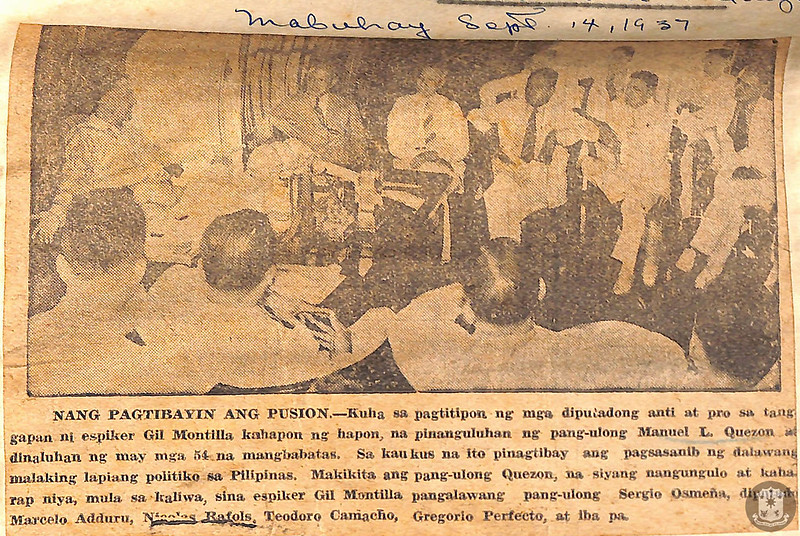
September 23, 1937
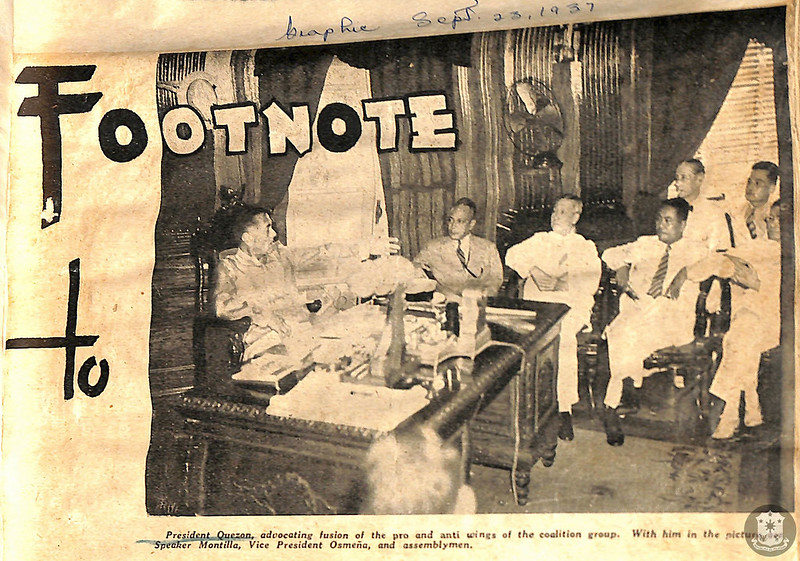
December, 1937 to January, 1938
December 30, 1937 — General Aguinaldo in another address of the day accuses President Quezon of trying to lead the people “back to the fold of the friars” and of close association with the Church, despite the constitutional mandate for the separation of church and state, pointing, in support of his allegation, to the building of a chapel on Malacanan grounds, the proposal to transfer the University of the Philippines outside of Manila which would compel many students to enroll in the University of Santo Tomas, the proposed purchase of friar-owned plantations, and the “reintroduction of the teaching of religion” in the public schools.
January 3, 1938 — Secretary of Agriculture and Natural Resources Eulogio Rodriguez states that the government does not propose to buy only friar lands but also other large estates for resale to the people in continuation of a policy stated by Governor Taft. “The only stain on the early government administration of the friar-land estates by the government,” he states, “was the success of certain influential persons in acquiring big lots within these estates, who have not made much effort toward paying the price agreed upon” — one of whom, the Secretary declares, is General Aguinaldo.
February 4, 1938
The Tribune: Aguinaldo Breaks Silence General Says Government Lenient with Church, Strict With Him
Feb. 6. — Filipino Veterans’ Association, about 1000 delegates present, endorses trip of General Emilio Aguinaldo to the United States before the end of the year to ask the American government for immediate and complete independence, expenses to be borne by the General and through voluntary contributions. A resolution is passed for independence in February 4, 1939 or 1940, with continuation of trade preferences for at least 10 years or up to 1960 as proposed by Roosevelt if possible, or else without. Tagalog is adopted as the official language of the convention and General Aguinaldo is re-elected President.
February 11, 1938 — Judge Zandueta decides Mindoro Sugar Estate case, awarding the government 18,285 hectares and the P625.732 already paid by the Estate, and the company, virtually owned by Archbishop of Manila, 1024 hectares for the payment, this area containing all or nearly all of the improvements made on the estate since the purchase of the land from the government in 1910. The decision follows efforts of Secretary Eulogio Rodriguez of Agriculture and National Resources to confiscate large portions of public domain sold to purchasers who have failed to meet their obligations to the government. General Aguinaldo whose hacienda was likewise confiscated has repeatedly attacked the Secretary for alleged partially to the Archbishop.
May 11, 1938. — Gen. Emilio Aguinaldo issues a statement opposing the bill providing for religious instruction in the public schools, stating that the “influence of the Church has always proved pernicious to the state” and that the members of the National Assembly should not close their eyes to history. “Memories of the persecutions by the religious corporations are still fresh in the minds of the Filipinos.”
May 25, 1938
The Tribune: ASSEMBLY ABOLISHES AGUINALDO PENSION IN CONCLUDING SESSION
June 4, 1938. — President Quezon vetoes the religious instruction bill on the ground of unconstitutionality because (1) the real subject of the bill is not stated in the title, (2) it restricts the discretionary power vested by the Constitution in the public school authorities, and (3) it substantially changes the policy embodied in Sec. 928 of the Administrative Code referred to in the Constitution. A Malacanan press statement declares that it is the “hope of the President that religious questions will not be permitted to divide the people and cause conflicts of a serious character’. Churchmen indicate the fight may be resumed, and Assem. Jose Zulueta proposes a change in the Constitution.
President Quezon approves the bill granting pensions ranging from P30 to P100 a month to all needy veterans of the Revolution and abolishing the P1,000 monthly pension received by General Aguinaldo since 1920.
June 12, 1938
Oct. 31, 1938 . — President Quezon orders the entire province of Cavite placed under Constabulary control following a shooting at a political candidate by an unidentified gunman whose aide was seriously injured. The President suspends 21 officials and employees of the Immigration Division of the Department of Labor and designates Judge Luis P. Torres, Malacanan technical adviser, as acting head. At a meeting of the Board of Regents of the University of the Philippines, presided over by President Quezon, the transfer of the institution to the Mariquina estate is approved, although the necessary authority must still be obtained from the National Assembly. An appropriation of PI 2,500,000, with an initial outlay of P6.000.000, will be required.
Pio Duran, Filipino attorney for extensive Japanese interests in the Philippines, asks permission of the Court of First Instance to appear as amicus curiae in the naturalization case, as the “issues raised . . . may affect very seriously the relations between the Philippines and neighboring Oriental nations and therefore are of great public interest to every Filipino”.
Gen. Emilio Aguinaldo and Gen. Jose Alejandrino at a political meeting in Pampanga attack President Quezon for his alleged silence on the independence question and interpret this as a “change of front”. “There has never been and there never will be a better chance for us to acquire independence that at the present time; yet President Quezon is not lifting a finger,” states Aguinaldo.
The Communist and Socialist parties in Manila decide to merge “to work for the triumph of democracy, progress, and peace against the inroads of fascism and militarism” and resolutions are adopted of a generally liberal rather than radical nature. Crisanto Evangelista is elected President of the consolidated party, Pedro Abad Santos, Vice-
President, and Guillermo Capadocia, National Executive Secretary. The convention was attended by nearly a thousand delegates from all parts of the country.
November 8, 1938
From the Philippine Electoral Almanac: Ahead of the first midterm polls in the country, the two factions of the Partido Nacionalista had already reunited. The party went into the 1938 Elections with the confidence of having practically every branch of government under the control of its stalwarts. This reconsolidation of political forces left the opposition in tatters, with the Allied Minorities, a loose caucus of opposition parties, failing to stop the Nacionalista bid. The legislative elections of 1938 proved to be historic in two ways: It was the first and last time that a single party would secure 100 percent of the seats in the legislature, with the Nacionalistas winning all 98 seats; and it ushered in the years of one-party rule in the country.
1939
Feb. 3, 1939. — Veterans of Philippine Revolution in annual convention score Administration for withdrawing Gen. Emilio Aguinaldo’s pension as “unpatriotic and reflecting adversely on Philippines abroad”. Aguinaldo states he has no regrets but deplores small amount set aside for pensions to veterans generally and the small number benefited. He states he is opposed to continuation of Commonwealth or establishment of a dominion government, and reiterates his stand for “early independence”.
May 3, 1939 — Gen. Emilio Aguinaldo sends radio message to Senate Committee on Territories and Insular Affairs expressing gratification in connection with reported plan to grant independence in 1940, adding, however, “we favor commercial treaties beneficial to both America and Philippines after independence”.
June 12, 1939. — Some 10,000 Filipino veterans parade in Kawit, Cavite, home of General Emilio Aguinaldo, on 41st anniversary of first proclamation of Philippine independence, the General in speech criticizing lack of interest in occasion on part of high Commonwealth officials. Among those present is Admiral Smeallie. Commonwealth spokesman states officials would have been present if General did not turn such observances into political rallies.
July 20, 1939 — Reliable reports said to have reached Manila from Washington that officials there have no objection to proposed amendments to Constitution. General Emilio Aguinaldo attacks President Quezon for “trampling” on Constitution and states he would not be candidate for Senate if it is revised.
July 21, 1939
Two accounts, on the reconciliation brokered by Daniel Maramba. These are usually dated as having taken place in July, 1940. But as the public aspects of the reconciliation started being communicated in February, 1940, it seems more logical to assume the events described took place in 1939 and not 1940 –much less 1941, as one source claimed.
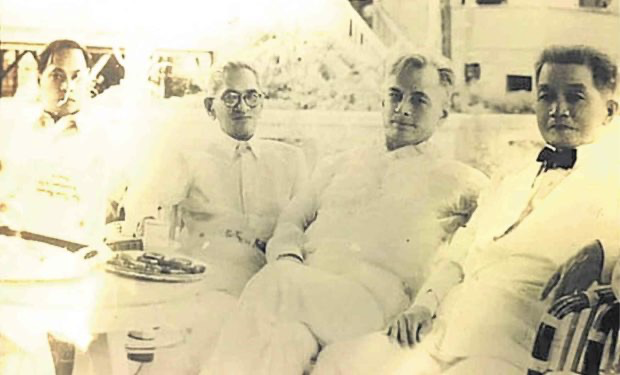
On July 21, from 1938 to 1941 – it became a habit of President Quezon to drop in at the house on Inocencio Street at about 10:00 A.M. to greet Don Daniel on his birthday. The President would ask, “What would you like for a birthday present?”
At that time, it so happened that a few days before his birthday, the family of a convicted criminal who was being considered for parole approached Don Daniel for help. It seemed that due to technicalities and some difficulties, the parole, which was before the Parole Board, was held pending. Don Daniel had felt rather helpless and he had been forced to tell the family that there was nothing he could do but that he would try his best to help them. When President Quezon asked him what he would like for a birthday present, it seemed like a heaven-sent answer to the problem.
“How about pardoning so and so? Don Daniel asked and explained the case to the President. Quezon called to his aide, Col. Nieto, ordered him to call up the Bureau of Prisons to secure the immediate pardon of the man concerned.
This became a sort of birthday ritual between the President and Don Daniel. At one time, after he had told the President what birthday present he would like, the President jokingly asked him, “Why don’t you ask something for yourself? Everytime you ask for a birthday present it is always for the benefit of others … for the people of the party.”
“If I did,” was Don Daniel’s smiling reply, “then I will never get anything after that.”
On his birthday in 1940, President Quezon mentioned about Don Daniel being groomed for Senator. Speaker Jose Yulo was with President Quezon on this particular occasion. Don Daniel dismissed the idea saying that he preferred to run for Congress again rather than be a Senator because he felt that as an independent-minded person, he would have more freedom as a Congressman than as a Senator. He believed that a Senator was more subject to the dictates of the party. President Quezon countered that as a Senator, Don Daniel would be better able and more in the position to maintain his independence.
Don Daniel celebrated his birthday in 1941 with a big “fiesta” to which nearly all the prominent people in the government and city were invited. As usual, the guests were headed by President Quezon. Quintin Paredes and Jose Yulo were also present, but what made it a memorable event was the meeting between Quezon and Aguinaldo. These two men who were great figures, in their own right – one belonging to the present as the country’s foremost leader and the other, to the past revolutionary days – had not been on speaking terms since 1935. In that year at a convention of Philippine Revolutionary Veterans, there had been some question regarding Quezon’s right to be a member and Daniel Maramba had defended Quezon. Aguinaldo – for reasons of his own – maintained that Quezon could not be considered a veteran and got angry with Don Daniel. To make matters worse, in 1935 during the elections for the first President of the Philippine Commonwealth, Gen. Emilio Aguinaldo, relying on his former leadership, ran for that post against Quezon. He was of course roundly defeated, and this did not in any way make him like Quezon more.
General Aguinaldo arrived at the house on Inocencio Street about 12:00 noon when the festivities were already in full swing. Thirty minutes later, President Quezon arrived and these two men, being both civilized, had to greet each other like gentleman. This led to their reconciliation with Don Daniel as their bridge.
1940: Year of Reconciliation
Feb. 4, 1940. — Gen. Emilio Aguinaldo, in Filipino Veterans Association meeting, adopts conciliatory tone and urges appropriation of P2,500,000 for pensions for all “genuine veterans”; also extension of “praise -worthy Mindanao homesteading plan to other unsettled regions in Cagayan Valley, Leyte, Samar, Mindanao, etc.” Resolutions adopted reiterate stand for independence and condemn “re-examination”.
May 11, 1940. — Malacanan announces that President Quezon has accepted invitation of Gen. Emilio Aguinaldo to address Veterans of Philippine Revolution on 42nd anniversary of Philippine Proclamation of independence on June 12; announcement hailed as indicating reconciliation.
June 12, 1940 . — At 42nd anniversary of proclamation of independence of first Philippine Republic attended for first time in years by President Quezon and celebrated on Luneta instead of at Kawit, Gen E. Aguinaldo, in introducing President, states he is forgetting bitterness of past and urges “unity to prop up our weakness, especially at this time when small countries in Europe are being swallowed like fish by stronger ones. But might does not always get upper hand . . . Justice and reason constitute another form of strength . .. Let us have faith in greatness of American nation aiding us in achieving our freedom … for America in champion defender of rights of men to be free and independent Veterans of Revolution should pray Almighty that present friendly relations with America will last forever and that before we are committed to our final resting place, we may enjoy blessings of independence which we proclaimed on June 12 1898.” President Quezon declares in part: “Never for moment should you doubt that independence will come. On July 4, 1946 — or earlier — I expect independence proclaimed at Kawit 42 years, to be reborn, no longer dream or wish, but reality. . . Some members of Assembly are advocating what they call reexamination of independence question, but as whole, the government is preparing for independence. I promise you in name of leaders of your government that in 1946 you will see fruit of your sufferings.”
June 12, 1940.—At 42nd anniversary of proclamation of independence of first Philippine Republic attended for first time in years by President Quezon and celebrated on Luneta instead of at Kawit, Gen. E. Aguinaldo, in introducing President, states he is forgetting bitterness of past and urges “unity to prop up our weakness, especially at this time when small countries in Europe are being swallowed like fish by stronger ones. But might does not always get upper hand… Justice and reason constitute another form of strength . .. Let us have faith in greatness of American nation aiding us in achieving our freedom… for America in champion defender of rights of men to be free and independent Veterans of Revolution should pray Almighty that present friendly relations with America will last forever and that before we are committed to our final resting place, we may enjoy blessings of independence which we proclaimed on June 12 1898.” President Quezon declares in part: “Never for moment should you doubt that independence will come. On July 4, 1946 — or earlier—| expect independence proclaimed at Kawit 42 years, to be reborn, no longer dream or wish, but reality. .. Some members of Assembly are advocating what they call reexamination of independence question, but as whole, the government is preparing for independence. I promise you in name of leaders of your government that in 1946 you will see fruit of your sufferings.”
Report of the US High Commissioner:
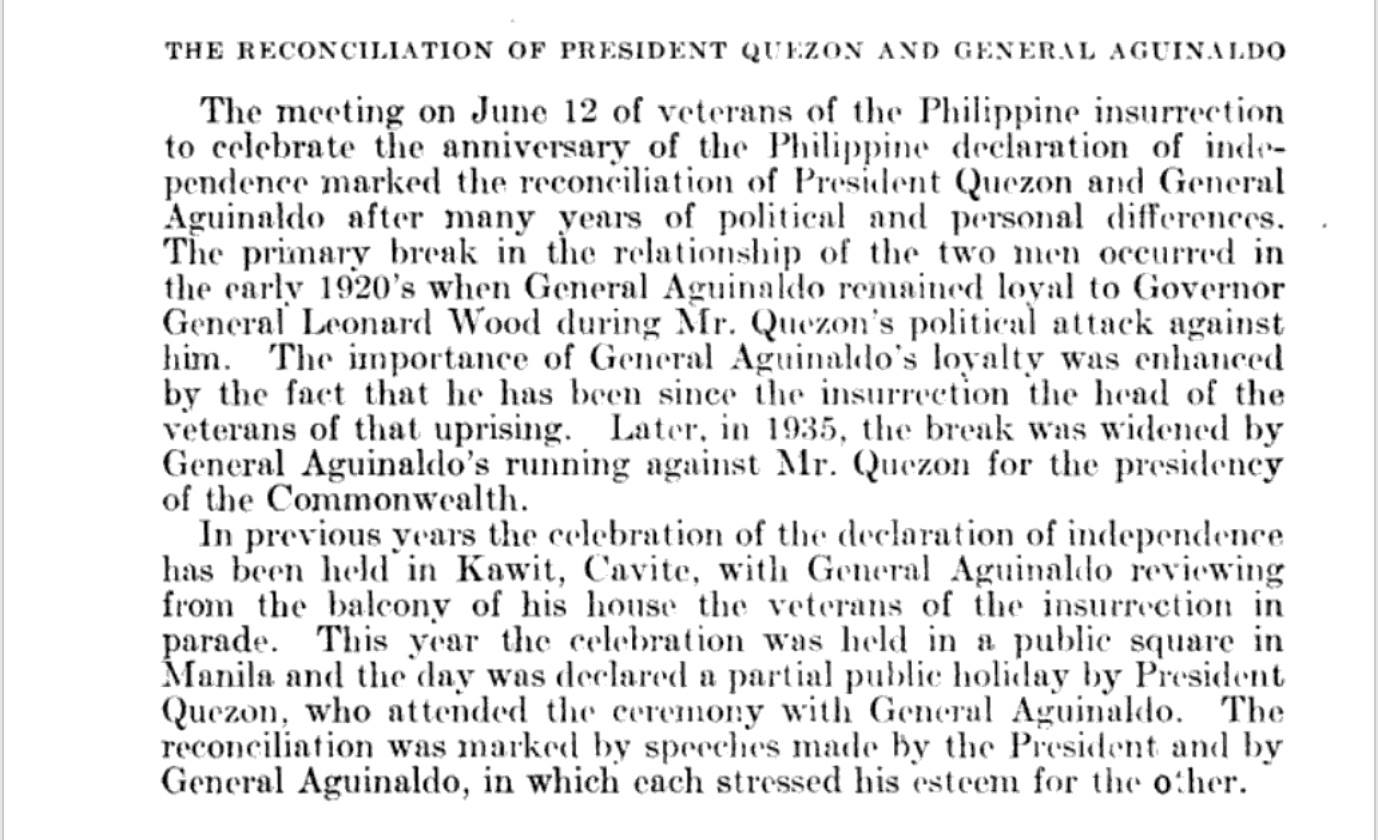
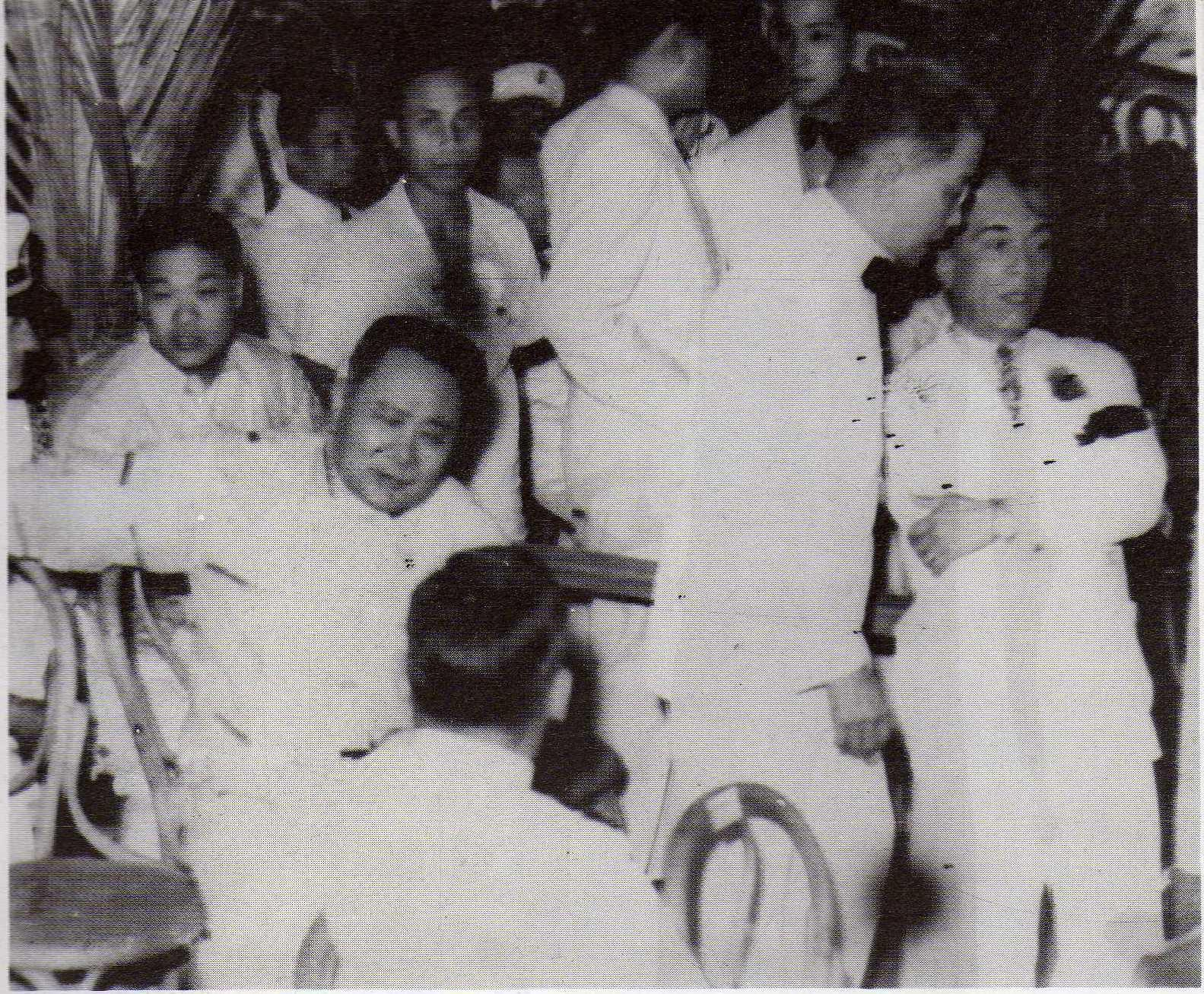
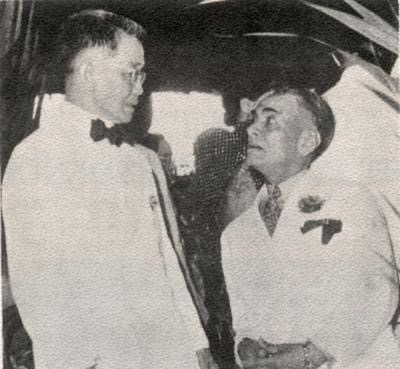
July 21, 1940
1. From Honesto Vitug’s book, “I Shot the Presidents.” “Tagaytay, the Cavite boundary with Batangas province was inaugurated on July 21, 1940. An hour’s drive from Manila, Quezon envisioned it as a summer resort next to Baguio City which was five or six hours away by car in the mountains of Benguet.”
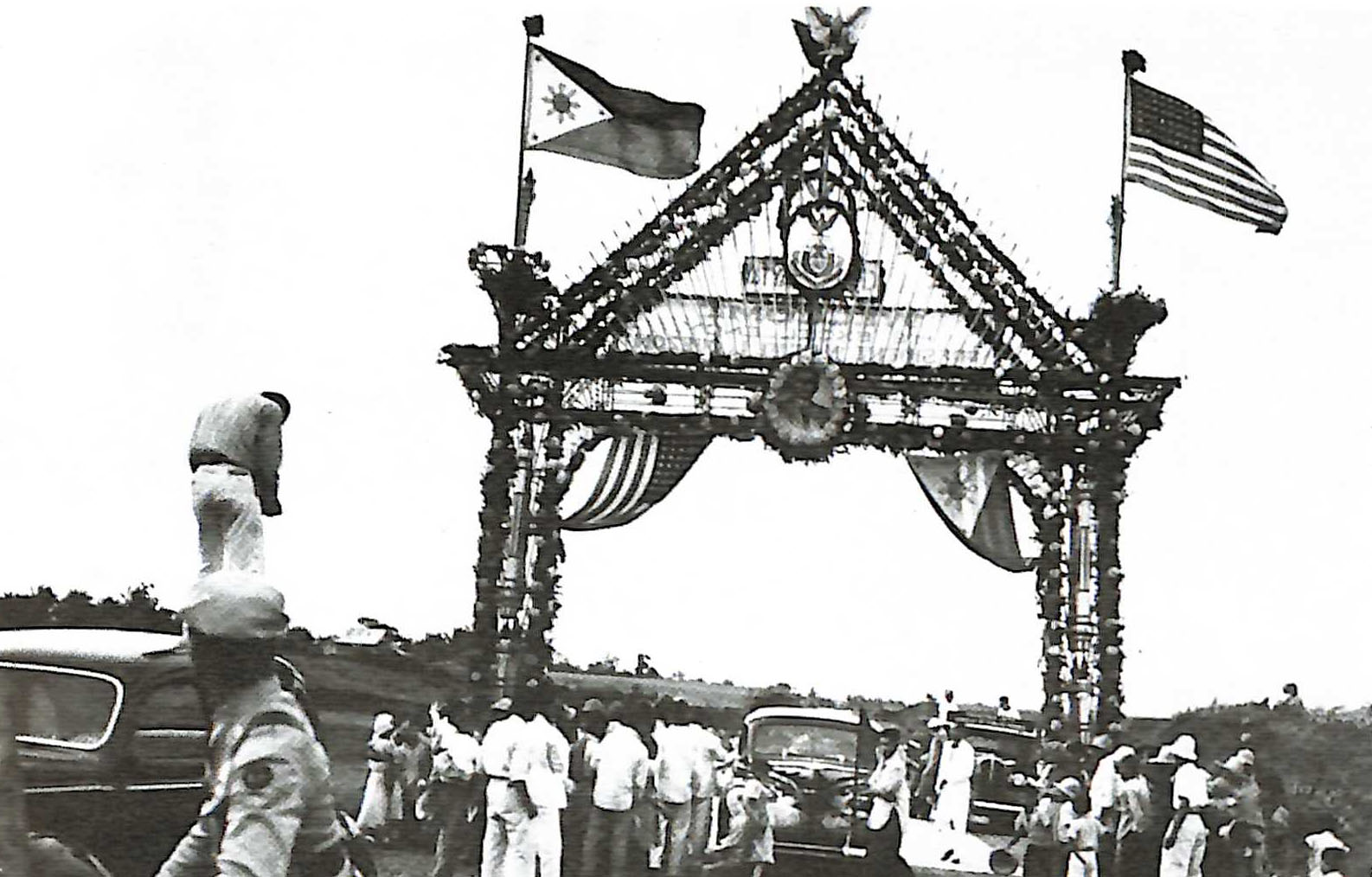
2. From Honesto Vitug’s book, “I Shot the Presidents.” “Congressman Manuel Rojas of Cavite greets Quezon as the latter got down from his car in Tagaytay.”
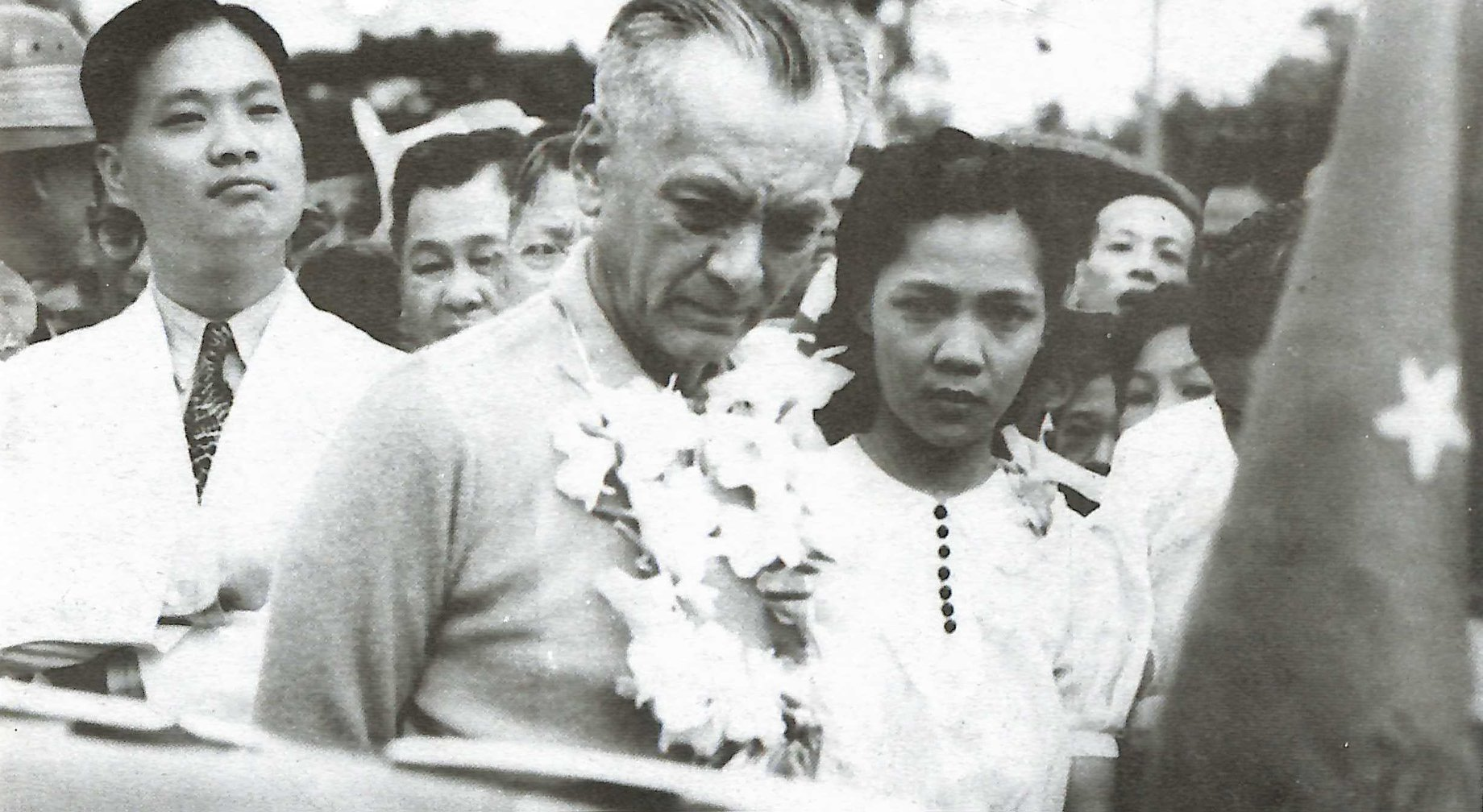
3. Quezon and Aguinaldo, one of the most-reproduced photos of the two.
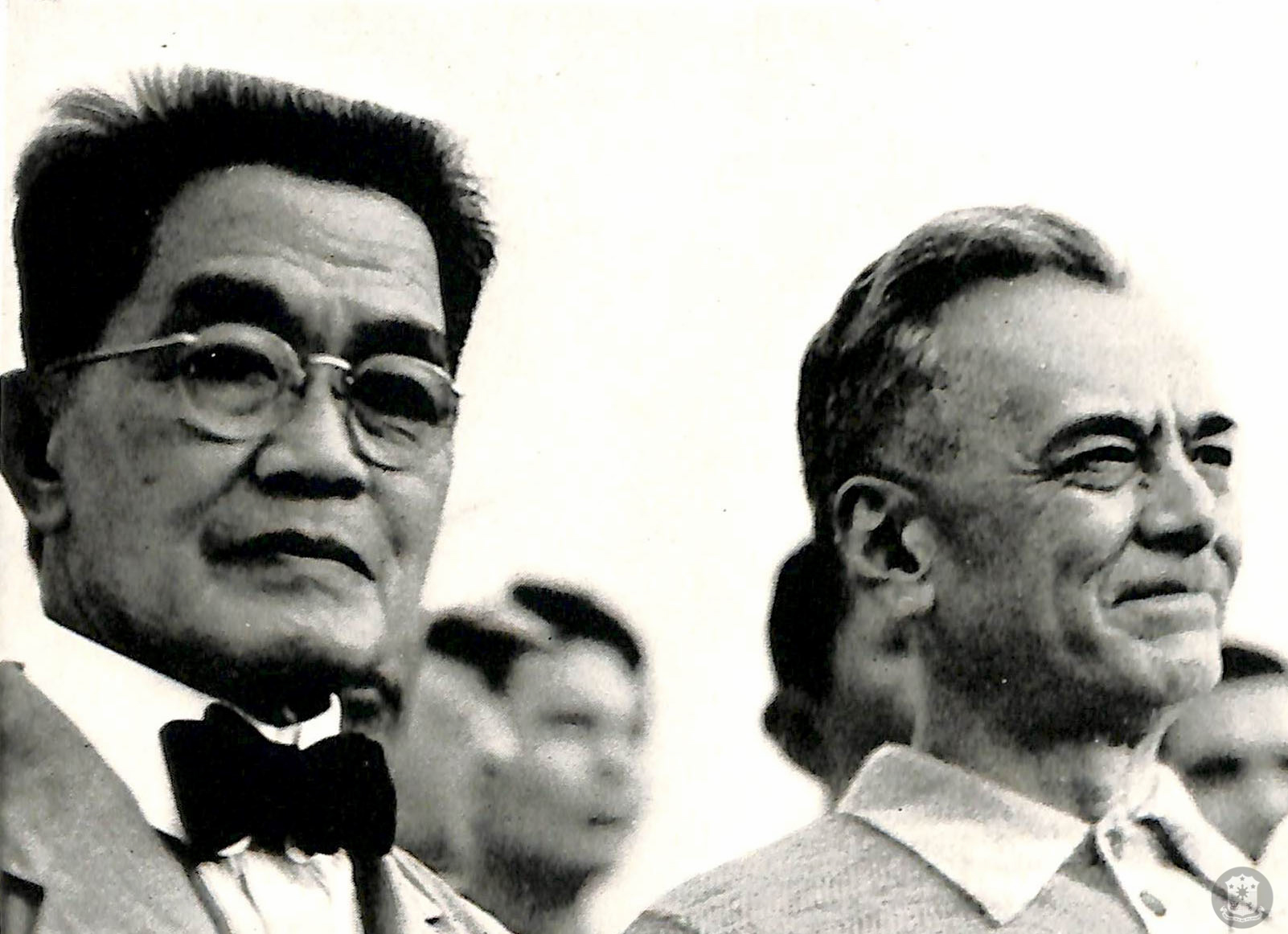
4. A much-retouched photo of Quezon and Aguinaldo at Tagaytay.
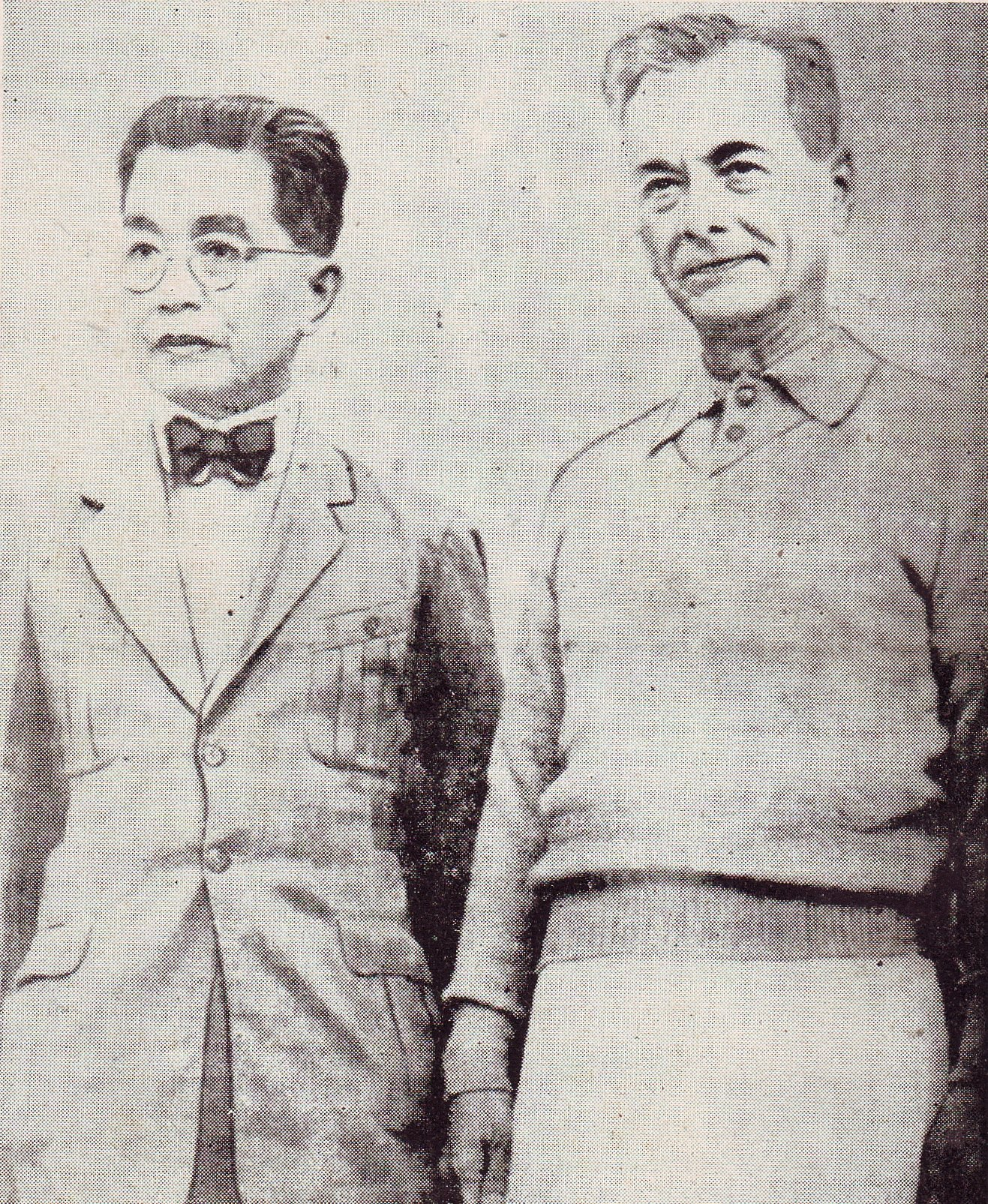
5. Quezon opens the Tagaytay golf course.
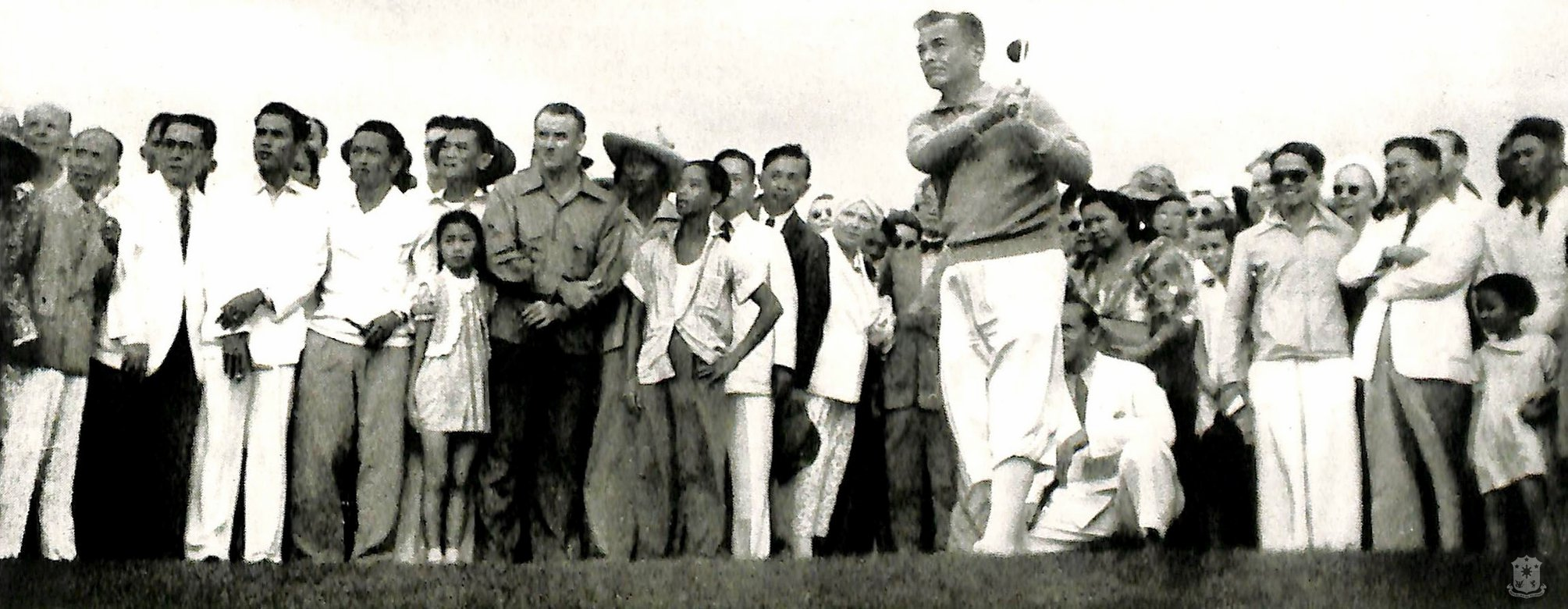
6. Sunday Tribune, July 28, 1940: “President Quezon drove the first ball inaugurating the new Tagaytay golf course, Sunday. Present was General Emilio Aguinaldo, who suggested the development of Tagaytay 20 years ago.”
July 24, 1940
The Tribune: QUEZON OPENS TAGAYTAY GOLF COURSE
Sept. 28, 1940. — General Emilio Aguinaldo issues statement proposing President Quezon’s theory of ”partyless democracy” be placed on trial during next elections.
November 20, 1940 — Mgr. Santiago A. Fonacier is installed Supreme Bishop of Philippine Independent (Aglipayan) Church (1,573,608 members), with many notables present, including President Manuel L. Quezon. Vice-President Sergio Osmena, and other prominent figures; sponsors included Gen. Emilio Aguinaldo, Floor Leader Quintin Paredes, Mayor Bulogio Rodriguez, and number of provincial governors.
Feb. 2, 1941. — Gen. Emilio Aguinaldo speaking before Philippine Veterans Association, urges Filipinos to stand by United States in these critical days and assures listeners that defense of country is in good hands and there is nothing to be afraid of.
March 7, 1941
The Tribune: REORGANIZE P.I. VETERANS
July 3, 1941
The Tribune: P. I. Veterans In “4th” Parade
August 14, 1941
The Tribune: Opposition For Quezon, Osmena
December 20, 1941
Official Week in Review, Official Gazette, December 20, 1941: “UPON THE SUGGESTION of General Emilio Aguinaldo, the President ordered that the Filipino flag be inverted so that the red stripe will be up and the blue one down. Traditionally, the Philippines at war has flown its flag that way “to denote the valor, firmness, and fortitude with which the Filipino people aim to prosecute war to victory.”
1946
August 13, 1946: Necrological Rites for Manuel L. Quezon in Kawit, Cavite. Aurora A. Quezon in attendance, with Emilio Aguinaldo.
The simulated catafalque bears the inscription, “Pangulong Quezon –Sa ginawa mong pagkapagtangol ng karangalan at kalayaan ng bayang Filipino sa bawat puso ng taga lalawigang Cavite ay mayroon kang isang monumento.”
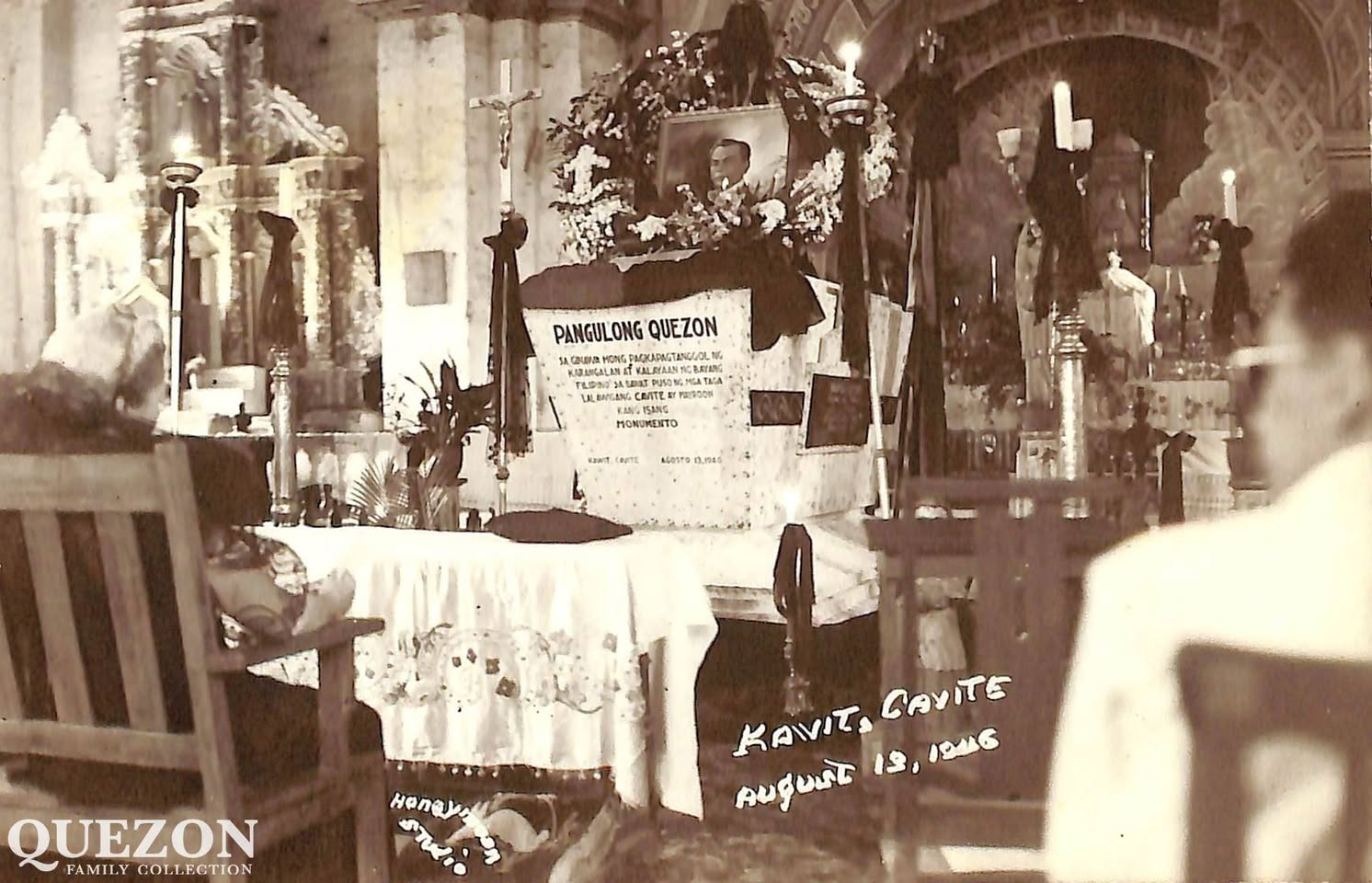
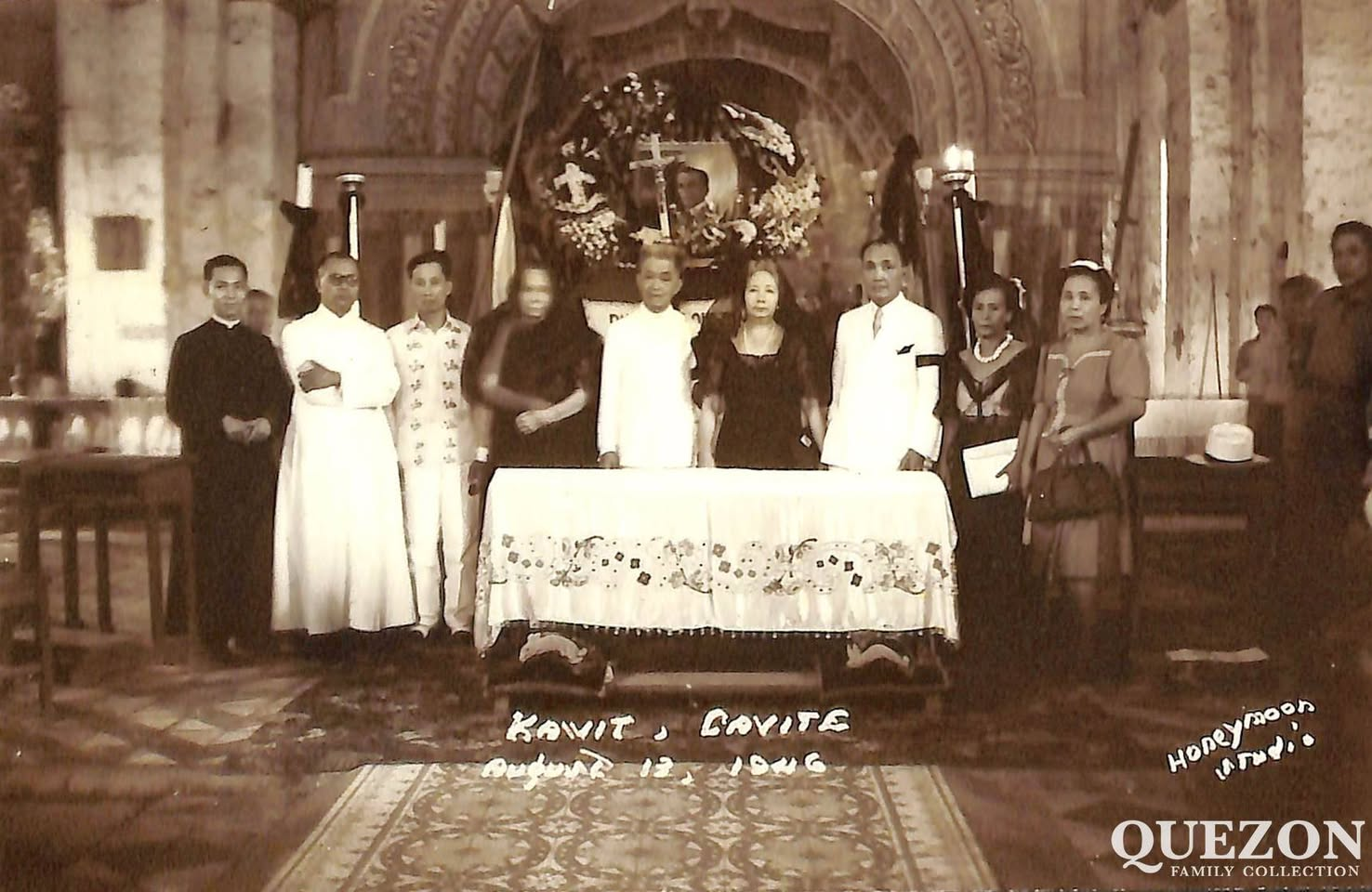
1954
President Ramon Magsaysay guest of honor at Lion’s Club dinner in commemoration of President Quezon’s 75th birth anniversary; beside the President’s daughter Nini Quezon Avanceña is General Aguinaldo.
June 12, 1956
President Ramon Magsaysay confers the Quezon Service Cross, the highest award of the republic, on former President Emilio Aguinaldo. The decoration was brought to General Aguinaldo’s home in Kawit by Vice-President Carlos P. Garcia.
The best source is the monumental work of Alfredo Saulo, Manuel Luis Quezon on his Centenary Part 1 (1978):
