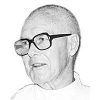
Fr. Reuter on Mrs. Quezon

April 30, 2005 by mlq3  
Filed under Daily Dose

I’m reproducing Fr. James Reuter, SJ’s column that appeared in today’s Philippine Star. The basis of the column was his homily during the requiem Mass for my grandmother last Thursday. Our family asked him to deliver the homily as he is one of the few people still around who knew my grandmother.

The slaughter of the innocents
AT 3:00 A.M. By James B. Reuter, S.J.
The Philippine Star 04/30/2005

On April 28, 1949 – 56 years ago – Doña Aurora Aragon Quezon was on her way to Baler. With her eldest daughter, Maria Aurora, whom everyone called “Baby”. And with her son-in-law, Philip Buencamino, who was married to her younger daughter, Zeneida, whom everyone called “Nini”. Nini was at home with their first baby, Felipe IV, whom everyone called “Boom”. And she was pregnant with their second baby “Noni”.

On a rough mountain road, in Bongabong, Nueva Ecija, they were ambushed by gunmen hiding behind the trees on the mountainside. The cars were riddled with bullets. All three of them were killed. Along with several others, among them Mayor Ponciano Bernardo of Quezon City.

Adiong, the Quezon family driver, was spared. Running to the first car, Adiong found Philip lying on the front seat, his side dripping blood. Philip smiled at Adiong and said: “Malakas pa ako. Tingnan mo” – “I am still strong. Look!” And dipping his finger in his own blood, Philip wrote on the backrest of the front seat: “Hope in God”.

When they placed him in another vehicle for Cabanatuan, his bloody hands were fingering his rosary, and his lips were moving in prayer. This was consistent with his whole life. His rosary was always in his pocket. And on his 29th birthday, exactly one month before, on March 28, 1949, at dinner in his father’s home, he said to Raul Manglapus: “Raul, the Blessed Virgin has appeared at Lipa, and has a message for all of us. What are we going to do, to welcome her, and to spread her message?”

He was echoing the thoughts of Doña Aurora, who wanted a national period of prayer to welcome the Virgin and to spread her message of Peace. Years later, the Concerned Women of the Philippines established the Doña Aurora Aragon Quezon Peace Awards, choosing the name in honor of this good, quiet, peaceful woman.

The blood stained rosary was brought to Nini, after Philip’s death. Many years later, she wrote down the thoughts that came to her when they gave her the bloody beads:

“We had joined my mother in Baguio for Holy Week, 1949. As we drove down the zigzag, after attending all the Holy Week services, Phil turned to me and said, ‘Nini, if we were to have an accident now, wouldn’t it be the perfect time for us to go?’ I said to him, ‘You may be ready, Phil, but I still have a child to give life to, so I can’t go just yet.’ And not long after this, his life was taken, and mine was spared.”

Her life was spared, but she felt the agony of those three deaths more intensely than anyone else. In that ambush she lost her husband, her mother, and her only sister. The gunmen riddled their bodies with bullets, on that rough mountain road. But miles away, with her one year old baby in her arms, and another baby in her womb, the gunmen left her with a broken heart. The ones she loved went home to God. But she had to carry on.

Last Thursday, April 28, 2005 – exactly 56 years after she was assassinated – the remains of Doña Aurora Aragon Quezon were transferred from the North Cemetery to the Quezon Memorial Shrine.

Mass was said at Santo Domingo Church, the National Shrine of Our Lady of the Holy Rosary. Then, at the Quezon Memorial Shrine, President Gloria Macapagal Arroyo turned over the Philippine Flag to Nini Quezon Avanceña. The urn was placed in a black granite crypt, beside the body of President Quezon. They are finally united, after all these years.

Doña Aurora Aragon Quezon was a lady, in the finest sense of that word. She did not need trappings to prove this. You could see it in her eyes. You could hear it in her voice. You could feel it, in her very presence. She was a soft spoken, motherly, gentle woman – all heart, all love.

I first met her at Christmas time, in 1938. I was studying philosophy at the Sacred Heart Novitiate, in Novaliches. Our Jesuit choir at that time – all male, young seminarians, Filipino and American – sang beautiful Christmas carols. We came in from Novaliches to Manila to sing for the poor, in the charity wards of the hospitals. Doña Aurora invited as to sing at Malacañang. She wanted to thank us for our efforts for the poor. She looked upon all the poor as her special children.

We climbed the majestic stairs of Malacañang in a kind of breathless awe. We were ushered into the music room, where Doña Aurora was waiting for us. She was wearing a simple house dress, absolutely no make-up, and she was in chinelas! She welcomed each one of us, personally, looking straight at us, asking not only our names, but where we came from.

When we sang for her, she listened quietly, saying softly from time to time: “Beautiful….. beautiful.” We were not that good. But she was a lady. After the singing, a maid brought in merienda, and Doña Aurora served each one of us, herself. She had no airs. She was just a wife and mother, with a warm heart for all these “poor boys, who left their homes and families to follow in the footsteps of the Lord.” That is what she said to the priest who was with us.

The next time I met her was in Baguio, in 1940. She had built a grotto and a shrine for the Blessed Virgin Mary. It was being blessed. The Jesuits had moved the seminary for philosophers to Baguio, and she remembered our choir. She invited us to sing at the blessing.

She was greeting each one of us, personally, holding our hand with both of hers. Before me in line was Rogelio la O. When he gave her his name, her face brightened. She looked at him closely and said: “Hijo de Maming?” He nodded, and smiled. She patted his hand. She seemed to remember everyone that she had ever met…. by their first name! And by their pet name!

She was “Ninang” to countless poor children whom she always remembered, with gifts and love letters, at the proper times. She was known, universally, for three things: her devotion to the Blessed Virgin Mary, her love for the poor, and the strong support she gave to her husband.

President Quezon was so occupied with official affairs that he sometimes left a little to be desired as a husband. But Doña Aurora never uttered one negative word of criticism. Not a syllable. She was his pillar of strength, always. There in Baguio, the women who were close to her would whisper to us young Jesuits: “She’s a saint, that woman! She’s a saint!’

No one knows who killed her, or why. The Hukbalahaps were blamed for it. But no one hated Doña Aurora, or Philip, or Baby. I am sure that when Aurora arrived in heaven, while her body was still lying warm on the road, she said to Our Lord: “Don’t hold it against those poor men. They know not what they do”. That’s the way she was. She herself never hated anybody.

And putting her to rest beside her husband is a beautiful thing. I judge this from my own family. When my Dad was dying of lung cancer, in Florida, he suddenly said: “I want to be buried beside my mother”. My younger brother, who was a Police Lieutenant, said: “Oh, Pappy, no! That’s New Jersey! It’s a thousand miles! We would have to get police clearance through every State. It’s impossible!” My Dad said: “Couldn’t you fly me up there?” My sister Dorothy said, instantly: “Oh, no! We did that with my boss! It was terrible! We had all the expenses of a funeral on both ends! If we did that, Mom would have nothing left to live on!”

My Dad thought about this. Then he said: “Well, when I die, couldn’t you just sit me up in the back of the car, and drive up north, and have me declared dead when we get there?” My mother remembered this. So, when he died, she flew him up north, and he was buried beside his mother. The strange thing is, his mother died when he was only seven years old. He had not seen her for 66 years. And yet it meant so much to him to be buried beside her.

Then my mother died, in Florida, I did not get home for the death of my Dad, or of my mother. But six months later, I got home to New Jersey for a visit. My sister Rita said, “Good! Now we can have Mom’s funeral!”

I said: “What do you mean – Mom’s funeral? She died six months ago.” But my sister said: “Yes! But she wanted to be buried beside Dad. So we cremated the body, and brought the ashes up here. Now we can bury her with Dad!”

So I said Mass, and we went to the cemetery, and buried her with my father. That is what she wanted.

I think that this is exactly what Doña Aurora wants, also – to be laid at rest beside her husband. Because, when a Filipina stands at the altar and says: “I take thee from this day forward; for richer, for poorer; for better, for worse; in sickness and in health; until death she does not really mean: “until death. . . . . ”

She means: “Forever!”

The Hukbalahap Insurrection: A Case Study of a Successful Anti-Insurgency Operation in the Philippines

April 29, 2005 by mlq3  
Filed under Daily Dose

In The Hukbalahap Insurrection: A Case Study of a Successful Anti-Insurgency Operation in the Philippines, there’s this concise account of my grandmother’s murder and the aftermath. My own thoughts on my grandmother, and her reinterment yesterday, next time.

In Chapter 4, there’s the following account:

In November, the military wing of the movement changed its name to the Hukbong Magapalaya ng Bayan, the People’s Liberation Army, commonly referred to as the HMB. Drawing on the support garnished during the summer truce, the HMB started a new series of raids on government troops and targets. Throughout the following year, 1949, HMB raids continued against government installations in and around central Luzon. Most of the raids were typical guerrilla operations, hit-and-run, and were usually conducted at night to avoid direct confrontation with AFP forces. Despite their numerous ambuscades and raids on banks and supply depots, the HMB did not participate in the old guerrilla favorite – sabotage. This was not only because they lacked trained demolition men or equipment, but also because the Huks relied heavily on government transportation and communication facilities for their own purposes.

The Huk campaign that began in November 1948 reached its peak in April 1949, with the ambush of Senora Aurora Quezon, widow of the former Philippine president. Commander Alexander Viernes, alias Stalin, took two hundred men and laid an ambush along a small country road in the Sierra Madres mountains and waited for a motorcade carrying Sra. Quezon, her daughter, and several government officials. When the ambush ended, Senora Quezon, her daughter, the mayor of Quezon City, and numerous government troops lay dead alongside the road. Although Viernes claimed a great victory, people throughout the islands, including many in central Luzon, were outraged. Viernes misjudged his target’s popularity. President Quezon left a strong nationalistic sentiment after his death in exile during the war, and his widow represented the spirit of Philippine nationalism and resistance. Feeling the swell of popular indignation about the death of a national hero’s wife and family, Taruc denied responsibility and said that the ambush was conducted without HMB approval. Despite his attempts to disclaim the actions of an overzealous Commander Viernes, Taruc lost a great deal of popular support and confidence over the incident, confidence he never fully regained and support that he would need later, but would not find forthcoming.

…Aided greatly by the horrible conditions that accompanied the 1949 election, Huk strength and influence grew by the end of the year, recovering somewhat from the Quezon ambush episode. HMB regular strength grew to between 12-14,000 and Taruc could rely on 100,000 active supporters in central Luzon. After the elections (fraught with fraud, terror, and rampant electioneering violations), Huk raids became more frequent and widespread. A Huk squadron occupied the town of San Pablo; Police Constabulary posts at San Mateo and San Rafael were attacked and the towns looted; and the mayor of Montablan was kidnapped and held for ransom.42 After most of these attacks, Huks left propaganda pamphlets with the people seeking their aid and support, and playing on their growing sense of disaffection for the government that resulted from election fraud. As the guerrillas strengthened their control in Tarlac, Bulacaan, Nueva Ecija, and Pampanga provinces, most government officials left their offices every day before nightfall, returning to the relative safety of homes they maintained in Manila.

…Dedicated anti-Huk operations by either the Philippine Army or the Police Constabulary remained few in number and insignificant in effect with the exception of the government operation mounted after Huks murdered Sra. Quezon on 28 April.

Ordered by President Quirino not to return to garrison until all the Huks who ambushed Senora Quezon were themselves either dead or captured, 4,000 troops (two constabulary battalions and one army battalion) went into the Sierra Madres mountains. Divided into three task forces, one to block and two to maneuver, the force scoured the mountain-sides. After two weeks of relentless patrolling, a Huk camp was discovered and while taking it, government troops captured a Huk liaison officer who told them the location of Commander Viernes’ base-camp near Mount Guiniat. Five companies converged on the mountain camp at dawn, 1 June 1949, but killed only eleven guerrillas before discovering the camp was only an outpost, not Viernes’ base.

The following day, government forces located the base-camp and attacked immediately. The troops captured the camp, that turned out to be “Stalin University,” and in the ensuing week long search and destroy mission killed thirty-seven additional Huks. Commander Viernes, however, managed to elude the net once again. After two more months of searching the mountains, the Philippine Army cornered Viernes near Kangkong and killed him on 11 September. His death, along with the deaths of many of his captains and several other Huk commanders, ended the operation that had spanned nearly four months. All toll, 146 insurgents were killed, 40 captured, and an entire Huk regional command was destroyed during the operation.

However, after the conclusion of the Sierra Madres offensive, conditions in the Philippine military returned to their old form of normalcy–ineffectiveness, corruption, and no efforts whatsoever to help the local villagers. Army checkpoints became “collection points” where troops extorted money from local citizens. The Philippine Chief of Staff discovered this situation when he (wearing civilian clothing) was stopped by a group of soldiers who demanded money from him. On Good Friday, 1950, army troops massacred 100 men, women, and children in Bacalor, Pampanga, and burned 130 homes in retaliation for the killing of one of their officers.71 In Laguna, fifty farmers attending a community dance were placed before a wall and executed as “suspected Huk.” The Philippine Air Force also contributed to the government’s loss of popular support. It acquired several P-51 Mustangs from the United States in 1947, and used them to strafe and bomb suspect locations. Unfortunately, these aerial raids caused more damage to civilians than to the Huks, and in mid-1950, the government placed tighter controls over the use of the fighter-bombers. In general then, government forces were treating the people worse than were the guerrillas, who while occasionally preying on a village, did try to maintain close ties with the majority of the population in central Luzon.

The Republican Attack on Senate Filibusters Is Backfiring

April 29, 2005 by mlq3  
Filed under Daily Dose

The Republican Attack on Senate Filibusters Is Backfiring was my Arab News column for yesterday.

A re-interment and other things

April 25, 2005 by mlq3  
Filed under Daily Dose

A re-interment – INQ7.net is my column for today.

The good folks at PCIJ have blogged about the Philippine e-library in INSIDE PCIJ: Stories behind our stories » Philippine e-Library. Seems its useless unless you subscribe, and subscriptions are expensive.

Tales of the Unlawyer blogs about tingi, buying stuff in tiny quantities, e.g. sacheted everything galore. PDI columnist Rina Jimenez-David wrote about it. Just an added note: according to a recent lecture Prof. Ricardo Trota Jose gave at the Ayala Museum Docent Training Program, micro-buying is a holdover from the Japanese Occupation: it was then, for example, that Filipinos got used to buying cigarettes by the stick, instead of by the pack, and bananas per piece and not by bunch, and so on.

From iblog – The 1st Philippine Blogging Summit, this announcement:

The Internet Society Program (ISP) of the U.P. College of Law is pleased to announce the holding of the 1st Philippine Blogging Summit—an open event where Pinoy bloggers and newbies can discuss everything and anything about blogging.

ISP recognizes the pioneering efforts of the originators of Pinoy blogging. Through their initiative, blogging became an effective tool for disseminating opinion and personal thoughts on a wide array of topics. The Filipino blogging community has since grown. And Pinoy blogging has become a vibrant and revolutionary medium of communication.

Hence, the summit aims to explore the potential social and political impact of blogging, as well as, document the history of blogging in the Philippines and encourage the growth of Pinoy blogging.

Globally, blogging is fast becoming a relevant social phenomenon. Blogging has gradually emerged as an effective tool that will have an impact on a broad spectrum—from political discourse to science and technology, and corporate governance to employment, among others.

Through this summit, therefore, ISP also wishes to engage the collective thoughts of our Pinoy bloggers and gather ideas on Pinoy blogging as a socially relevant phenomenon.

And Bikoy.net agrees with some of my views concerning public transportation.

Papal spam

April 23, 2005 by mlq3  
Filed under Daily Dose

Unam Sanctum: Holy Father officially in the digital age has a hilarious sendoff of spam -Vatican style!

Readability test

April 23, 2005 by mlq3  
Filed under Daily Dose

Via ProfessorBainbridge.com comes Juicy Studio: Readability Test, in which you can type in the url of your blog (or any website) and find out how it does in terms of a couple of readability tests.

Results for my blog:

Total sentences: 387

Total words: 2,727

Average words per Sentence: 7.05

Words with 1 Syllable: 1,693

Words with 2 Syllables: 577

Words with 3 Syllables: 316

Words with 4 or more Syllables: 141

Percentage of word with three or more syllables: 16.76%

Average Syllables per Word: 1.60

Gunning Fog Index: 9.52 (within 8 – 10 = Most popular novels)

Flesch Reading Ease: 64.45 (“Authors are encouraged to aim for a score of approximately 60 to 70.)

Flesch-Kincaid Grade: 6.02 (“The result is the Flesch-Kincaid grade level. Like the Gunning-Fog index, it is a rough measure of how many years of schooling it would take someone to understand the content. Negative results are reported as zero, and numbers over twelve are reported as twelve.”)

Arab News Newspaper: Finding an Alternative Explanation for Anti-Japanese Protests

April 21, 2005 by mlq3  
Filed under Article Archives

Finding an Alternative Explanation for Anti-Japanese Protests 
Manuel L. Quezon III
 
ALTERNATIVE means are what I’ve had to find, when it comes to figuring out the recent epidemic of popular protests taking place in China. The protests are aimed against Japan, apparently provoked by yet another incident of Japanese textbooks downplaying the severity of their army’s behavior during World War II. They were further fueled by renewed discussions concerning Japan’s desire to be admitted as a permanent member of the UN Security Council. they have resulted in what the New York Times describes as “raucous” protests in cities such as Shenyang and the industrial and commercial powerhouse city of Shenzhen, as well as “a wave of vandalism” in Shanghai.

For eyewitness accounts that go beyond the pieces published in the papers, I’ve increasingly turned to blogs. While most bloggers with eyewitness accounts of protests are written by foreigners (expats in China proficient in English and I presume, less worried of official Chinese reactions to what they write), they do provide nuances and details absent in standard media accounts.

A Shanghai blogger, Andres Gently, has an extremely fascinating and provocative piece on these anti-Japanese demonstrations (he was an eyewitness to the one in Shanghai). He considers the protests not only the result of a determined Japanophobia on the part of the Chinese Communist Party (implied in most media coverage) or and the expression of government fears of Japan as a rival on the UN Security Council (the standard geopolitical explanation), but also a reflection of the utter political repression in China, which prevents any expression of sentiment, much less discussion, on Chinese politics.

Gently’s thoughts (well worth a visit on the worldwide web) reminds me of a recent discussion I had with two people: one was a recent visitor to that city, the other, a Beijing resident touring South East Asia. The recent visitor noticed that all reference to the protests was censored -including news items on CNN. Hotel TV screens would go black for the duration of any news item on the protests. The Beijing resident had it on the most credible authority, that the Chinese government sent strict, and specific, instructions forbidding any coverage and commentary on the protests.

This goes against the conventional wisdom that nothing happens in China without the government’s permission, and that there is a fundamentally geopolitical reason behind the protests being “permitted” (more likely, organized and encouraged) to take place. But if the Chinese government isn’t organizing the rallies, and the primary motivation for the rallies aren’t official Chinese opposition to a Security Council seat for Japan, what’s the cause of the protests? According to the Beijing resident, it’s a combination of factors. First, there is a widespread antipathy to Japan, due to handed down memories of the war and indoctrination in schools concerning Japanese atrocities. Any news of textbook whitewashing, and further news of renewed Japanese diplomatic ambitions, is sure to provoke anger. However, another reason is that since Japan is, in a sense, a legitimate target of protest, and since there are very few avenues for protest in China, then marching against Japan is a means for expressing dislike for the current situation — including the government.

The Beijing resident explained this by pointing out that there is a widely held opinion among younger Chinese that their government is too eager, and unhealthily concerned, with keeping relations with Japan smooth, for the purpose of encouraging investments. Add to this the reality that criticism, at least in the media in China (which, unless foreign-owned, is state-controlled), is permissible only when dealing with the relatively distant past, or when it is concerned with goings-on in distant lands. Disgust over the perception that their government is too concerned with money-grubbing, and the realization that expressing this disgust is only possible when linked to the past and a country who’s historical record is officially condemned, means mounting protests against Japan offers a near-perfect avenue for engaging in what has been impossible since 1989: Marching in the streets.

This would explain why the Chinese government can’t crack down on protests, but is also unwilling to fully support them. Officials simply can’t figure out the real motivation for the protests, and they don’t want to risk appearing too obliging to the Japanese. On the other hand, they can’t appear too paranoid, as it would entail the government’s losing face, because it would have to admit that at least a few viewed the protests as a pretext for mobilizing against the state, as well as a crackdown proving the state was not fully in control of a situation everyone’s assumed has been contained since the Tiananmen Square “incident” (known to the rest of the world as a massacre).

Shanghai blogger Dan Washburn provides a marvelous translation of one email calling for protests, including this particular piece of advice: “The police are public servants, they are just as patriotic as us, but they have their duties — to ensure security during the protest. Therefore, please cooperate with them, especially in front of the Japanese consulate. If a policeman looks at you, don’t throw anything, if not, throw an egg or a tomato. If you are spotted throwing stuff at the consulate, smile at the policeman.”

Perhaps, in gingerly approaching the crossroads to democracy, the old train track warning — Stop, Look, Listen — lacks one modern addition: Smile, you’re protesting in China!

Today, the smiles of protesters able to organize despite their government’s unease, must be positively delicious. There aren’t any smiles on the faces of Chinese officials, their Japanese counterparts, or stockbrokers the world over, though.

Today’s word buffet

April 21, 2005 by mlq3  
Filed under Daily Dose

Victory for orthodoxy – INQ7.net is my PDI column for today. Also interesting is Benedict XVI – INQ7.net, the PDI editorial for today.

Finding an Alternative Explanation for Anti-Japanese Protests is my Arab News column for today; in it, I make reference to two blogs. First, that of Andrés Gentry at Andrés Gentry, with a truly fascinating opinion piece on the reasons why the Chinese are protesting against Japan; and Dan Washburn’s blog, specifically, Dan Washburn’s Shanghai Diaries: ‘A detailed instruction on the Protest Against Right Wing Japanese’, which makes for fun reading. Both blogs, incidentally, discovered through myrick.

Also of interest is the Arab News editorial that deals with the Philippines: Editorial: Search for Peace in Mindanao.

Papal oath: Watch for it

April 20, 2005 by mlq3  
Filed under Daily Dose

In Papal oath: Information From Answers.com you can read the papal oath, put in place supposedly by St. Agatho, in AD 681 which was taken by new popes upon their coronation:

I vow to change nothing of the received Tradition, and nothing thereof I have found before me guarded by my God-pleasing predecessors, to encroach upon, to alter, or to permit any innovation therein;

To the contrary: with glowing affection as her truly faithful student and successor, to safeguard reverently the passed-on good, with my whole strength and utmost effort;

To cleanse all that is in contradiction to the canonical order, should such appear;

To guard the Holy Canons and Decrees of our Popes as if they were the Divine ordinances of Heaven, because I am conscious of Thee, whose place I take through the Grace of God, whose Vicarship I possess with Thy support, being subject to the severest accounting before Thy Divine Tribunal over all that I shall confess;

I swear to God Almighty and the Savior Jesus Christ that I will keep whatever has been revealed through Christ and His Successors and whatever the first councils and my predecessors have defined and declared.

I will keep without sacrifice to itself the discipline and the rite of the Church. I will put outside the Church whoever dares to go against this oath, may it be somebody else or I.

If I should undertake to act in anything of contrary sense, or should permit that it will be executed, Thou willst not be merciful to me on the dreadful Day of Divine Justice.

Accordingly, without exclusion, We subject to severest excommunication anyone — be it ourselves or be it another — who would dare to undertake anything new in contradiction to this constituted evangelic Tradition and the purity of the Orthodox Faith and the Christian Religion, or would seek to change anything by his opposing efforts, or would agree with those who undertake such a blasphemous venture.

This oath was taken by all the popes since 681 and all modern popes, including Pius X’s succesors, Benedict XV, Pius XI, Pius XII, John XXIII, and Paul VI. Yes, even the darling of Catholic liberals, John XXIII (again this convinces me that today’s liberals have a profound misunderstanding of John XXIII, who convened Vatican Council II), and his successor, Paul VI. The first pope to abandon the oath -he refused to take it- was John Paul I, who also refused to be crowned. Interestingly, John Paul II also refused to take this oath, and refused to be crowned.

What’s crucial here is if, on Sunday, Pope Benedict XVI does one of the following:

1. Have himself crowned with the papal tiara, or crown;
2. Take, before God and the public, the traditional papal oath.
Either act would definitively establish what kind of a papacy we would have: a new Counter Reformation. If he declines both, however, he may just turn out far more moderate and progressive than people expect.

The papal oath, however, shouldn’t be confused with another oath, also against modernism, required of the clergy by St. Pius X. That oath is here: The Anti-Modernist Oath. An adequate discussion of anti modernism is at Anti-Modernist oath – Learn all about Anti-Modernist oath.

Benedict XVI

April 19, 2005 by mlq3  
Filed under Daily Dose

New pope, new blog style.

The confusion about the smoke; the added confusion about the bells; the definitive tolling of the great bell; and the announcement of the name of the new pope; prophetic of things to come?

So what now of the much talked about St. Malachy’s prophecy, describing this pope as “The Glory of the Olives”? It will be interesting to see how things are made to fit. Already, some point to the assertions of the Benedictine Order that the “Glory of the Olives” pope would come from their order; apparently, the choice of the name Benedict is a means to fulfill this claim. An interesting link is The Future and the Popes, which predicted the name Benedict XVI before the fact.

Not since Paul VI has a frontrunner turned out to be who the Vatican pundits said it would be. What to expect? It’s all in Benedict XVI’s last sermon as a cardinal. Journalist John Allen wrote, before the election of the pope, of what his reign might be like: National Catholic Reporter: Electing a new pope April 16, 2005. Another, interesting because it’s a Devil’s Advocate piece, is by the priest (and succesful novelist) Andrew Greeley, which you can read at The case for Cardinal Ratzinger . Among other things, Greeley suggests the new pope may not be as inflexible in all the things he’s expected to be rigid about; his reportedly convincing Pope John Paul II not to make an infallible declaration against contraception is particularly intriguing.

Interesting tidbit: some priest being interviewed in St. Peter’s square by CNN claims he talked to Rome’s Chief Exorcist, who in turn claims that invoking John Paul II’s name inspires a particular fear in demons. This kind of statement reminds me why I’m skeptical of “liberal” hopes for a faith built, after all, on casting out demons (remember? Jesus did that; casting out demons requires a firm belief in an absolute Truth).

Next Page »